




Published 20 Apr 2026
Why Your Acne Isn't Going Away - And How to Support Your Skin Gently
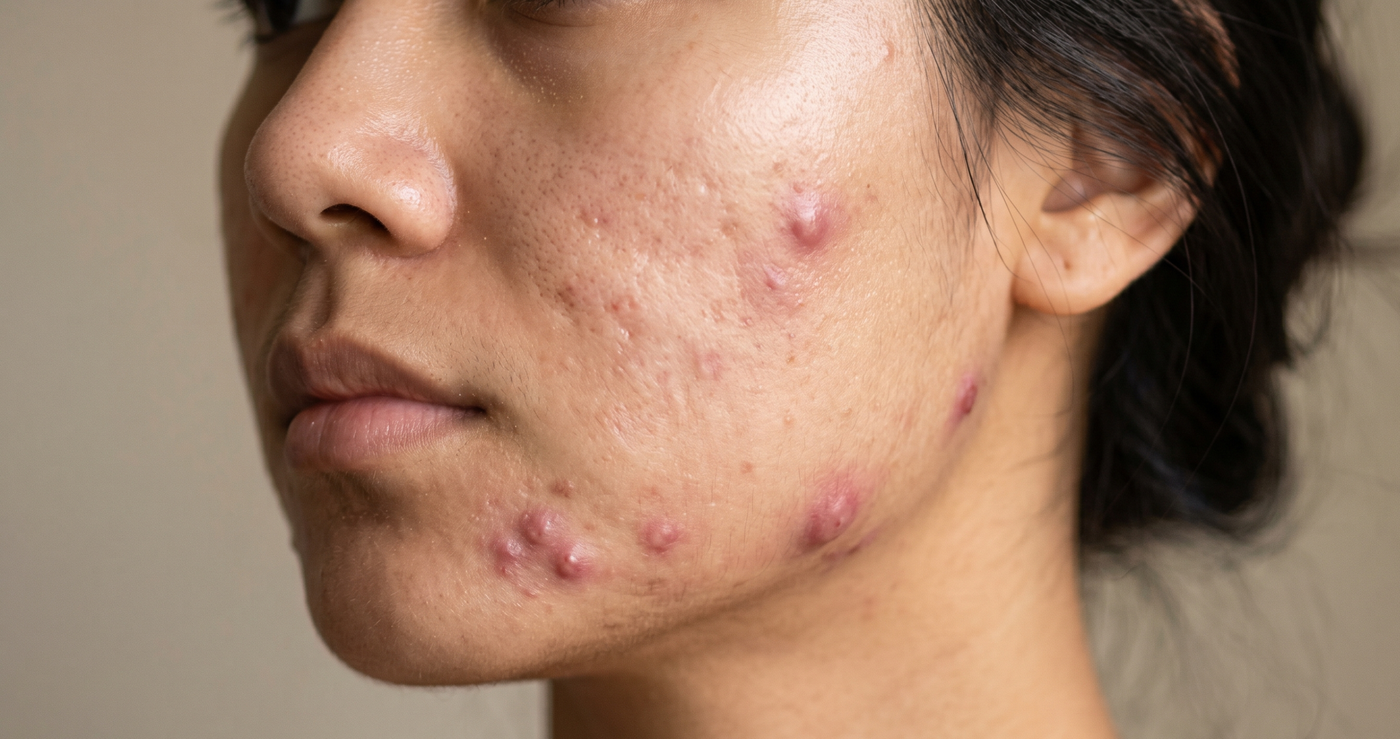
Table of Contents
Introduction Why Is My Acne Not Going Away? What Is Cystic Acne? Is It Hormonal Acne? Here's How to Tell Common Mistakes That Keep Acne Coming Back What About Acne Scars? Why They Form and What Helps Can Natural Ingredients Actually Help With Cystic Acne? How to Support Acne-Prone Skin Gently Every Day The TakeawayIntroduction
You're going to find out exactly why your acne keeps coming back... and it has nothing to do with how hard you're trying.
Most people chasing a clear skin routine are doing the right things. They're cleansing, they're being consistent, they're giving products time.
What nobody told them is that the real driver of persistent acne... especially cystic acne... isn't sitting on the surface of their skin at all.
It's happening inside the follicle, in an environment most topical routines never actually reach.
There's a specific process at work. When excess sebum, dead skin cells, and bacteria combine inside a blocked pore, they create a closed environment that feeds itself.
The breakout you see is just the result. The environment producing it keeps running unless the conditions inside actually change.
Every woman who's spent months switching products without results knows that frustration. Doing everything right and still breaking out isn't failure.
That's what happens when the approach keeps targeting the symptom while the source keeps running underneath it.
By the end of this, you'll know exactly what's feeding your breakouts, what keeps cystic acne locked in that cycle, and what gentle daily skin support actually looks like when it's built around the right understanding.
Why Is My Acne Not Going Away?
Acne that keeps coming back isn't random. There's always a reason the cycle stays in motion, and it almost always comes down to a combination of factors working together beneath the surface.
Excess oil production is where it usually starts. Your skin's sebaceous glands produce sebum to keep the skin barrier functioning, but when production runs too high, that sebum mixes with dead skin cells and accumulates inside the follicle.
That buildup creates the blocked pore environment where bacteria thrive. From there, inflammation follows.
And if the barrier is already weakened by harsh products or stress, the whole system becomes harder to settle.
Knowing how to treat acne-prone skin starts with understanding this chain. It isn't one trigger in isolation.
It's a cycle, and every piece of it needs to be understood before any routine can actually address it.
Common reasons acne keeps returning:
- Excess oil mixing with dead skin cells to block pores
- Bacteria thriving inside clogged follicles
- Hormonal shifts increasing oil production
- Harsh products stripping and disrupting the skin barrier
- Stress-driven hormonal responses keeping the cycle active
What Is Cystic Acne?
Not every breakout is the same kind of problem.
A surface pimple and a cystic acne lesion are two entirely different situations... one sits close enough to the skin's surface to respond to standard topical care, the other forms deep inside the follicle where most products simply don't reach.
A cystic pimple is larger, more inflamed, and significantly more painful than a surface breakout. It develops when a pore becomes so deeply blocked that the trapped material has nowhere to go.
The result is a swollen, tender nodule under the skin that doesn't come to a head the way a regular pimple does. That's why it lingers.
That's why it's more likely to leave a mark behind. And that's why it resists the same approaches that might clear a surface breakout in a few days.
Cystic acne isn't a more severe version of regular acne. It's a different category of problem entirely, and it responds to a different kind of attention.

Is It Hormonal Acne? Here's How to Tell
For a lot of women, the pattern is unmistakable once they know what to look for.
Breakouts that cluster along the jawline, chin, and lower cheeks... that arrive on a predictable schedule tied to the menstrual cycle... that resist every cleanser and topical approach because the trigger isn't topical at all.
That's hormonal acne, and it's one of the most common reasons a cystic pimple keeps reappearing in the same spots.
Hormonal fluctuations drive excess sebum production. When androgen levels rise, the skin's oil glands respond by producing more oil, which feeds the exact environment that keeps breakouts forming.
This is why the same spot on your jawline keeps flaring. The pore isn't simply blocked. The conditions that block it are being recreated from the inside, on a cycle.
Understanding this matters because it completely changes how you approach your skin. Aggressive topical routines don't resolve hormonal drivers.
They just irritate the barrier further, which can make the situation worse. The right starting point is recognizing what's running the cycle... and then building a routine around that reality rather than against it.
Common Mistakes That Keep Acne Coming Back
This is where a lot of well-intentioned skin routines quietly do more harm than good.
The instinct when facing persistent breakouts is to do more... cleanse more aggressively, layer on more actives, attack the problem harder.
But that instinct is usually the thing that keeps the cycle going.
Knowing how to treat acne-prone skin means understanding that the skin barrier is the foundation of everything.
When that barrier is compromised, oil production increases to compensate. When it's already struggling, adding harsh actives accelerates the damage rather than resolving the breakout.
Most people also underestimate what picking does. Pressing or squeezing a cystic spot doesn't release the blockage the way it might with a surface pimple.
It drives the inflammation deeper, widens the affected area, and significantly increases the chance of lasting marks.
Pimple treatment that relies on force rather than support consistently makes deep breakouts worse.
Habits that quietly make breakouts worse:
- Over-washing, which strips the skin's natural barrier and triggers more oil production
- Applying too many active ingredients at once, which overwhelms and irritates the skin
- Picking or squeezing cystic spots, which deepens inflammation and spreads bacteria
- Skipping moisturizer on oily skin, which causes the skin to produce even more oil
- Switching products every few weeks before anything has enough time to work
What About Acne Scars? Why They Form and What Helps
When a breakout stays inflamed longer than it should, the skin's repair response leaves something behind.
Sometimes it's a flat dark mark... post-inflammatory hyperpigmentation, which isn't true scarring but fades slowly over time.
Sometimes it's a shallow depression in the skin where the tissue was damaged during the inflammatory process. And sometimes it's both.
The two get confused often, and the distinction matters because they respond differently.
Discoloration from acne responds well to consistent daily barrier support, sun protection, and time.
True scarring is more structural and typically requires professional guidance to address effectively.
If you're seeing persistent texture changes or marks that haven't improved after several months of consistent care, scars treatment through a healthcare professional or dermatologist is worth pursuing.
What both have in common is that they form when acne is left inflamed for too long or handled too aggressively.
The most effective thing you can do for marks that haven't appeared yet is shorten the inflammatory window.
That means consistent support at the first sign of a flare, not reactive intervention once it's already deep.
Can Natural Ingredients Actually Help With Cystic Acne?

Some ingredients have real, documented properties that make them genuinely useful for stubborn, deeper breakouts.
Tea tree oil is one of the most studied. Its antimicrobial action targets the bacterial environment inside clogged pores, which is exactly where the problem with cystic acne lives.
That's not a marketing claim. It's why tea tree oil consistently shows up in formulas designed for deeper flare-ups rather than surface-level spots.
Thyme carries a different but complementary role. It supports the skin through inflammation and helps protect the barrier while the skin works through a flare.
Together, thyme and tea tree form the active foundation of a formula designed specifically for the kind of stubborn, recurring breakouts that surface-level pimple treatment routines consistently miss.
Thyme & Tea Tree Flare Care was built around exactly this combination.
Rooted in a surgeon-passed-down formula and trusted by a community of over 500,000 customers, it's formulated for adults managing body acne, recurring cystic spots, inflamed areas on the face, and flare-prone zones like the underarms and inner thighs.
Many customers in our community report calmer, less inflamed skin with consistent daily use. Results vary from person to person.
How to Support Acne-Prone Skin Gently Every Day

The routines that actually work for acne-prone skin are the ones that can be sustained. Not the most aggressive. Not the most loaded with actives.
The ones that support the skin barrier, address the bacterial environment, and stay consistent enough for the skin to actually respond.
For adults using Thyme & Tea Tree Flare Care, the approach is straightforward. Apply directly morning and night as a daily moisturizer for consistent topical support.
For deeper spots that need more attention, the Gauze Method... applying the formula and covering with cotton gauze, especially overnight... gives the skin extended contact time where it matters most.
This is what gentle, informed daily support looks like when it's built around understanding rather than reaction.
Not chasing every new breakout with force. Building a consistent routine that addresses the conditions producing them.
A few things worth knowing before you start. Always perform a patch test before use, especially on areas that tend to be sensitive.
Thyme & Tea Tree Flare Care is formulated for adults 18 and over. It is not for use during pregnancy or breastfeeding.
Do not apply to broken or irritated skin. Avoid sun exposure on areas where it has been applied. If symptoms persist or worsen, consult a healthcare professional.
Understanding how to treat acne-prone skin comes down to this: stop fighting the surface and start supporting the conditions underneath it. That's the shift that changes everything.
The Takeaway
Persistent acne... especially cystic acne... keeps coming back because the conditions feeding it stay in place beneath the surface.
Hormonal shifts, excess sebum, bacterial buildup, and a weakened skin barrier are the real drivers.
No amount of product-switching resolves them without first understanding what's actually running the cycle.
Getting clear on that is the most important thing you can do for your skin. From there, a consistent, gentle daily routine built around the right ingredients gives your skin what it actually needs... not more aggression, but better support.
Ingredients like tea tree oil, with documented antimicrobial properties, belong in that routine because they address the environment where the problem actually lives.
For adults looking to support acne-prone skin every day with a natural topical, Thyme & Tea Tree Flare Care is what many in the MMH community of 500,000 customers reach for.
Always patch test before use. Not for use during pregnancy or breastfeeding. If symptoms persist, consult a healthcare professional.

