




Published 05 Jun 2026
Eczema and Pimples: Can You Have Both?
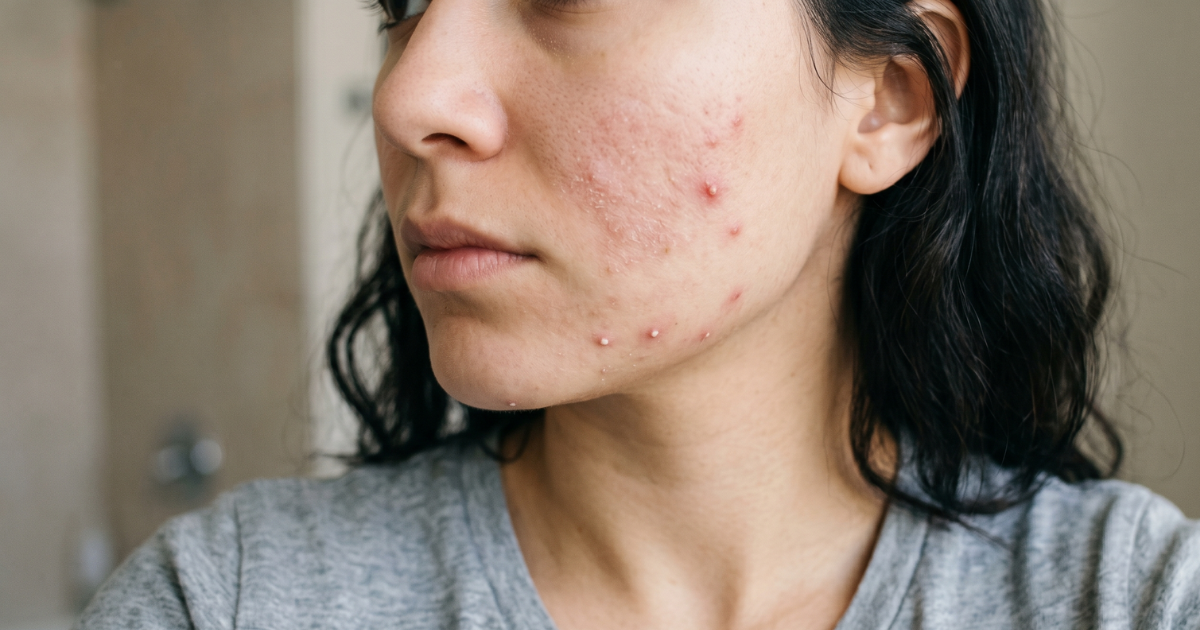
Table of Contents
Introduction What eczema really is, and why it can look like bumps Eczema or acne: how to tell the difference Can you have eczema and pimples at the same time? Why treating eczema like acne makes it worse How to calm eczema-prone skin How to handle pimples without stripping your skin barrier Simple habits that help both at home When to see a healthcare professional The TakeawayIntroduction
You catch your reflection, spot a cluster of raised bumps sitting in the middle of a red, flaking patch, and your mind jumps straight to one conclusion, that these must be pimples.
So you reach for the strongest thing in the cabinet, the acne wash that promises to scrub the breakout away, and you go at the area twice a day with everything you have.
Here is what almost no one tells you. The bumps that show up on eczema prone skin are often a different problem than the breakouts oily skin gets, and eczema pimples rarely respond to the harsh, drying products built for true acne.
When you treat the two as one and the same, you end up scrubbing and stripping skin that was already struggling to hold itself together.
The result is a quiet pile-up. The flare gets angrier, the protective barrier gets thinner, and the very bumps you were trying to clear settle in and stay longer.
But you do not have to keep guessing at the mirror. Once you understand what each one is, why they can turn up on the same face, and what each one needs, the whole picture gets a lot calmer. Let's walk through it.
What eczema really is, and why it can look like bumps
Eczema is not a breakout. It is a barrier problem. Your skin has an outer layer that holds moisture in and keeps irritants out, and with eczema that layer is weakened, so it loses water fast and overreacts to things that would not bother calmer skin.
Soap, wool, cold air, fragrance, even a stressful week can set it off.
That weakness shows up as itchy eczema skin, dryness, and patches of inflamed skin that can look rough or leathery where you have been scratching.
It also shows up as small raised bumps, and this is where the confusion starts. One form, sometimes called papular eczema, brings tiny red itchy bumps that look so much like a breakout you would swear they were pimples.
They are not pimples at all. They are the surface sign of skin barrier damage and the inflammation sitting underneath it.
Reading them as ordinary acne is the first wrong turn, because the products you would grab for a breakout are usually the last thing this kind of skin wants.

Eczema or acne: how to tell the difference
The quickest way to tell them apart is to notice how the skin feels, not only how it looks.
Eczema tends to itch, sometimes fiercely, and it leaves skin dry, tight, and flaky. Run your fingers over it and you often feel dry irritated skin, the kind of texture that begs for moisture.
Acne feels different. It is bumpy in specific spots, with clogged pores, blackheads, or whiteheads, and the skin around it often looks and feels oily rather than parched.
Pattern is another giveaway. Eczema usually spreads across a patch, while pimples tend to sit as separate spots or clusters.
Then there is the moisturiser test, which is surprisingly reliable. Smooth a rich moisturiser over the area, and if it calms the rough itchy skin and the redness eases, you are most likely dealing with eczema. If it seems to feed more breakouts, acne is the more likely answer.
Can you have eczema and pimples at the same time?
Yes, you can have both, and plenty of women do. The catch is that they usually set up camp in different places.
Because eczema runs dry and acne runs oily, the two rarely share the exact same spot. What you see more often is eczema pimples and true breakouts living on the same face but in separate zones.
You might have an eczema rash on your cheeks, eyelids, hands, or the inside of your elbows, while the oilier T-zone across your nose and forehead breaks out the way it always has. Acne also favours the chest, back, and shoulders, where oil glands are busiest.
So a single face can carry irritated skin patches that are dry and itchy in one area and genuine clogged-pore breakouts in another. That mix is exactly why a one-size-fits-all routine tends to fall short. Each zone is asking for something different.
Why treating eczema like acne makes it worse
This is the part worth slowing down for, because it is where most skin gets hurt. Acne products are built to cut oil and push skin cells to shed faster.
Many lean on strong actives and a drying base, which can suit oily, breakout-prone skin on a good day. Now picture that same product on an eczema patch, where the barrier is already cracked and thirsty.
You are not clearing anything, you are stripping a wall that was barely standing, and that deepens the skin barrier damage that started the trouble.
What follows is predictable. The skin loses even more moisture, the itch climbs, and eczema flare ups that might have settled instead dig in.
You scratch, the red itchy bumps multiply, and the cycle feeds itself. Harsh scrubbing does the same thing through friction alone. The kinder and far more effective move is to stop fighting eczema like a breakout and start giving it what calm, intact skin is made of.
How to calm eczema-prone skin
Calming this kind of skin is less about attacking it and more about protecting it. Keep your cleanser gentle, wash with lukewarm water rather than hot, and moisturise while your skin is still damp so you seal in water instead of letting it escape.
Steer clear of fragrance and known triggers, and resist the urge to scratch, however loud the itch gets.
For daily comfort on eczema prone skin, a gentle, fragrance-free salve can give the barrier something to work with.
Universal Flare Care, Essential Oil-Free was made with this in mind, offering daily skin support that is well tolerated when used as directed, gentle enough for sensitive and broken skin, and suitable during pregnancy and breastfeeding.
Many customers in our community report that it helps soothe dry irritated skin and brings comfort to tender, flaking areas. Results vary from person to person.
Whatever you choose, patch test it on a small area first, and check with a healthcare professional if you are unsure.
How to handle pimples without stripping your skin barrier
When the bumps really are pimples, on skin that is clear rather than mid-flare, you can be a little more targeted, as long as you do not bulldoze the barrier in the process.
Caring for true breakouts is not the same as caring for itchy eczema skin, where protection has to come first.
With genuine acne you can cleanse consistently without scrubbing, reach for non-comedogenic formulas that will not clog pores, and keep moisturising, because even oily skin makes more oil when you dry it out.
For pimple-prone areas that are clear and not currently flaring, Thyme & Tea Tree Flare Care offers daily skin support for skin that needs a little extra.
A few things matter with this one. It is for adults, and teenagers can use it when an adult buys it and supervises.
Keep it for external use only, away from the eyes, and out of reach of children. It is not for use during pregnancy or breastfeeding, and it should not go on broken, irritated, or inflamed skin, which is exactly why it is not the answer for an active eczema patch.
Avoid sun exposure on treated areas, and speak with a healthcare professional first if you have asthma or epilepsy.
Many customers in our community report calmer-looking skin with regular use. Results vary from person to person, so always patch test before you commit.

Simple habits that help both at home
A few everyday habits ease both conditions without you having to pick a side.
- Wash with lukewarm water and a gentle cleanser rather than a harsh scrub, and moisturise while your skin is still damp to lock in water.
- Pay attention to what sets you off, since stress, heat, certain fabrics, and strong fragrances are common triggers behind eczema flare-ups, as pore-clogging products often sit behind breakouts.
- Try not to pick, pop, or scratch, because broken bumps invite infection and leave marks.
- And whenever you bring in something new, patch test it on a small area for a day or two before you trust it on irritated skin patches.
None of this is dramatic. It is the steady, unglamorous care that keeps skin on a more even keel between flares.
When to see a healthcare professional
Home care goes a long way, but some situations call for a professional eye.
If you cannot tell eczema from acne, if the skin is painful, spreading, or severe, if it is stealing your sleep or chipping at your confidence, or if the products you have tried are making things worse, it is worth booking an appointment.
A dermatologist or doctor can tell the two apart, rule out look-alike conditions, and help you build a plan that fits your skin rather than fighting it.
There is no prize for struggling through stubborn, rough itchy skin alone, and getting the right answer early saves you weeks of trial and error. If symptoms persist, consult a healthcare professional.
The Takeaway
Eczema bumps and pimples can share the same face, sometimes the same week, but they are not the same problem and they do not want the same care.
Eczema pimples sit on a damaged barrier and need gentle protection, while true breakouts need clean, non-clogging treatment on skin that is clear and calm.
Match the care to what is in front of you. Protect and soothe eczema prone skin, treat genuine pimples gently and only on intact skin, patch test anything new, and reach out to a healthcare professional if your skin stays unhappy.
Read your skin honestly, give each zone what it asks for, and you take back far more control than any one-product shortcut ever promised.
