




Published 16 Apr 2026
What Is Perioral Dermatitis?
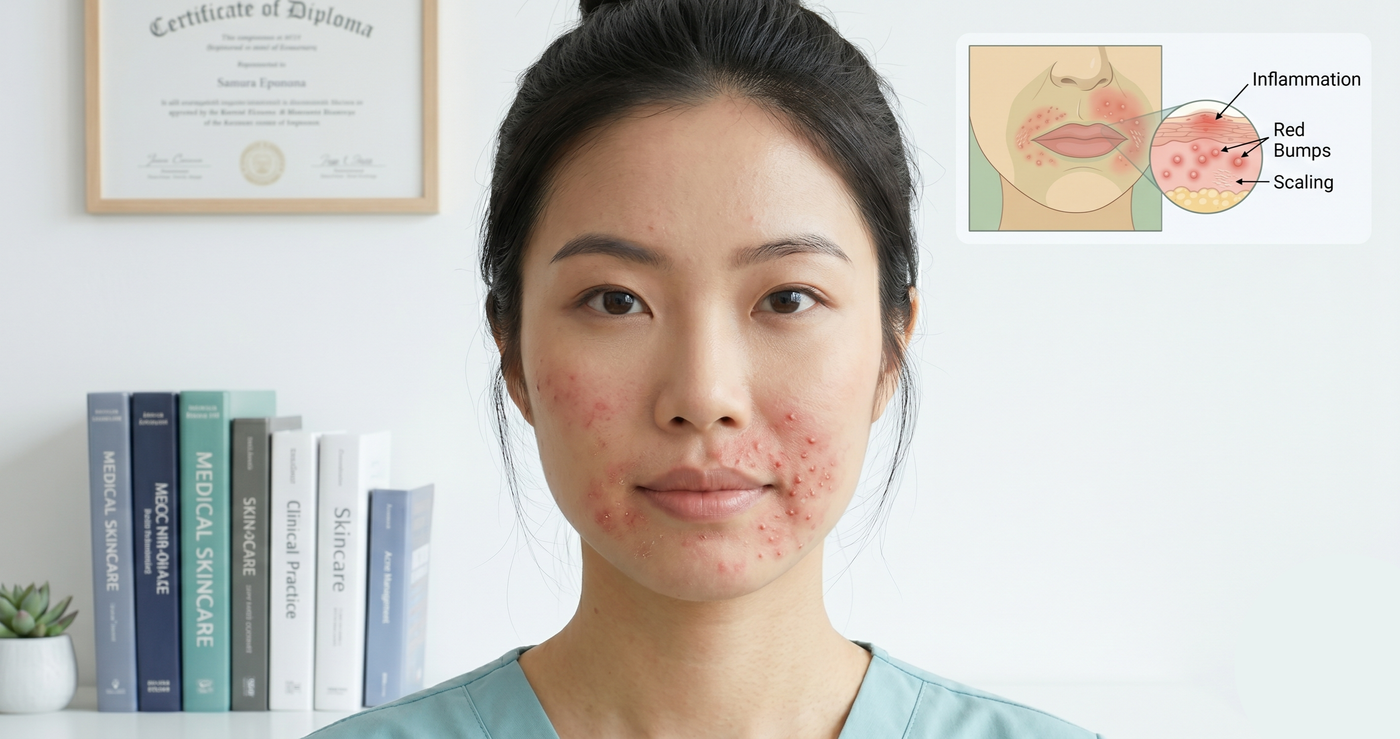
Table of Contents
Introduction What Does Perioral Dermatitis Look Like? What Is Perioral Dermatitis Caused By? Best Treatment For Perioral Dermatitis Preventing Future Flare-Ups The TakeawayIntroduction
Have you noticed small bumps forming around your mouth that just won't go away? You're not imagining things.
Here's something dermatologists see all the time but many people don't realize… what is perioral dermatitis often gets mistaken for acne, leading people to use treatments that actually make it worse.
You try your usual spot treatments, maybe even stronger acne medications only to watch the rash spread or intensify.
Well, you're in good company. Perioral dermatitis affects thousands of people, particularly women ages 20-45, and the frustrating part?
Most conventional treatments focus on symptoms, not the underlying cause. Let me walk you through it.
What Does Perioral Dermatitis Look Like?
Perioral dermatitis is a facial rash that typically appears around the mouth, nose, or eyes. The name itself gives you a clue... "peri" means "around" and "oral" refers to the mouth.
It mimics acne and here's the catch… acne treatments often make perioral dermatitis worse. Because what's happening beneath your skin is fundamentally different from a typical breakout.
Why does recognition matter? The sooner you identify it correctly, the faster you can address it properly and avoid the weeks or months of frustration that come from using the wrong approach.
Common Signs of Perioral Dermatitis:
- Small red or flesh-colored bumps clustered around your mouth, nose, or chin
- Dry, flaky patches that feel tight or uncomfortable
- Mild burning or itching sensation, especially after applying products
- A distinctive clear zone... normal skin... right at the border of your lips
- Redness that seems to flare up after using certain skincare products

What Is Perioral Dermatitis Caused By?
See, most people don't get to know that perioral dermatitis isn't all about bacteria or clogged pores like acne. It's about barrier disruption.
Your skin was built to have a protective barrier that absorbs moisture and keeps the irritants out. When this barrier gets compromised, inflammation follows.
And unlike acne, which stems from excess oil and bacterial overgrowth, perioral dermatitis is triggered by things that damage this delicate barrier.
Common triggers include topical steroids. Yes, the irony is real... medications meant to calm inflammation can actually trigger perioral dermatitis, especially when used long-term around the mouth area.
Heavy, occlusive moisturizers can trap heat and irritation against the skin. Fluorinated toothpaste, which many people use daily without a second thought, has been linked to flare-ups.
Face masks brought a surge in cases during the pandemic. The constant friction and trapped moisture created the perfect storm for barrier disruption. And harsh cleansers being responsible for stripping the skin's natural protection that weakens it's defenses over time.
All of these have one thing in common: they compromise your skin's natural barrier function and understanding what is perioral dermatitis caused by helps you avoid the very things that keep the cycle going.
Why Conventional Treatments Often Fall Short
Maybe you tried acne spot treatments first. When that didn't work, you might have used a stronger moisturizer, thinking dry skin was the problem. And still no relief?
Well, the truth of the matter is traditional acne treatments only target oil and the bacteria responsible for the acne... and that's why it doesn't work.
Salicylic acid, benzoyl peroxide, retinoids... these are designed to penetrate pores, dry out oil, and kill acne-causing bacteria. But that's not what's happening with perioral dermatitis.
Your skin barrier is already compromised. Harsh actives just damage it further. Heavy moisturizers can trap irritation and heat, making inflammation worse instead of better.
What your skin actually needs is barrier repair and gentle, antibacterial support... not harsh actives or heavy occlusives. This revelation changes everything about how you approach treatment.
The Science Of Healing: What Your Skin Actually Needs
Understanding how skin heals from perioral dermatitis changes everything. Instead of attacking symptoms, you need to support your skin's natural healing process through three distinct stages.
Stage 1: Immediate Relief
Inflamed skin needs soothing compounds that calm on contact. When your skin is burning or itching, your first priority is comfort. Natural ingredients like egg yolk extract provide this relief without adding irritation. It's like giving your skin with the ability to heal itself on autopilot instead of being in constant defense mode.
Stage 2: Address the Inflammation
After immediate relief is in place, you need gentle antibacterial support to tackle the underlying irritation. That's where Propolis comes in... it is a bee-derived compound which has been studied deeply for its wound healing properties. Compared to over-the-counter options, it supports your skin's natural defenses while calming inflammation at the source.
Stage 3: Protect the Barrier
Now while the healing process is ongoing, your skin needs a breathable protective layer. This is crucial. Natural waxes and oils create this seal without trapping irritants or suffocating the skin. They allow healing to continue underneath while preventing new irritants from setting you back.
This is the approach that perioral dermatitis treatment home remedies should follow, and it's exactly what natural medicine has understood for centuries. You have to work with your skin, not against it.
Perioral Dermatitis Treatment Home Remedies: A Natural Approach
The good news? You don't necessarily need harsh prescriptions to support your skin's healing. In fact, simplification is often the most powerful first step.
Less is almost always more when your skin barrier is compromised. Every product you apply is a potential irritant, so paring down to the essentials gives your skin breathing room.
The natural approach follows a simple principle: gentle cleansing, antibacterial support, and barrier protection. That's it.
You don't need 20-min routines or layering multiple actives for efficiency or going through complicated protocols like you need to suffer before you see results.
Natural Steps to Support Healing:
- Immediately stop topical steroids and any products that sting or burn
- Simplify to fragrance-free, gentle cleansing or just lukewarm water
- Look for natural antibacterial ingredients like propolis or honey-based formulas
- Support moisture balance with lightweight, non-comedogenic oils like grapeseed or olive
- Avoid makeup and potential irritants during active flare-ups
- Consider eliminating common dietary triggers like dairy or high-sugar foods temporarily
These perioral dermatitis home remedy treatments work because they remove obstacles to healing rather than adding more variables into the mix.
Dry Skin And Perioral Dermatitis: Understanding The Connection
Here's why dry skin perioral dermatitis occurs concurrently most times.
When your skin barrier is damaged, it loses its ability to hold moisture which leads to transepidermal water loss... another way of saying moisture escapes too quickly.
Due to this loss, your skin becomes drier and more sensitive. Which leads to more irritation from everyday things like weather, fabric or even water.
Which causes more inflammation... leading to further damage on the barrier and the cycle continues.
This is why aggressive "solutions" backfire. Stripping cleansers, harsh exfoliants and drying spot treatments just accelerate this downward spiral. Your skin gets drier, more inflamed, and more reactive with each use.
The solution? Gentle, barrier-supportive care that works with your skin's natural healing process instead of fighting against it.
Best Treatment For Perioral Dermatitis
So yes, dermatologists may be able to prescribe oral antibiotics or topical medications that can help.
Even prescription options like metronidazole cream or low-dose doxycycline have their place in the mix, especially in severe cases.
But what if you want to improve your skin's ability to heal with natural, clinically-studied ingredients?
Well, what you will be needing is a formula that covers all the three healing stages we discussed earlier: immediate relief, antibacterial support, and barrier protection. Not just one or two... all three working together.
This is what separates effective natural treatment from just hoping things get better on their own. The best treatment for perioral dermatitis works at every level your skin needs.
Perioral Dermatitis Natural Healing: Our Solution
At MyMagicHealer, we developed Universal Flare Care, using this exact 3-stage approach to support perioral dermatitis natural healing as a guide.
It's a surgeon-developed formula that combines clinically-studied natural ingredients that were designed specifically for painful, inflamed skin conditions.
We made sure every component was chosen based on research and clinical observations about how skin actually heals.
Compared to other brands, we didn't just gather popular natural ingredients, mix them up and hoped for the best.
The Mechanism: Why It Works
Propolis Extract
Naturally, bees use the material propolis to protect their hives from infection and environmental threats. And after extensive research was done, we found out that propolis supports the wound healing process and provides a natural antibacterial protection without the harsh effects of synthetic compounds.
That's why we chose the pharmaceutical-grade propolis for its clinically-documented ability to calm inflammation. Because multiple studies have shown that propolis helps to reduce redness, supports tissue repair and creates an environment that supports the skin's natural healing process.
It's one of nature's most powerful antibacterial ingredients, and it's gentle enough for the most sensitive perioral skin.
Egg Yolk Extract
This might surprise you, but egg yolk extract has been studied for its ability to accelerate tissue recovery and skin regeneration. It contains phospholipids and proteins that closely mimic the natural components of healthy skin.
It provides immediate soothing relief while supporting long-term healing. Many of our customers report feeling the calming effect within minutes of application, while the deeper healing continues over days and weeks.
Raw Beeswax
Beeswax creates a breathable, protective barrier that locks in moisture without suffocating your skin. Which is important for the perioral area where skin is thinner and more sensitive than other parts of your face.
Compared to petroleum-based occlusives that can trap heat and irritation, beeswax gives your skin the ability to breathe while still protecting against environmental stressors. It's what determines whether your skin seals in healing or seals in problems.
Lavender Essential Oil (0.5%)
We use a precise, therapeutic dose, not fragrance-level lavender. At 0.5%, lavender essential oil provides just enough of its anti-inflammatory and calming properties without risking irritation from higher concentrations.
Research shows lavender helps calm redness and reduce the sensation of irritation, making it a valuable addition to a healing formula when used at the right percentage.
Clinical Support:
In our clinical observations, many customers in our community report visibly calmer skin within just a few days of consistent use of Universal Flare Care.
Trusted by thousands of customers for their most sensitive skin concerns, it's become a go-to solution for natural perioral dermatitis relief. One customer shared that after years of dealing with painful flare-ups, Universal Flare Care finally gave her "the comfort of living in my own skin."
How to Use Universal Flare Care:
Application is simple.
Apply a thin layer to clean, dry skin 2-3 times daily. The formula while being gentle enough for the delicate perioral area, it also delivers real results.
Many customers report feeling a difference early in their use, with the soothing effect building over consistent application
You can learn more about how Universal Flare Care works and read more customer experiences here.

Preventing Future Flare-Ups
Once your skin has healed, prevention becomes your focus. Keep your routine minimal and gentle.
Your skin will thank you for not overwhelming it with layers of products, each introducing new potential irritants.
Once you identify your personal triggers, avoid them consistently. This might mean switching toothpaste, retiring that heavy night cream or being more selective about face masks.
Support your skin barrier daily with natural, non-irritating ingredients. Think of it as maintenance... you're investing in your skin's long-term health, not just managing current symptoms.
Listen to your skin. If something stings, burns, or makes redness worse, stop using it immediately. Your skin is communicating with you... pay attention.
When to Consult a Dermatologist
See a healthcare provider if the rash persists beyond 2-3 weeks despite gentle, natural care.
If you experience severe pain, rapid spreading, or signs of infection like warmth, increasing redness, or pus, professional evaluation is important.
A dermatologist can rule out other conditions that may look similar, such as rosacea, seborrheic dermatitis, or contact dermatitis. Getting the right diagnosis ensures you're treating the right condition.
Natural approaches like Universal Flare Care can often work alongside medical treatment for best results. Many dermatologists appreciate when patients use gentle, non-irritating supportive care in combination with prescription options.
The Takeaway
Perioral dermatitis responds best when you understand what your skin actually needs… gentle barrier support, natural antibacterial action, and protective healing.
You don't have to live with the discomfort, redness, or frustration.
With the right natural approach, like Universal Flare Care... you can improve your skin's natural ability to heal and feel comfortable again because you deserve to feel at home in your own skin.

