




Published 16 Apr 2026
What Is a Bartholin Cyst?
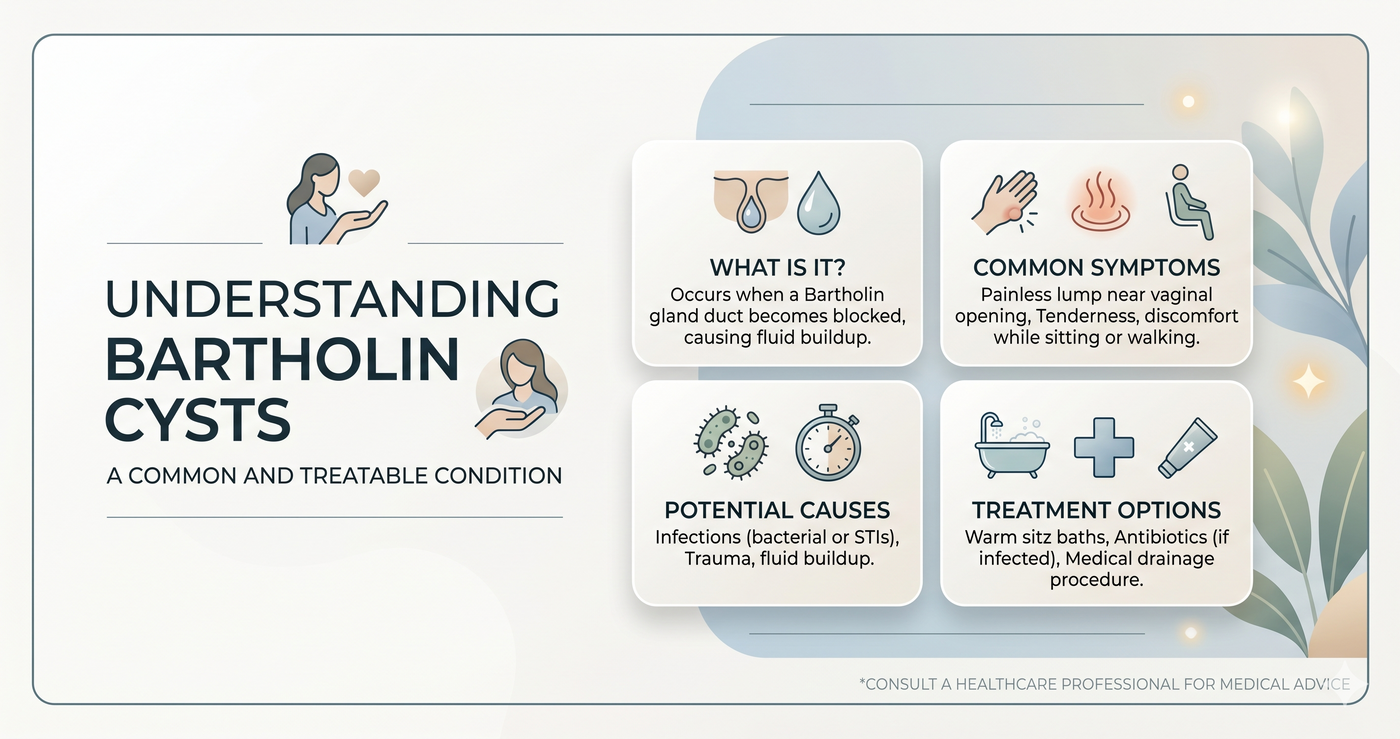
Table of Contents
Introduction How Does a Bartholin Cyst Form? What Does a Bartholin Cyst Look Like? What Causes a Bartholin Cyst? What Are the Symptoms of a Bartholin Cyst? What to Do When You First Notice a Bartholin Cyst Natural Remedies for Vaginal Cyst Relief How Universal Flare Care Helps Your Skin Heal The TakeawayIntroduction
A bartholin cyst is not a sign that something has gone seriously wrong with your body.
That lump you have found, tender and unfamiliar in one of the most personal places imaginable, is one of the most common things that can happen to a woman's skin in her lifetime.
And in most cases, it is completely manageable without panic, without surgery, and without being made to feel like your body has betrayed you.
The fear that comes with it is understandable. You noticed something different, something that wasn't there before, and your mind went straight to the worst possible place.
That is a completely normal reaction. But here is what you actually need to know right now: a bartholin cyst what is it really comes down to a simple blockage. Nothing more. A tiny gland gets clogged, fluid builds up, and a soft lump forms. That is the whole story.
Millions of women deal with this every year and most never even need to see the inside of a clinic. Your body is not broken. You just need the right amount of information to know what is happening and what to do about it.
How Does a Bartholin Cyst Form?
You have two Bartholin glands, one sitting on either side of the vaginal opening, each about the size of a pea.
Their job is simple and important: they release small amounts of fluid to keep the area naturally lubricated, especially during sex.
Most women never think about these glands at all because they do their job quietly, without any fuss.
When the tiny duct that carries that fluid outward gets blocked, the fluid has nowhere to go. Think of it like a drain that has been sealed shut from the outside.
The fluid keeps being produced, keeps building up, and eventually forms a soft, rounded cyst right where the blockage is sitting. That is a bartholin cyst what is it in plain terms: a backed-up gland that has swelled into a lump.
This type of vaginal cyst is one of the most common cysts that can form around the vaginal area. It is not cancerous in the vast majority of cases. It is not contagious. And your body often resolves a small one entirely on its own, without any treatment at all.
What Does a Bartholin Cyst Look Like?

If you are wondering about bartholin cyst what does it look like, picture a smooth, rounded bump sitting just under the skin on one side of the vaginal opening.
It tends to feel soft when you press it gently, similar to a small water balloon sitting just beneath the surface. Most cysts appear on one side only, not both.
Size varies significantly. A cyst can be as small as a pea when it first appears and may grow to the size of a golf ball if left untreated for a while. The skin over a small, uninfected cyst often looks completely normal.
You might not even notice any visible difference. It is only when you feel the area that the lump becomes obvious.
An infected cyst tells a very different story visually. The skin around it becomes red and warm to the touch. The area may look visibly swollen and angry. In some cases you will notice fluid beginning to push through the surface.
That shift in appearance from soft and skin-toned to red, hot, and swollen is the clearest signal that something more than a simple blockage is happening.
What Causes a Bartholin Cyst?
The first thing to understand is that this is not something you caused. There is no habit, hygiene routine, or choice you made that created this blockage.
A Bartholin cyst can form without warning, in women who take exceptional care of their bodies, just as easily as in those who don't. It is not a reflection of cleanliness or health.
What actually causes the duct to block is a short list. Minor injury or friction in the area can trigger swelling that closes the duct off.
A bacterial infection like E. coli can cause enough inflammation to block it. A sexually transmitted infection such as chlamydia or gonorrhea can do the same.
For women who have recently given birth, particularly those who had an episiotomy, the trauma of childbirth itself can cause a blockage to form.
Bartholin cysts most often appear in women between their 20s and 40s, when the glands are most active. But they are not exclusive to that window.
If you are outside that age range and are dealing with a growth in this area, it still warrants the same attention and care.

What Are the Symptoms of a Bartholin Cyst?
A small Bartholin cyst is often completely silent. You may discover it by chance and feel nothing else. No pain, no disruption to daily life, no discomfort at all.
When the cyst is small and not infected, it can sit there for weeks without demanding any attention.
An infected cyst is a very different experience. Once bacteria take hold inside the blocked gland, the symptoms escalate quickly.
Here is what to watch for:
- Noticeable tenderness or throbbing near the vaginal opening
- Redness, warmth or visible swelling around the lump
- Fever or chills
- Pain when sitting, walking or during sex
- Visible drainage or fluid leaking from the cyst
If those signs are showing, do not wait it out hoping things will settle on their own. An infected Bartholin cyst can progress into an abscess, and the sooner you respond to those symptoms, the simpler the path through them.
What to Do When You First Notice a Bartholin Cyst
Bartholin cyst what to do starts with a calm, clear assessment. If the lump is small, not painful, and showing no signs of infection, the most reasonable first step is to give your body a chance to handle it.
Small cysts often drain and heal on their own within a few weeks without any intervention at all.
In the meantime, warm sitz baths are your most effective at-home tool. Fill a shallow bath or basin with a few inches of comfortably warm water and soak for 10 to 20 minutes, three or four times a day.
The warmth encourages the cyst to soften and drain naturally. Warm compresses held gently against the area work the same way and can offer real relief from tenderness.
You need to see a doctor when the cyst grows rapidly over a short period, when fever or chills develop, when the pain becomes severe enough to affect how you move, or when cysts keep returning in the same spot.
Recurrent cysts are a signal that the duct needs more than a temporary solution. Your doctor can discuss options from drainage procedures to more lasting treatments.
None of that is something to fear. It is simply information that helps you act.
Natural Remedies for Vaginal Cyst Relief
When it comes to natural remedies for vaginal cyst care, the most powerful things you can do are also the simplest.
Supporting your body's ability to heal itself, keeping the area calm and clean, and avoiding anything that creates additional irritation goes a long way. This is not about doing more. It is about doing the right things consistently.
Many women also look for a gentle bartholin cyst ointment to support the skin around the area as it heals.
The skin in this region is delicate, reactive, and can become raw or inflamed quickly, especially if a cyst has already been draining or if the area has been irritated by clothing or friction. What you apply there matters enormously.
These daily habits make a real difference to your recovery and your comfort:
- Soak in a few inches of warm water for 10 to 20 minutes, a few times a day
- Apply a warm compress directly to the area to ease tenderness
- Wear loose, breathable underwear — nothing that traps heat or friction against the skin
- Wash with warm water only, no harsh soaps, no scented products near the area
- Wipe front to back every time to prevent bacteria from spreading
For the skin itself, Universal Flare Care is a gentle daily topical built specifically for reactive, inflamed, and sensitive skin.
It supports the skin barrier through every stage of a flare-up, keeping the area protected and calm while your body works through the healing process.

How Universal Flare Care Helps Your Skin Heal
You have been through something uncomfortable and unsettling. The skin around a bartholin cyst has experienced inflammation, pressure, and in many cases, the kind of raw irritation that makes even sitting still feel difficult.
That skin needs more than time. It needs targeted, daily support from something gentle enough to use in such a sensitive area and effective enough to actually make a visible difference.
That is exactly what Universal Flare Care was built to do.
This is a surgeon-passed-down formula that has been trusted for generations, now trusted by over 500,000 customers who needed something that worked on reactive, painful skin without the harshness of conventional topicals.
Many customers in our community report calmer, more comfortable skin within just a few days of consistent use. Results vary from person to person.
The formula works because every ingredient has a specific job. Propolis delivers antibacterial protection, keeping the environment around inflamed skin from worsening.
Egg Yolk Extract nourishes the skin barrier at a deep level, supporting the repair that needs to happen underneath the surface.
Beeswax seals and protects, holding moisture in and keeping irritants out. And Lavender at just 0.5% is gentle enough to use directly on active flare-ups while still supporting the healing process.
The goal is not just to get through this cyst. The goal is to get your skin to a place where a flare-up does not own your day, your comfort, or your confidence.
That is possible and it starts with giving your skin the right care at the right time.
The Takeaway
A Bartholin cyst is a fluid-filled lump that forms when one of the tiny glands near your vaginal opening gets blocked.
It is common, it is manageable, and in most cases your body will handle a small, uninfected cyst entirely on its own with a little warmth and patience.
If the cyst is small and painless, warm sitz baths and gentle daily care are your first line of response.
If it becomes infected, grows rapidly, causes a fever, or keeps returning, that is your signal to get professional support. Neither path is something to be afraid of.
You came here with a question and probably a fair amount of fear. You leave with clarity, a practical path forward, and the understanding that your body is not failing you.
It is simply asking for a little support. Give it that, and you will be on the other side of this sooner than you think.

