




Published 20 Apr 2026
Understanding the Differences Between Hidradenitis Suppurativa and Folliculitis
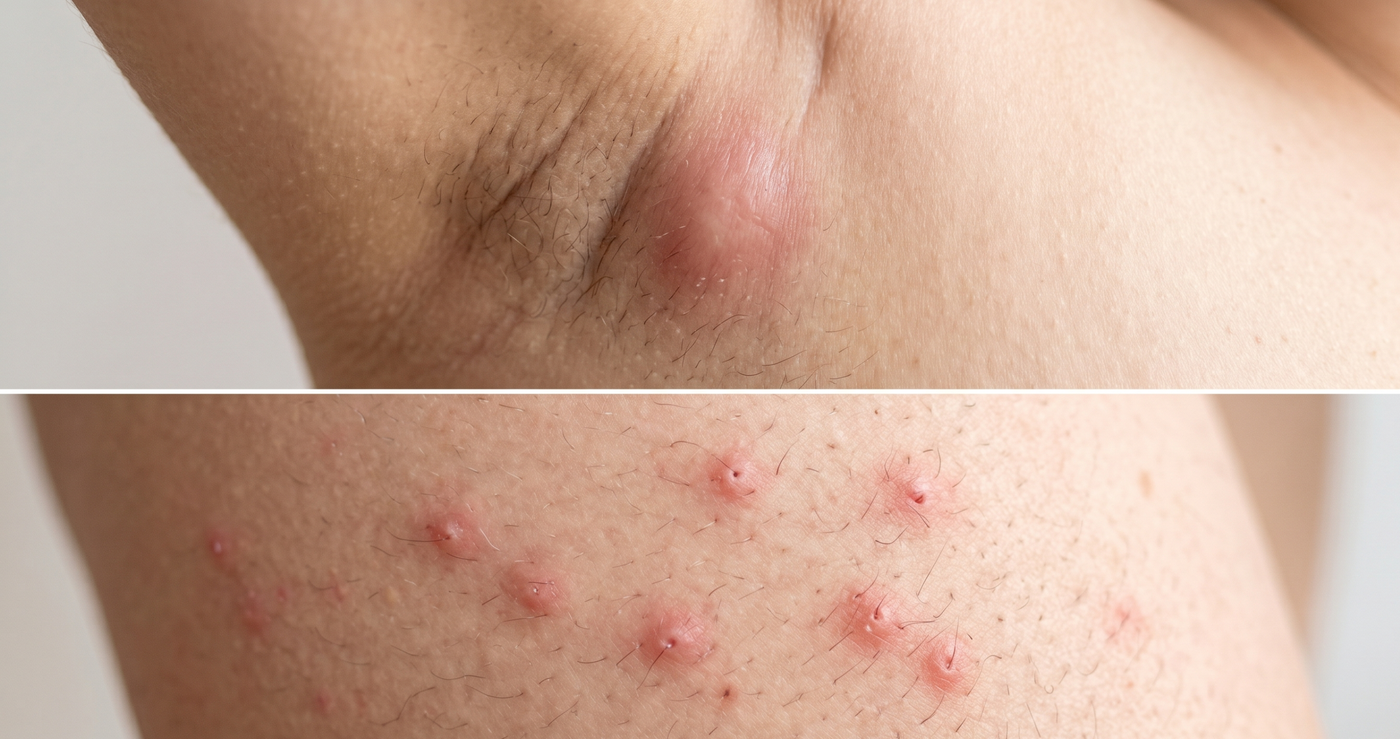
Table of Contents
Introduction What Is HS? What Is Hidradenitis Suppurativa Caused By? What Does HS Look Like? What Is Folliculitis? What Causes a Hair Follicle Infection? What Does Folliculitis Look Like? What Is the Difference Between HS and Folliculitis? How Is HS Treated vs. Folliculitis? What Helps Hidradenitis Suppurativa Day to Day? When Should You See a Doctor for HS or Folliculitis? The TakeawayIntroduction
If you've been searching what is HS or what is folliculitis, chances are something keeps showing up on your skin that isn't responding the way it should.
Just because both conditions involve bumps around hair follicles doesn’t mean they’re the same. That's where the similarity ends.
HS is a chronic, autoinflammatory condition that runs deep and returns in the same spots. Folliculitis, on the other hand, is usually a surface-level reaction with a clear trigger... and in most cases, it clears.
Getting these two confused isn't just frustrating. It means you’re not sure what proper care to give your skin.
Keep on reading as this article breaks down exactly how to tell them apart and what to use in each condition.

What Is HS?
Hidradenitis suppurativa is a chronic, autoinflammatory skin condition. It causes painful nodules, abscesses and open sores to develop under the skin... most often in areas where skin rubs against skin. Think armpits, groin, under the breasts and between the buttocks.
HS is not a surface issue. It runs deeper than most people realise, and it has a pattern: the same spots flare up again and again. In more advanced stages, tunnels can form underneath the skin connecting different lesions, and significant scarring follows.
HS can be difficult to diagnose because it doesn't always look the way people expect. It gets mistaken for recurring infections, cysts, or ingrown hairs... sometimes for years.
That's years of treating the wrong condition, watching the same bumps return and wondering why nothing is working.
What Is Hidradenitis Suppurativa Caused By?
HS is not caused by poor hygiene. It is not contagious. This matters, because the stigma around it runs deep and the community has carried it long enough.
What actually contributes to HS involves a combination of factors: genetics, hormonal shifts, immune system dysfunction, excess body weight, and smoking.
The hair follicles in skin fold areas become blocked, triggering a cycle of inflammation that the body struggles to resolve on its own.
What Does HS Look Like?
In its early stages, HS can look like regular pimples or blackheads in overlapping areas. As it progresses, it develops into big lumps and abscesses that are painful to the touch.
When opened, you can see fluid or pus coming out of them, and healing is often slow.
What makes HS distinct visually is the fact that it appears back-to-back in the same location and, in more advanced cases, it could lead to the formation of sinus tracts... tunnels that connect lesions beneath the skin surface.

What Is Folliculitis?
It is an inflammation of the hair follicles, most commonly caused by a bacterial or fungal infection.
Unlike HS, folliculitis tends to be superficial. It can appear almost anywhere on the body, often at random, and it frequently clears on its own with basic care.
It's more of an event than a condition. A specific trigger leads to an outbreak, the skin responds, and with the right support it resolves.
So when next you're thinking, what is Folliculitis? Just remember it is that flare that doesn't carry the chronic, recurring nature that defines HS.
What Causes a Hair Follicle Infection?
The most common cause of a hair follicle infection is Staphylococcus bacteria, though fungi, viruses and even tiny mites can be responsible.
What triggers it is usually something external: shaving friction, time in a hot tub, tight clothing rubbing against the skin, or excessive sweating. Sharing towels, razors, or clothing with someone who has folliculitis can also spread it. Addressing the source usually stops the cycle.
What Does Folliculitis Look Like?
What does folliculitis look like? Small red bumps or white-headed pimples clustered around hair follicles are the clearest sign.
The area may itch or feel tender. In more severe cases, bumps can swell into larger boils or blister and crust over.
It most commonly appears on the face, scalp, arms, legs, and back... areas that are regularly shaved, exposed to friction, or prone to sweating. The location tends to be more random and scattered than HS.

What Is the Difference Between HS and Folliculitis?
On the surface, both conditions involve bumps around hair follicles. But the similarities stop there. Here's how they actually compare:

The clearest flag for HS is this: if a lesion heals and then returns in the exact same spot, that is a pattern worth taking seriously. Folliculitis doesn't do that.
How Is HS Treated vs. Folliculitis?
Treatment for each condition follows a very different path.
For folliculitis:
- Mild cases often clear on their own with gentle cleansing and warm compresses
- Bacterial folliculitis responds to topical or oral antibiotics
- Fungal folliculitis requires antifungal treatment
- Avoiding shaving in affected areas, tight clothing, and hot tubs helps prevent recurrence
For HS:
- A dermatologist is essential… self-treating HS as a surface infection delays real progress
- Mild HS may be managed with topical or oral antibiotics and corticosteroid injections
- Moderate to severe HS may require biologics approved specifically for the condition
- Hormone therapy is an option where hormonal factors are involved
- Lifestyle adjustments help: loose cotton clothing, avoiding shaving inflamed areas, managing weight
- Daily topical support between flares protects the skin and reduces the intensity of each new episode
That last point matters more than most people expect. What you apply to your skin between flares is not separate from your care routine... it is part of it.
What Helps Hidradenitis Suppurativa Day to Day?
Prescription treatment handles the condition at a clinical level. But day to day, your skin still needs something gentle, natural, and reliable... something that works with your skin rather than adding more stress to it.

Universal Flare Care
Formulated for inflamed, painful, irritated skin during a flare. Rooted in a surgeon-passed-down formula, it uses propolis, lavender, egg yolk extract, and beeswax to calm, protect, and support the skin's natural recovery.
Works as a daily moisturiser or deeper healing support when used with the Gauze Method overnight. Many customers in our community report calmer, more comfortable skin within just a few days of consistent use. Learn more about Universal Flare Care here.
Thyme & Tea Tree Flare Care
Built for deeper, more stubborn flares. If you're dealing with HS closed spots, folliculitis-prone skin, ingrown hairs, or cysts that sit under the surface and resist clearing, this is where it helps.
Thyme brings healing support. Tea tree brings antimicrobial action. Customers report it "shrinks bumps," "calms redness," and is "great for ingrowns." Learn more about Thyme & Tea Tree Flare Care here.

When Should You See a Doctor for HS or Folliculitis?
For folliculitis, a visit to the doctor makes sense if bumps aren't clearing after a week of basic home care, if they're spreading, or if a fever develops. Most cases won't need more than that.
For HS, the guidance is different: go sooner rather than later. If you have lesions that keep returning in the same spot, if healing is slow, if you're seeing scarring, or if the pain is affecting how you move, dress, and live... those are signs that this needs proper attention.
HS caught early responds better to treatment. The years spent waiting are the real damage.
You deserve care that actually fits what your skin is going through. Understanding what you're dealing with is the first step toward getting it.
The Takeaway
Hidradenitis suppurativa and folliculitis can look alike on the surface. But they are two very different conditions with two very different paths forward.
Folliculitis is usually triggered by an infection. It tends to be shallow, scattered, and in most cases it clears on its own with basic care.
HS is chronic, autoinflammatory, and it will not resolve without proper attention. It returns in the same spots, it deepens over time, and the longer it goes unaddressed, the harder it becomes to manage.
If bumps keep coming back in the same fold areas... if healing is slow... if scarring is starting to form, that is your skin telling you something important. Don't spend another seven years waiting for answers.
In the meantime, your skin still needs daily support. Something gentle enough to use every day, strong enough to actually show up during a flare.
That is exactly what Flare Care was made for... whether you reach for the Purple bottle for everyday inflammation and pain, or the Green bottle for the deeper, more stubborn flares that won't budge.
Your skin deserves care that fits what it's actually going through. Now you know the difference. That's where it starts.

