




Published 18 May 2026
Understanding “Strawberry Skin” aka Keratosis Pilaris
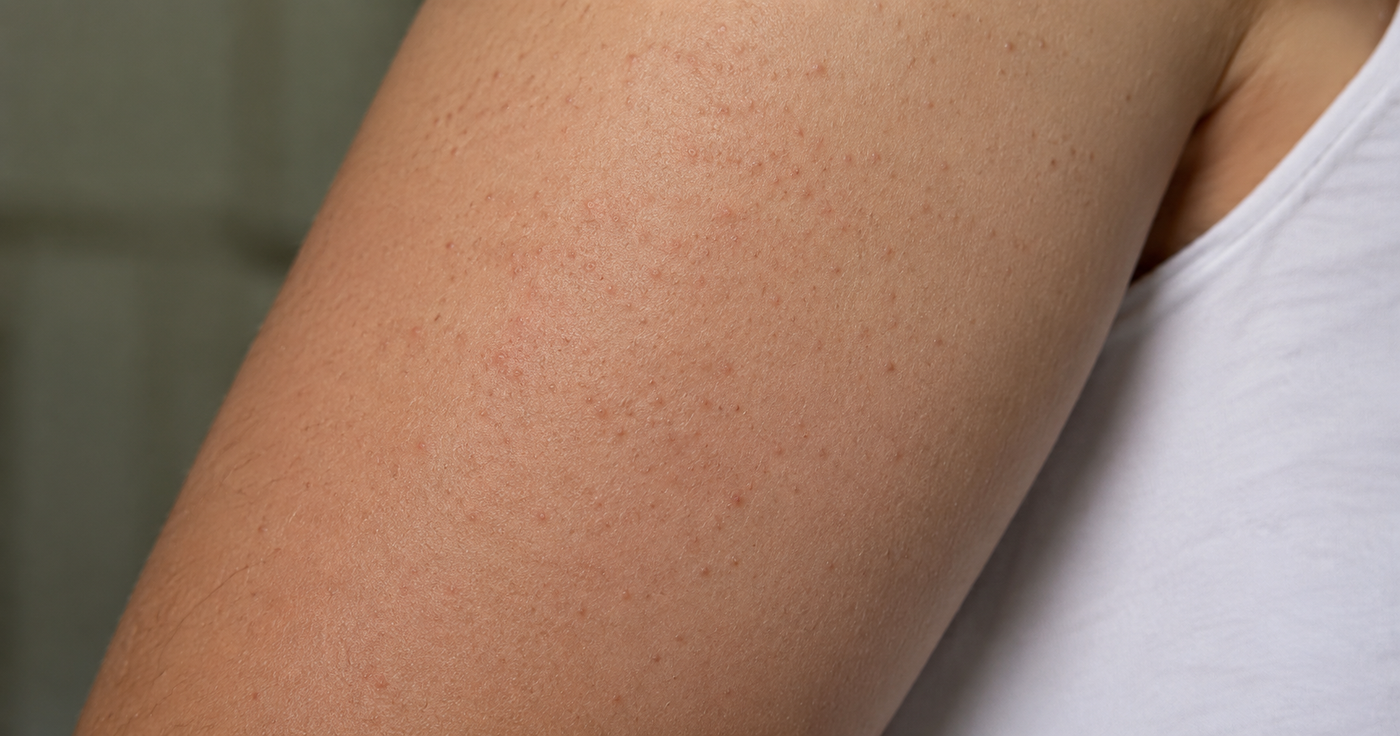
Table of Contents
Introduction What Keratosis Pilaris Actually Is Why Chicken Skin and Strawberry Skin Mean the Same Thing What Causes KP to Keep Coming Back Where the Bumps Show Up on the Body KP on Face vs KP on the Body Why Scrubbing Harder Makes the Bumps Worse What a Gentler KP Treatment Routine Looks Like Daily Skin Support with Thyme & Tea Tree Flare Care The TakeawayIntroduction
Those rough little bumps on the back of your arms aren't a sign that something is wrong with your skin... and you haven't been failing to scrub hard enough.
But here's what nobody is saying clearly enough. The advice you've been following... exfoliate harder, stronger acids, body brush before every shower, glycolic peel pads on top of everything else... isn't moving the bumps because it was never the right tool. The entire approach has been pointed at the wrong target.
You scrubbed your thighs raw with a loofah one weekend and woke up to skin redder, angrier, and bumpier than before.
You smoothed thick body lotion over your arms every night for three months and watched it disappear into the bumps, changing nothing.
This is what's actually happening on your skin. A protein called keratin is collecting around the opening of each tiny hair follicle and forming a small plug. That plug is what your fingertips are reading as a bump.
The skin you've been treating as broken is doing something completely normal... just slightly louder than usual. The condition has a name, keratosis pilaris, but the name isn't the point.
The point is that you can't sand away something that lives inside the follicle. The "scrub it off" advice has been recycled for decades and still hasn't moved this for most women, because the bumps were never sitting on top of the skin to be scraped away in the first place.
What Keratosis Pilaris Actually Is
Keratosis pilaris is a common skin pattern where keratin... the protein your body uses to build skin, hair, and nails... collects inside the hair follicle and forms a tiny plug.
You can't see the plug from the outside. What you see is the texture it creates... a small raised bump around each follicle, sometimes flesh-toned, sometimes pink, sometimes a touch redder on lighter skin or darker on deeper skin tones. Run your hand across the area and it feels like fine sandpaper.
This is not rare. Dermatologists describe it as one of the most common non-acne skin patterns women carry from their teen years into adulthood.
It is not contagious. It has nothing to do with hygiene. It is simply how some skin behaves at the follicle level, and it tends to soften with the right kind of daily care.
Why Chicken Skin and Strawberry Skin Mean the Same Thing
If you've gone down the rabbit hole of search results, you've noticed three names floating around for the same thing. The medical term is one.
The everyday nicknames are the other two, describing the same condition from different angles.
The two names come from how the bumps look on different parts of the body:
- The "chicken" name describes the texture, particularly on the upper arms. The clustered bumps look similar to the surface of a plucked chicken.
- The "strawberry" name describes the appearance after shaving, particularly on the legs. The dotted pattern of follicles, sometimes darker or shadowed, looks like the surface of a strawberry.
Different visual, same underlying mechanism. The keratin plug in the follicle is identical whether you're calling it chicken skin or strawberry skin.
What Causes KP to Keep Coming Back
The most studied of the keratosis pilaris causes is genetics. If a parent or sibling has the same texture, you likely inherited the same tendency. Skin wired to produce extra keratin around the follicle runs in families.
Beyond genetics, a few patterns make the bumps flare:
- Dry skin and dry weather. Cold months, indoor heating, hot showers, and underhydrated skin make the bumps look more pronounced.
- A history of eczema, sensitive skin, or asthma and hay fever. These coexist with the condition because they share an underlying skin-barrier sensitivity.
- Friction and shaving. Constantly shaving the same follicles, wearing tight gym leggings on damp skin, or repeatedly waxing irritated areas keeps the follicles inflamed.
- Aggressive skincare. Layering acids on dry skin or scrubbing with abrasive body scrubs strips the barrier and makes the bumps look worse.
The condition often softens with age and behaves best when the surrounding skin is calm, hydrated, and supported.
Where the Bumps Show Up on the Body
The bumps follow a predictable map. They cluster on areas where hair follicles are dense and the skin is regularly exposed to friction or shaving.
The most common spots are:
- The backs and sides of the upper arms
- The fronts and outsides of the thighs
- The buttocks
- The lower back
- The lower legs, especially after shaving
When the bumps appear on shaved legs, the dotted pattern reads as strawberry skin. The hair stub just under the follicle opening can cast a faint shadow, which is why dots look darker even when no blockage is present. Hot showers and dry winter air make the bumps look more raised and red.
KP on Face vs KP on the Body
KP on face mostly shows up on the cheeks. It's most common in younger skin, but plenty of adult women still carry a faint version.
The bumps are smaller, finer, and more pink than the ones on the arms or thighs, because facial skin is thinner and more reactive than body skin.
Anything you do here has to be gentler. A scrub that feels manageable on your shins will leave your cheeks raw.
Acids that work on your thighs can sting your face for days. Keep facial care minimal, lean on consistent moisturizing, patch test anything new, and consult a healthcare professional if cheek bumps are persistent, painful, or visibly inflamed.
Why Scrubbing Harder Makes the Bumps Worse
The plug inside the follicle is not dirt. It's not a clogged pore. It's not bacteria. It is a structural buildup of a protein your body needs.
You cannot scrape it out. When you try, you take everything else with it.
Aggressive exfoliation strips the skin barrier. The barrier holds water in your skin and keeps small irritants out.
When it's compromised, the surrounding skin gets drier, redder, and more reactive, which makes every follicle stand out sharply against the irritated background.
Common over-exfoliation mistakes:
- Daily exfoliating gloves or stiff body brushes. Friction on the same area resets the irritation clock every morning.
- Layering acids on top of physical scrubs. A glycolic wash with a body brush with an acid lotion is three forms of exfoliation in one shower.
- Hot showers right before scrubbing. Heat plus friction plus stripped barrier equals red, angry bumps.
- Hard pressure on dry skin. Dry skin is brittle skin. Scrubbing it doesn't smooth it... it cracks it.
Calmer skin shows fewer bumps. Aggravated skin shows more.
What a Gentler KP Treatment Routine Looks Like
A real kp treatment routine is built on three things... gentleness, consistency, and barrier support.
Gentleness means scaling back on what you're already doing. One light exfoliation a week is usually plenty.
Skip the loofah. Use your hands or a soft cloth. If you use a chemical exfoliant, use it on alternating evenings, only on body skin, never on broken or freshly shaved skin.
Consistency means showing up daily with hydration, not occasionally with intensity. Most women see their bumps soften over weeks of steady moisturizing... not a single aggressive Sunday routine.
Barrier support means feeding the skin around the follicle, not just attacking the follicle itself. A calm, well-hydrated barrier makes the texture less visible even before the keratin softens. A thoughtful strawberry skin treatment is one you can do every day without your skin reacting.

Daily Skin Support with Thyme & Tea Tree Flare Care
For women looking for daily skin support on the body areas where the bumps show up... the backs of the arms, thighs, buttocks, lower back, and lower legs... Thyme & Tea Tree Flare Care is formulated to soothe and support skin prone to bumpy, rough texture.
It's a thyme and tea tree balm built around plant ingredients chosen for their gentle, comforting feel on body skin. As part of a calmer daily rhythm, it supports the skin while it does what it's already doing.
Many customers in our community report softer-feeling skin and calmer-looking texture on their arms and thighs after a few weeks of consistent use. Results vary from person to person.
- Suitable for teen and adult skin. For users under 18, an adult should purchase the product and oversee its use.
- It is not for use during pregnancy or breastfeeding.
- It is for external use only, on intact skin. Do not apply to broken skin, open wounds, or sensitive personal areas.
- A patch test on a small area is recommended before broader use, especially if you have reactive skin.
- Limit sun exposure on treated areas, or use sunscreen on top, as the formula can increase sun sensitivity.
- Apply to specific body areas like the upper arms, outer thighs, buttocks, and lower legs.
This is daily skin support, not a medical treatment. The point is to give your skin a calm, consistent rhythm instead of another harsh routine to react to.
When to Talk to a Healthcare Professional
Most cases are harmless and respond well to a calmer routine over time. There are still moments where it makes sense to get a professional opinion.
If your bumps are painful, spreading, warm to the touch, draining, or clearly inflamed... or if facial bumps are persistent and not improving with gentle care... book a visit with a dermatologist. They can rule out other conditions that look similar and recommend the next step.

The Takeaway
The bumps on the backs of your arms and the dotted pattern across your legs after shaving are not signs that your skin is broken. Your skin is producing a normal protein in a slightly louder rhythm.
The reason harsh exfoliation never moved this for you is that it was never the right tool. You cannot sand away something that lives inside the follicle. You can only support the skin around it so it does its job more calmly.
The path forward is quieter than the one you've been sold. Less scrubbing, more hydration. Less intensity, more consistency. Daily care that meets your skin where it is. Over weeks, that quieter rhythm is what softens the texture you've been chasing for years.

