




Published 04 Jun 2026
Understanding and Preventing Thigh Chafing
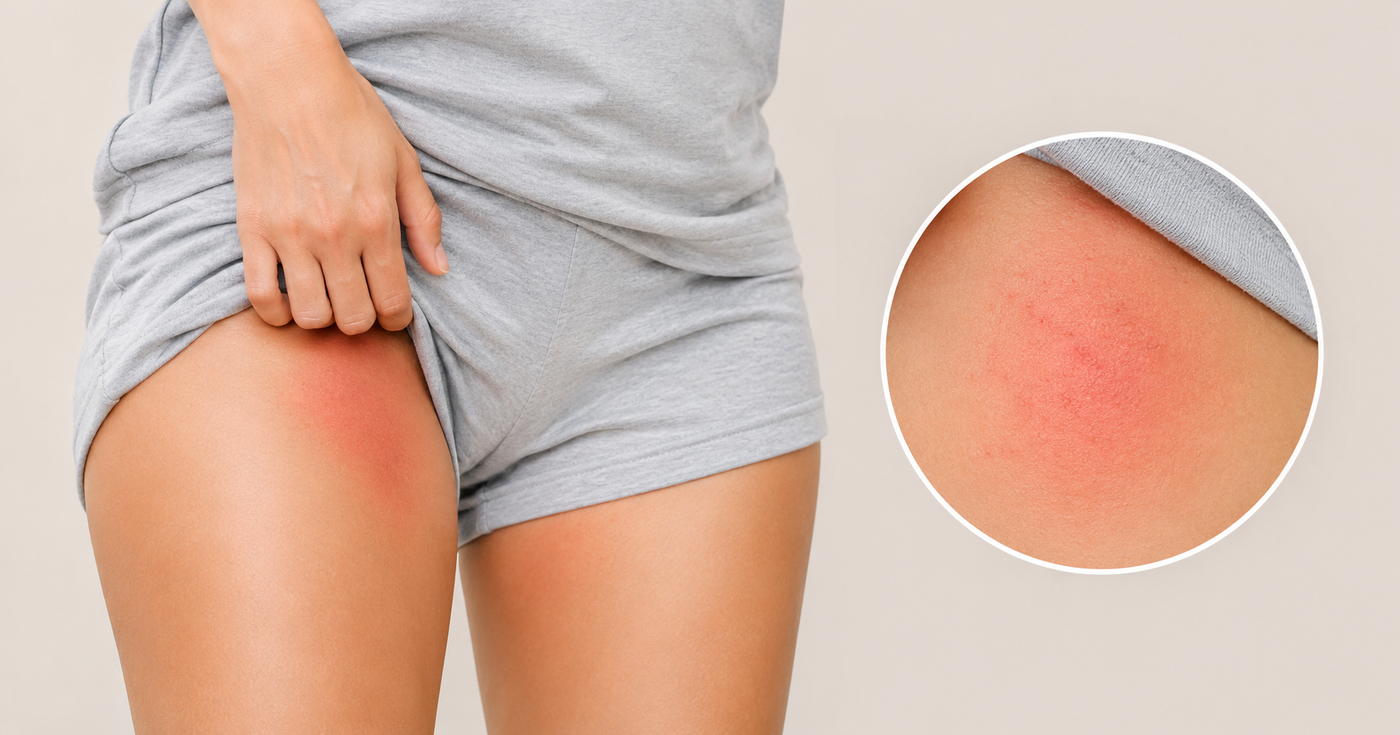
Table of Contents
Introduction What Causes Inner Thigh Chafing What Does Thigh Chafing Look Like Why Chafed Inner Thighs Keep Coming Back How to Calm Chafed Skin That Is Already Raw Daily Skin Support for Chafed Inner Thighs How to Stop Your Thighs From Chafing When Thigh Chafing Needs a Doctor The TakeawayIntroduction
You know your body. You moisturize, you dress for the weather, you do the sensible things a woman does to look after her skin.
And still, somewhere in the middle of a warm afternoon, the inside of your thighs is raw and stinging with every step. That is inner thigh chafing, and it has very little to do with what you assume.
So you have probably reached the same conclusion most women do. That this is about your thighs. About your size. That this is simply what your body does once the temperature climbs.
Here is the part worth slowing down for. Yes, your thighs touch. Yes, that contact burns by the end of the day.
But chafing is friction, heat, and trapped moisture working on the skin... not a flaw in how you are built. Settle those three things and your skin can carry you through the day without that burning skin sensation.
You have likely tried to manage it already, and the usual fixes ask you to work around your skin rather than support it. The thick powder that cakes into paste by noon.
The pair of shorts worn under every dress all summer. The walk you skipped because the heat was not worth the aftermath.
Picture the day that runs differently:
- A long walk in the heat, and the skin between your legs is calm at the end of it
- The dress you actually wanted to wear, with nothing layered underneath
- A finished workout, and you are not limping the last block home
None of that is a lucky day. Comfortable skin is the normal your body is meant to have. The real question is why raw, stinging skin ever got filed away as something you simply live with.
Because it was never about the size of your thighs. It was about friction you can actually do something about.
That shift, from stuck with it to in charge of it, is where everything changes. So let us start with what is really going on when your inner thighs rub.
What Causes Inner Thigh Chafing
Chafing starts with one thing... skin moving against skin, over and over. When your inner thighs rub together as you walk or move, that repeated skin friction wears at the surface and leaves it tender and sore.
Sweat and heat make it worse. Moisture softens the skin and lets the rubbing dig in faster, which is why a hot, humid day can turn a short errand into a real problem. Fabric matters too, since rough seams or material that traps sweat add to the rubbing instead of easing it.
Keep that going and the surface can break into small friction bumps where the skin has taken the most wear. It is a mechanical problem with a mechanical cause, and that is genuinely good news.
A cause you can see is a cause you can do something about. Once you start looking at the rubbing as the source, the fixes that follow make sense in a way that powders and willpower never quite did.
What Does Thigh Chafing Look Like
Most women feel chafing before they ever look at it. There is a warmth, then a sting, then that raw ache that shows up with every stride.
When you do look, the signs are easy to spot.
- Redness or a flat thigh rash where the skin has been rubbing
- Raised red bumps on thighs in the spots that take the most friction
- A burning skin sensation that sharpens as the day goes on
- Itchy irritated skin as things start to settle
- Rough skin texture that lingers after repeat episodes
- Darker marks left behind once the surface calms
If the rubbing keeps up, those mild signs can deepen into cracked or broken skin. That is the point where comfort turns into something you want to take more seriously, and we will get to when that means calling a professional.
Why Chafed Inner Thighs Keep Coming Back
Here is what makes this so frustrating. It rarely shows up once and leaves for good.
The skin between your thighs sits in a spot built for repeat trouble. It is warm, it folds, it holds moisture, and it moves constantly. So even after a sore patch settles down, the same skin friction returns the next warm day, in the same place, before the surface has fully recovered.
That is the loop so many women get stuck in with chafing thighs. The skin never gets a real stretch of calm, so each new episode lands on skin that is already worn.
Breaking the cycle means supporting the skin between flare-ups, not only reacting once it is raw. The good part is that a loop with a clear cause is a loop you can interrupt, as long as you give the skin steady attention rather than waiting for the next bad day.
How to Calm Chafed Skin That Is Already Raw
When the damage is already done, the goal is simple... calm the area and give it room to settle. The skin recovers best when you stop the friction and keep the spot clean and protected.
Start gentle and go slow:
- Rinse the area with lukewarm water and a mild, unscented cleanser
- Pat it dry with a soft towel... never rub a sore patch
- Let air reach the skin when you can, especially at home
- Skip tight, rough fabric over the area while it is tender
- Reach for a gentle layer of daily skin support that soothes rather than stings
The aim through all of it is to comfort irritated skin instead of adding to the load. Harsh scrubs, fragranced products, and anything that burns on contact will only stretch out the soreness and keep that itchy irritated skin going.
Daily Skin Support for Chafed Inner Thighs
Between flare-ups, your skin still needs something gentle and reliable... something that works with the area rather than against it. This is where a daily layer of support earns its place in your routine.
Many women in our community reach for Universal Flare Care, the Purple jar from MyMagicHealer, as gentle daily skin support for inner thigh chafing.
It is made for use on the inner thighs and groin, built on a surgeon-passed-down formula that uses propolis, egg yolk extract, beeswax, and lavender to soothe and comfort the skin during a flare. You can read more about Universal Flare Care here.
Used as a daily moisturizer morning and night, it gives chafed skin a calm, protected layer over irritated skin where the friction tends to hit hardest.
Rooted in a recipe trusted for generations and now relied on by 500,000 customers, it is meant as steady, gentle support rather than a quick fix. Many customers in our community report calmer, more comfortable skin within a few days of steady use. Results vary from person to person.
A few things to keep in mind. This is for external use only, and a patch test on a small area first is always worth it before you apply to a tender spot.
If you are allergic to eggs, bee products, poplar tree products, or balsam of Peru, check with a healthcare professional before you start.

How to Stop Your Thighs From Chafing
Calming a flare is half the work. Keeping the friction from building again is what changes your daily life.
The whole game is cutting down on rubbing and moisture, and a few habits do most of the heavy lifting:
- Choose snug, smooth shorts or thigh bands in moisture-wicking fabric to keep skin from rubbing skin
- Skip cotton for workouts, since it holds sweat against you... polyester or spandex blends breathe better
- Change out of damp clothes quickly after a workout or a hot afternoon
- Dry the area through the day when you sweat, especially in heat and humidity
- Ease into new activity so the skin has time to adjust
Small, steady choices like these keep thigh chafing from setting in, and they stop those friction bumps from forming in the first place. For many women, getting on top of chafing thighs is less about one product and more about removing the conditions that let the rubbing win.
When Thigh Chafing Needs a Doctor
Most chafing settles with gentle care at home. Some does not, and that is worth paying attention to.
Reach out to a healthcare professional if the skin breaks open and will not close, if the soreness spreads, or if you notice oozing, pus, swelling, a bad smell, or a fever. Those can be signs of infection, and infected skin needs proper medical care rather than another layer of balm.
The same goes for soreness that keeps returning no matter what you change. A professional can look closer and help you sort out what your skin actually needs.
Catching an infection early keeps a sore patch from turning into a bigger setback, so it is better to ask sooner than to wait it out and hope it fades.

The Takeaway
Chafing is not a flaw in your body. It is friction, heat, and moisture working on skin that sits in a tough spot, and every part of that is something you can manage.
Calm the area when it is raw, support chafed skin daily so it is not always starting from worn, and cut the friction and moisture that bring it back.
Keep the Purple jar within reach for the in-between days, and learn the signs that mean it is time to call a professional.
You do not have to plan your summer around your skin. Once you understand what is really happening, comfortable, calm skin stops being a lucky day and starts being the one you expect.

