




Published 20 Apr 2026
Rash That Won't Go Away? Common Causes and When to Be Concerned
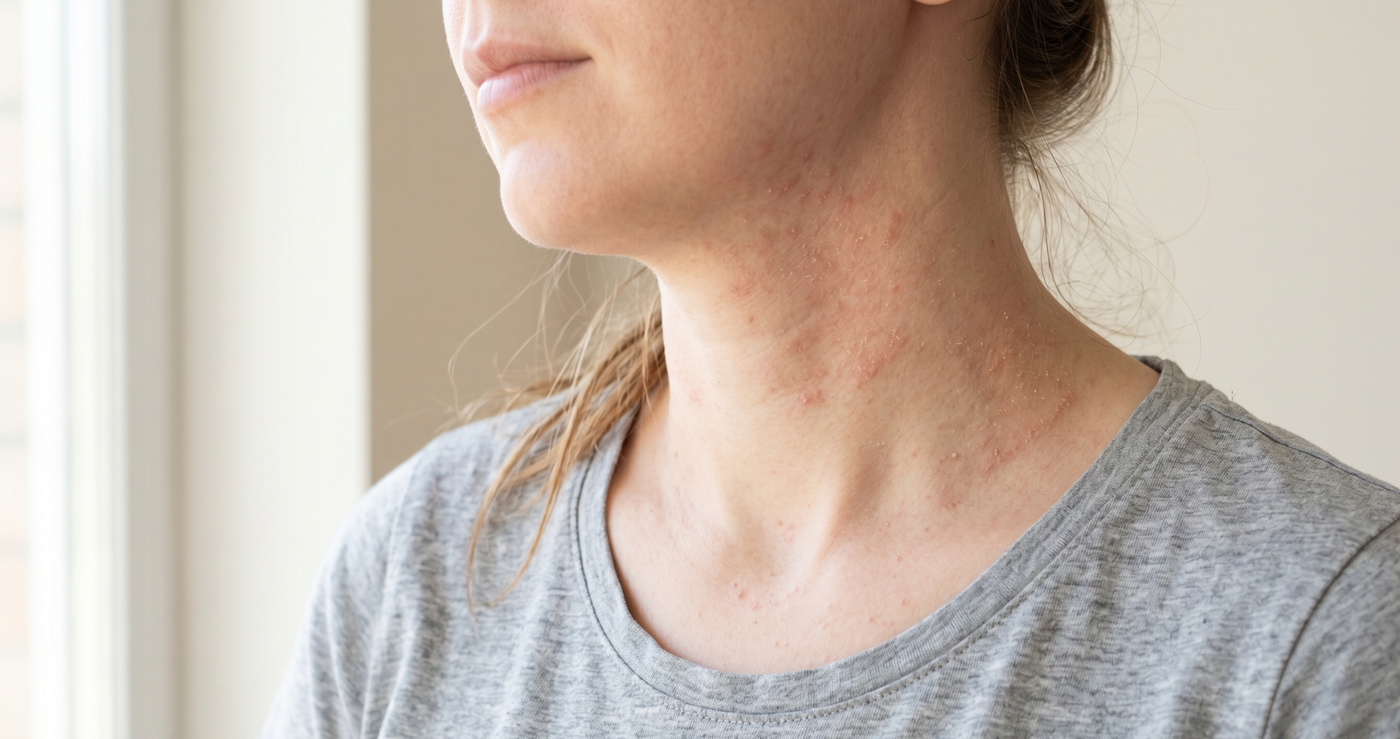
Table of Contents
Introduction Why Is Your Rash Not Going Away? What Are the Most Common Skin Rash Causes? What Do Red Itchy Patches on Skin Actually Mean? Can Stress Cause a Rash on Your Body? When a Skin Rash Becomes a Warning Sign What Should You Look for in an Ointment for Skin Rashes? How Universal Flare Care Essential Oil-Free Supports Irritated Skin The TakeawayIntroduction
Most people trust their skin to handle itself. A rash shows up, you give it a few days, and it clears.
That has worked enough times that it becomes the default assumption... your skin knows what to do, and time is usually enough.
But there is a problem hiding inside that assumption.
When a skin rash keeps coming back in the same spot, or refuses to clear past a certain point, treating it like a temporary reaction is exactly what keeps the cycle going.
You are solving for the wrong thing. The flare-up isn't the problem... it is what your skin is trying to tell you about the problem.
And those are two completely different situations with two completely different answers.
The causes behind a reaction that clears are almost never the same ones driving something that returns.
Getting that distinction wrong means you can try every product in the cabinet and still end up back at square one.
This article breaks down what actually drives persistent irritation, what the warning signs look like, and what genuinely supports a complexion that keeps flaring... so you stop managing symptoms and start understanding what your skin is actually saying.
Why Is Your Rash Not Going Away?
Most reactions triggered by a brief irritant clear within a week. Your skin encounters a trigger, reacts, and recovers once that trigger is removed. That is the straightforward version.
But one that returns in the same spot, keeps spreading, or refuses to settle is telling a different story.
Something is either continuing to aggravate the skin, or your barrier is compromised enough that it cannot recover properly between flares.
The mistake most people make is applying the same logic to both situations. You wait it out. You switch products. But when the underlying cause is still active, nothing changes the outcome for long.
Persistent irritation is a signal. It deserves a real answer.
What Are the Most Common Skin Rash Causes?
Recognizing skin rash causes starts with understanding how many different things can produce the same surface result: redness, texture changes, and discomfort that simply doesn't move on.
Contact with an irritant is one of the most frequent triggers. Soaps, detergents, fabric softeners, synthetic fabrics, and metals in jewelry can all set off a reaction.
What makes this tricky is that the culprit is often something you have been using for a long time, not something new you introduced recently.
Allergic reactions work differently. Your immune system flags a substance as a threat and fires back.
Those responses can appear hours or even days after contact, making the connection genuinely easy to miss.
Then there are causes that run deeper...
Common triggers behind persistent skin irritation:
- Bacterial or fungal overgrowth, especially in skin folds like the underarms, inner thighs, groin, and under the breast, where heat and moisture create the right conditions for a bacteria rash to take hold
- Chronic conditions like eczema or psoriasis that cycle through active flares and quieter periods without ever fully resolving
- Immune responses that surface in the skin before other symptoms appear elsewhere in the body
- Hormonal shifts that affect how reactive your complexion becomes over time
- Repeated friction from clothing or skin rubbing together in areas like the inner thighs and underarms

What Do Red Itchy Patches on Skin Actually Mean?
Red itchy patches on skin are one of the most common reasons people go searching for answers online, and also one of the harder things to identify without the full picture.
Color alone doesn't tell you much. What matters more is where the patches appear, whether they are raised or flat, whether they have defined edges or blur into surrounding skin, and whether they return to the same location repeatedly.
Patches that show up in folds like the underarms, inner thighs, or groin often point toward friction, moisture buildup, or fungal involvement.
A clearly raised border with a rough texture leans more toward eczema or psoriasis. Patches that shift location and fade within hours are more typical of an allergic response.
None of this replaces a professional evaluation. But if what you are seeing keeps returning to the same spot without improvement, that is your signal to consult a healthcare professional rather than keep guessing.

Can Stress Cause a Rash on Your Body?
Yes, it can. A stress rash is a real physiological response, and it is far more common than most people expect.
When your body is under pressure, it releases cortisol and other inflammatory signals. For skin that is already reactive or sensitive, that internal shift can trigger visible symptoms: redness, hives, or a flare of an existing condition.
The complexion becomes easier to irritate, slower to settle, and more prone to reacting to things it would normally handle without issue.
What makes this harder to identify is timing. The reaction often appears hours or even a full day after the stressful event itself, so the connection is easy to overlook entirely.
If your skin consistently worsens during high-pressure periods, that pattern is worth documenting and bringing up with a healthcare professional.
When a Skin Rash Becomes a Warning Sign
Most reactions are uncomfortable but manageable at home. Some are not. Knowing the difference is what gives you the ability to act at the right time rather than too late.
A skin rash moves into warning sign territory when it starts behaving in ways that suggest something more serious is happening beneath the surface.
That is when the right move is to stop self-managing and get a professional evaluation without delay.
Signs your skin needs professional attention:
- Irritation spreads rapidly or covers large areas including the torso, neck, or face
- A fever develops alongside the flare-up
- The affected area shows warmth, swelling, or fluid discharge
- Flares appear in the underarms, inner thighs, or groin and keep returning in the same spot
- Red streaks extend outward from the site
- The area is painful rather than just itchy
- Blistering appears, especially near the eyes or around the mouth
- Symptoms have lasted more than two to three weeks without clear improvement
If any of these apply, do not wait it out. Consult a healthcare professional as soon as possible.
What Should You Look for in an Ointment for Skin Rashes?
If you have been reaching for any ointment for skin rashes that seemed reasonable at the time, you are not alone.
But not every formula is suited to skin that is sensitive, reactive, or dealing with a persistent flare.
Start with the ingredient list. Formulas loaded with essential oils, synthetic fragrance, or a long list of actives can aggravate already-irritated skin more than they support it.
For a compromised barrier, more ingredients typically means more potential triggers.
What reactive skin tends to respond best to is simplicity. A short ingredient list where every component has a clear purpose. No fillers. No fragrance. Nothing earning its place by being trendy.
For skin dealing with open or broken areas, the standard gets even higher. The formula needs to be gentle enough to use consistently without adding to the very problem it is meant to address.
How Universal Flare Care Essential Oil-Free Supports Irritated Skin
Universal Flare Care Essential Oil-Free was built around exactly that standard. Four ingredients: olive oil, beeswax, egg yolk extract, and propolis. No essential oils. No fragrance. Nothing that doesn't belong.

The formula is rooted in a surgeon-passed-down recipe trusted across generations and now relied on by over 500,000 customers.
It is gentle and well tolerated when used as directed on the most sensitive and reactive skin... including eczema, perioral dermatitis, cracked skin, and persistently flare-prone conditions. Well tolerated during pregnancy, nursing, and for babies and children as well.
Every ingredient earns its place.
- Olive oil nourishes and hydrates.
- Beeswax creates a breathable barrier that supports recovery.
- Egg yolk extract provides nourishing comfort to compromised skin.
- Propolis brings gentle calming support to the flare zone.
The formula works in stages. In the first days, discomfort eases and irritation begins to settle. Over the following days the affected area calms further.
From day six onward, the skin barrier begins to rebuild properly.
Many customers in our community report noticeably calmer skin within days of consistent use, and the results vary from person to person.
Apply directly to the underarms, inner thighs, groin, and under the breast. Always perform a patch test before use, especially on sensitive areas. If symptoms persist, consult a healthcare professional.
The Takeaway
Persistent skin irritation deserves more than another product switch. Here is what to carry forward:
- A rash that keeps returning is a different problem from one that clears on its own... and it needs a different approach
- Skin rash causes range from contact irritants and allergic reactions to bacterial overgrowth, chronic conditions, and hormonal shifts
- Red itchy patches on skin, a stress rash, or recurring flares in the underarms, inner thighs, or groin all warrant real attention
- Know the warning signs that mean it is time to stop self-managing and consult a healthcare professional
- For sensitive and reactive skin, fewer ingredients and a gentler formula offer the most consistent daily support
- Universal Flare Care Essential Oil-Free gives your skin exactly that... nothing more, nothing less

