




Published 17 Apr 2026
Psoriasis vs Eczema: Why They’re Often Confused and How They’re Different
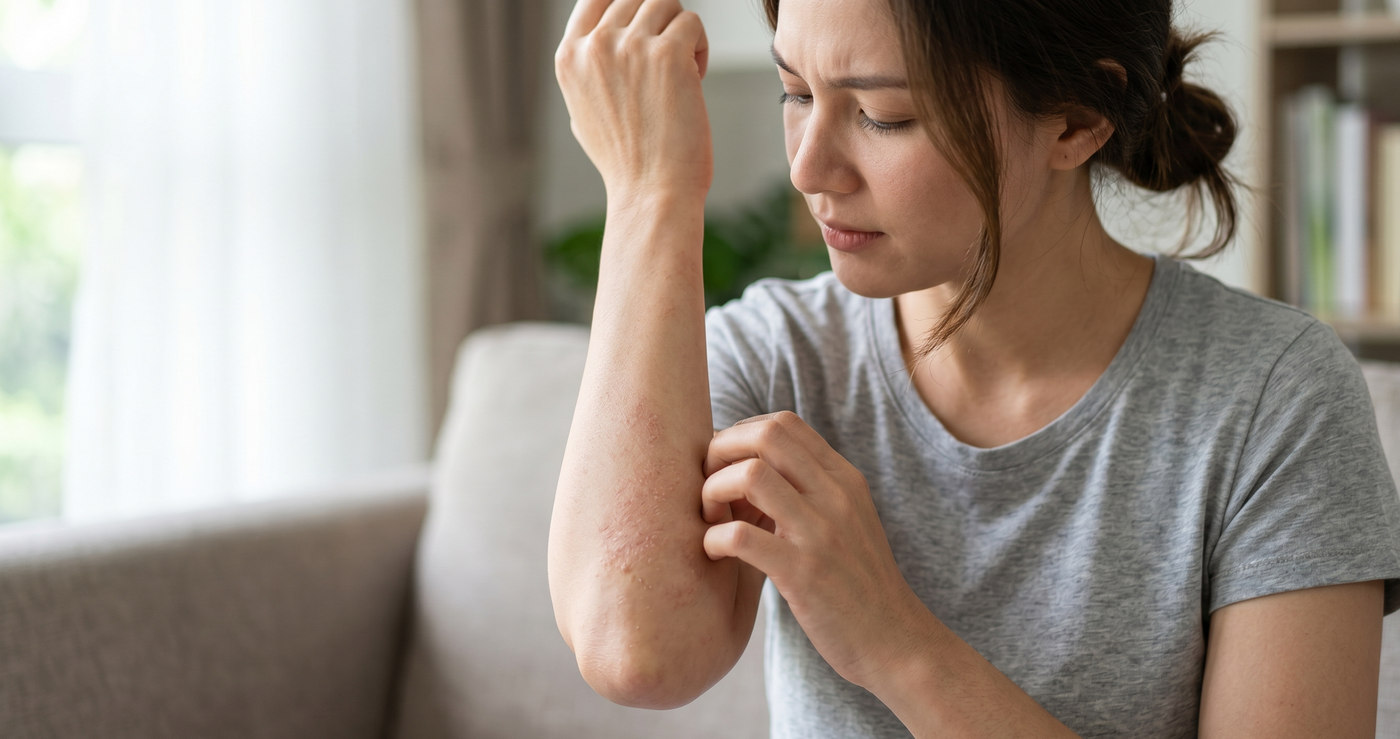
Table of Contents
Introduction Why Eczema and Psoriasis Are So Easy to Mix Up What Does Eczema Look Like? What Does Psoriasis Look Like? What Causes Eczema Flare Ups? What Causes a Psoriatic Arthritis Flare Up and Other Psoriasis Triggers? Where on Your Body Does Each One Show Up? Can You Have Eczema and Psoriasis at the Same Time? What to Put on Eczema and Psoriasis When Your Skin Is Flaring A Natural Option for Sensitive, Reactive Skin The TakeawayIntroduction
Most people treating a skin condition are treating the wrong one. Not because they’re careless but because eczema and psoriasis look similar enough that even careful people mix them up.
And when you’re putting the right thing on the wrong condition, nothing is going to work. That’s not a product problem. That’s a starting point problem.
Knowing what does eczema look like versus what does psoriasis look like... that’s not a small detail. It’s the whole game. Because these two conditions don’t come from the same place, they don’t behave the same way, and what clears one can do absolutely nothing for the other.
Here’s how to tell them apart.
Why Eczema and Psoriasis Are So Easy to Mix Up
Both cause red, inflamed, uncomfortable skin. Both tend to flare without much warning. Both can leave you cycling through products, hoping something finally sticks. On the surface, they can genuinely look like the same problem.
But look a little closer and the differences start to show... in how the patches are shaped, where they settle on your body, and how they feel against your skin. That’s where the answers are.

What Does Eczema Look Like?
Eczema doesn’t have one fixed appearance. On lighter skin tones, it tends to show up as pink or red patches with soft, undefined edges. On medium to deeper skin tones, it can look dark brown, gray, or even purple.
The borders are blurry. There’s no clean line where the irritation starts or stops. It tends to live in the folds and creases of your body.
The inner elbow. Behind the knees. Your wrists, neck, and ankles. On babies, it often shows up on the cheeks and scalp. For adults, the face and hands are common spots.
And then there’s the itch. It’s relentless. It peaks at night, the kind that breaks your sleep and makes you wake up having already scratched. Over time, that scratching breaks the skin. Oozing and crusting can follow.
It doesn’t just feel uncomfortable... it’s exhausting in a way that’s hard to explain to someone who hasn’t lived it.
Common signs of eczema to look for:
- Red, pink, or darkened patches with blurry, undefined edges
- Intense itching, especially at night
- Dry, cracked, or scaly skin
- Oozing or crusting in more severe cases
- Rashes in skin folds... inner elbows, knees, wrists, and neck
- Flare-ups triggered by soaps, fabrics, stress, or weather changes
What Does Psoriasis Look Like?
Where eczema’s edges are soft and undefined, psoriasis is the opposite. It has clear, sharp borders. It builds up in thick, raised patches called plaques, with a silvery or white scale sitting on top of the redness underneath.
The skin feels harder, thicker… like there’s a layer that won’t come off no matter what you put on it. Psoriasis tends to favor the outside of the body.
The outer edges of your elbows and knees. The scalp. The lower back. Nails. It can also appear on the palms, soles of the feet, and around the ears.
The sensation is different too. Instead of eczema’s deep, relentless itch, psoriasis often causes burning or stinging. Some people with psoriasis don’t itch much at all. That difference in feeling... that alone can be one of the most useful clues when you’re trying to tell them apart.
Common signs of psoriasis to look for:
- Thick, raised plaques with well-defined, sharp edges
- Silvery or white scale sitting on top of inflamed skin
- Burning or stinging sensation rather than intense itch
- Skin that feels harder and more raised than usual
- Patches on the outer elbows, knees, scalp, lower back, and nails
- Flare-ups triggered by stress, infections, alcohol, or certain medications

What Causes Eczema Flare Ups?
Eczema is rooted in a compromised skin barrier. When your skin barrier isn’t functioning the way it should, your immune system becomes oversensitive. It overreacts to things that wouldn’t bother most people.
Common triggers that cause eczema flare ups include harsh soaps and detergents, synthetic fragrances, pet dander, dust, pollen, cold or dry weather, and hormonal shifts.
Stress is a significant one too... the kind that quietly builds and then shows on your skin before you’ve even registered how tense you’ve been.
What causes dermatitis flare ups often falls into the same category: your skin’s barrier meets something it can’t tolerate, and the reaction follows. Knowing your specific triggers isn’t always easy, but it’s one of the most powerful things you can do to stay ahead of the next flare.
What Causes a Psoriatic Arthritis Flare Up and Other Psoriasis Triggers?
With psoriasis, the problem starts deeper than the skin. Your immune system sends faulty signals that tell skin cells to multiply far faster than your body can shed them. Those excess cells pile up on the surface, forming the thick plaques you see.
Triggers include stress, infections, cold dry weather, smoking, excess alcohol, and certain medications like lithium or some blood pressure drugs.
For some people, psoriasis doesn’t stop at the skin. It’s also connected to psoriatic arthritis flare ups... joint pain, stiffness, or swelling that can come alongside skin symptoms.
If you’ve noticed both happening together, that’s not a coincidence. It’s worth mentioning to your doctor rather than managing the two separately without knowing they may be linked.
Where on Your Body Does Each One Show Up?

Can You Have Eczema and Psoriasis at the Same Time?
Yes, it’s possible but it’s uncommon for this to happen.
If you’ve been treating one condition consistently and nothing seems to be working, that’s worth taking seriously rather than pushing through alone.
A dermatologist can examine your skin and give you a clear diagnosis, which matters more than it might seem... because the treatments are different, sometimes significantly so.
What to Put on Eczema and Psoriasis When Your Skin Is Flaring
Now that you know what you’re looking at, the next question is what your skin actually needs. For both conditions, the basics matter more than most people realize. Keeping your skin moisturized is essential.
Choosing fragrance-free, gentle products protects a barrier that’s already under stress. Avoiding known triggers... whether that’s a particular soap, fabric, or stressful season... gives your skin the chance to recover instead of constantly reacting.
For what to put on eczema, look for options that are fragrance-free and designed for sensitive skin. Thick, gentle moisturizers applied right after bathing help lock in hydration before your skin has a chance to dry out.
Topical support that calms inflammation without harsh ingredients makes a real difference over time.
For what to put on psoriasis, consistency matters. Keeping plaques moisturized softens the scale and reduces discomfort.
Gentle topical options that target inflammation without stripping the skin are a smart first step, especially if you want to manage it naturally before reaching for stronger treatments.
If you’re looking for something built for sensitive, reactive skin without the ingredients to worry about, Universal Flare Care Essential Oil-Free was made exactly for that.

A Natural Option for Sensitive, Reactive Skin
If you’ve been through the trial-and-error cycle long enough, you know how quickly “soothing” products become the problem. Fragrances that flare you up. Essential oils that sting. Formulas that felt promising until they didn’t.
Universal Flare Care EO-Free... the yellow jar... was made for skin that’s done with all of that. No essential oils. No fragrance. Safe for pregnancy, nursing, babies and anyone whose skin simply cannot afford another reaction on top of a flare.
The formula works with your skin rather than against it. Olive oil delivers deep nourishment. Beeswax creates a breathable barrier that protects without suffocating. Egg yolk extract supports repair. Propolis brings natural healing support to inflamed or broken skin.
And the results aren't just anecdotal. Thousands of customers in our community report feeling relief quickly... with calmer, more comfortable skin in just a few days. Results vary from person to person.
For deeper or more stubborn flares, the gauze method is worth knowing: apply Universal Flare Care directly to the affected area and cover with cotton gauze overnight. It gives the formula time to work without being wiped away.
You don’t have to keep guessing. This formula has been trusted for generations. It was made for skin exactly like yours... sensitive, tired, and more than ready for something that finally holds.
The Takeaway
Eczema and psoriasis look similar enough to confuse almost anyone. But they are different conditions with different causes, different patterns, and different needs.
Eczema tends to appear in the skin folds with soft, blurry edges and an intense itch that worsens at night. Psoriasis builds up in thick, well-defined plaques with a silvery scale and more of a burning sensation than a deep itch.
What causes eczema flare ups is usually external triggers meeting a compromised skin barrier. What drives psoriasis is an immune system that’s telling skin cells to reproduce faster than your body can shed them.
Knowing which one you’re dealing with is the first and most important step. Because treating the right condition with the right care... that’s when things actually start to shift.

