




Published 17 Apr 2026
Overview: Boils and carbuncles
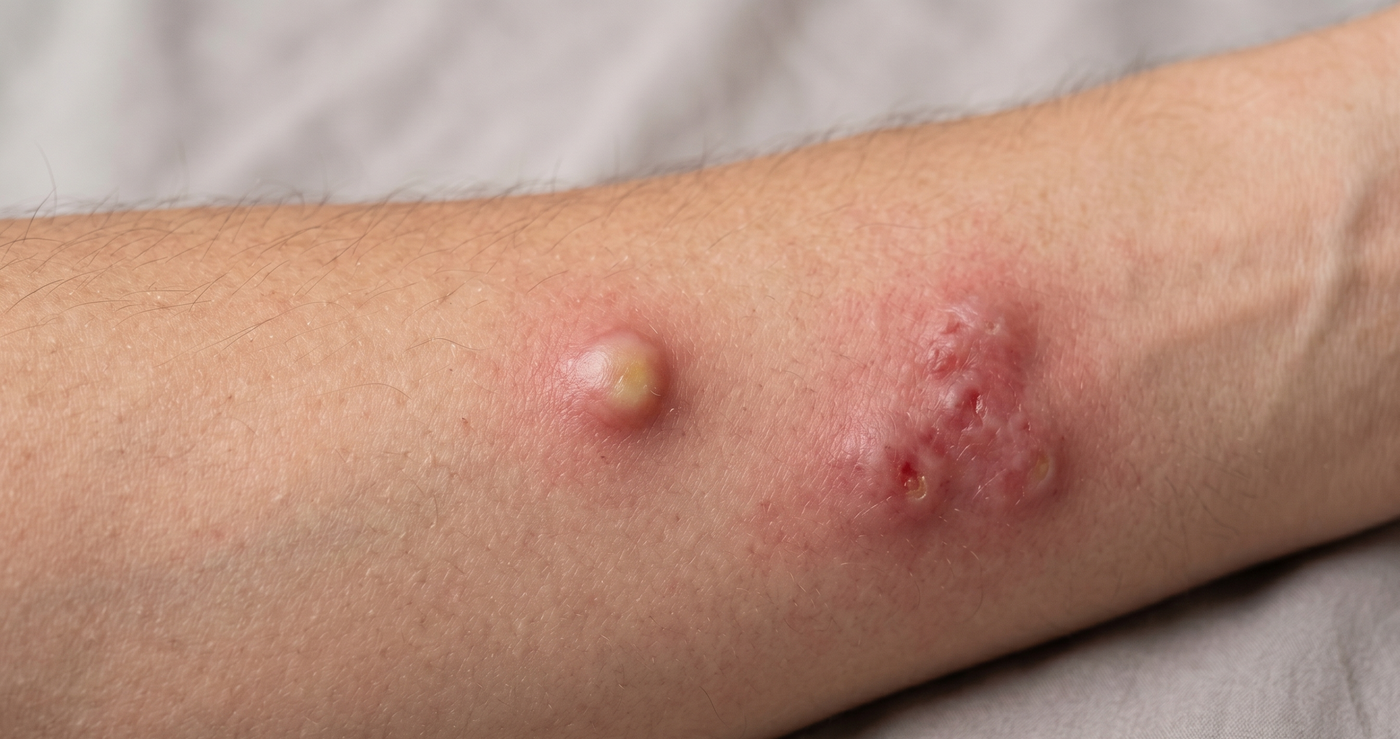
Table of Contents
Introduction What Causes Boils and How Do They Form? What Is a Carbuncle and Why Is It More Serious? What Are the Boil Healing Stages? How to Get Rid of Boils With Home Care That Works Can You Get Rid of a Boil Overnight? When Should You See a Doctor for a Boil? How to Support Boil-Prone Skin Between Flares The TakeawayIntroduction
Staphylococcus aureus bacteria live on the skin of roughly one in every three people. Right now, along the lining of your nostrils, in the folds where skin presses against skin... these bacteria are doing absolutely nothing.
You could carry them for years and never know. They don't care how often you shower. They're already there.
All it takes is one shift. A nick from shaving. A waistband that digs into the same crease every day. A dip in immunity from stress or a condition you haven't been told about yet.
That's when the bacteria enters the hair follicle. And what happens next is not random... it's a boils treatment issue that follows the same biological sequence every time.
Your body sends white blood cells to fight the infection. Tissue around the follicle breaks down. Pus forms. Pressure builds.
What you see as a painful, swollen lump is actually a structured immune response unfolding in predictable stages underneath. Stages nobody told you were readable.
That is why the same spot keeps flaring. Not because you're doing something wrong. Because the bacteria was already there, the trigger keeps repeating, and nothing in your routine addresses the skin during the weeks when everything looks fine.
This article breaks down what each stage of a boil looks like so you can read where you are. What a carbuncle is and why it matters. When home care is enough and when waiting becomes a risk.
And what a natural remedy for boils looks like when it's built around daily support... not damage control.
The bacteria is microscopic. The follicle is smaller than a pinhead. But the pain, the way it changes how you sit, what you wear, whether you can get through a full workday... that is the real size of this condition.
Warm compresses and keeping the area clean are real steps. But they arrive after the flare starts and disappear the moment the skin flattens.
The window between one boil and the next... when nothing is being done... that's where the cycle holds on.
What Causes Boils and How Do They Form?
A boil starts when Staphylococcus aureus bacteria enter a hair follicle through a small break in the skin. A razor nick, a scratch, even friction from clothing rubbing the same spot repeatedly can create the opening.
Once inside, bacteria multiply beneath the surface. Your immune system floods the area with white blood cells, and the collision creates a pocket of pus... an abscess.
That's what a boil actually is. Not a pimple. A deep infection sealed beneath your skin.
Friction-heavy areas... your underarms, inner thighs, groin, under or on the breast, buttocks, and the back of the neck... are the most common locations. Heat, moisture, and rubbing create the conditions bacteria need.
A weakened immune system from diabetes or chronic stress raises the risk. So does eczema or sharing towels and razors within a household.
Boils are not caused by poor hygiene. The bacteria is already living on your skin. The boils treatment question isn't about cleanliness. It's about what gives bacteria an opening... and what supports the skin in between.

What Is a Carbuncle and Why Is It More Serious?
A carbuncle forms when several boils in neighboring hair follicles merge into one connected infection beneath the skin. Multiple pockets of pus linked together, often with more than one opening draining on the surface.
Carbuncles go deeper, involve more tissue damage, and carry a higher risk of scarring. They also produce symptoms a single boil rarely does: fever, chills, fatigue.
Those are signs the infection has moved beyond a local skin event.
A single boil can often be managed at home. A carbuncle almost always needs medical drainage, sometimes antibiotics through an IV. If boils start merging or fever develops, see a doctor.
Trying to reduce boil inflammation at the carbuncle stage on your own risks pushing the infection deeper.
What Are the Boil Healing Stages?
Boils follow a predictable sequence. Once you know what each stage looks like, you can tell exactly where you are... and what to do next.
- Stage 1: A firm, tender lump forms beneath the skin. No visible head yet. The area feels warm and may look slightly red. Infection is taking hold in the follicle.
- Stage 2: The bump swells over two to four days. Redness spreads. Pain increases with pressure or movement. Pus is collecting beneath the surface.
- Stage 3: A white or yellow center becomes visible. The boil has come to a head. Pain peaks. Pressure is at its highest.
- Stage 4: The boil drains, either on its own or through medical incision. Pain drops quickly once pus releases.
- Stage 5: The skin closes and begins to recover. A small scar may remain. The area is still tender and vulnerable.
The boil healing stages don't end when the surface closes. Stage 5 is where most women stop paying attention.
But the skin underneath is still recovering, still carrying bacteria, and still at risk. That quiet window is exactly where the next cycle begins.

How to Get Rid of Boils With Home Care That Works
Most single boils can be managed at home when caught early. Consistency through the full cycle is what makes the difference:
- Apply a warm, moist compress for 15 to 20 minutes, three to four times a day. Use a clean washcloth every time. This draws infection toward the surface and encourages drainage.
- Keep the area clean with mild soap. Do not scrub.
- Never squeeze, lance, or pop a boil yourself. This pushes infection deeper and can spread bacteria to neighboring follicles... which is how carbuncles form.
- Wear loose, breathable clothing over the area.
- Wash towels, washcloths, and bedding that touched the boil separately. Never reuse before washing.
- Keep the area dry between compresses.
A drawing salve... an ointment designed to pull infection toward the surface... can help in early stages before a head forms. This is one form of boils treatment you can start on day one.
If you're looking for a natural remedy for boils alongside compresses, choose something gentle enough for inflamed skin.
Harsh chemicals or fragranced products add irritation on top of infection... the opposite of how to get rid of boils.
Can You Get Rid of a Boil Overnight?
No. The infection has to move through its stages. No product or compress bypasses the biology.
But starting warm compresses early in Stage 1 can shorten the timeline. Keeping the area clean and dry removes irritants.
A gentle topical that supports the skin without adding chemical stress helps the area stay calm while the body works.
What slows things down: squeezing the bump, products that burn on inflamed skin, tight clothing, and reusing towels.
If you've searched how to get rid of a boil overnight, the honest answer is consistent daily care... not a single overnight fix.
When Should You See a Doctor for a Boil?
Not every boil needs a doctor. But there is a clear line.
See a healthcare professional if the boil is larger than a coin and still growing. If you develop a fever. If red streaks spread from the site... that means the infection has entered the lymph vessels.
If boils are merging into a carbuncle. If the boil is on your face near the nose or upper lip... bacteria here can reach the brain, which carries serious risks.
Recurring boils in the same spot are worth raising even if each flare seems manageable. The pattern may point to something deeper.
Medical care typically involves incision and drainage under sterile conditions. Antibiotics may follow if the infection has spread.
A culture can identify which bacteria is responsible and help reduce boil inflammation with the right approach.
Never drain a boil yourself. Always consult a healthcare professional if symptoms persist.
How to Support Boil-Prone Skin Between Flares
Everything before this addresses the active flare. This is the part nobody talks about: the weeks between.
Your underarms, inner thighs, groin, under or on the breast, and buttocks deal with constant friction, heat, and moisture. After a boil clears, that skin is still recovering. Still carrying Staph on its surface. And in most routines, it's getting zero support.

That gap is where Universal Flare Care fits. It's not a medical product. It's daily skin support... a natural solution for boil-prone skin that gives the area what it needs between flares instead of waiting for the next one.
The formula is rooted in a surgeon-passed-down recipe: propolis to support the skin barrier, beeswax for protection and moisture, egg yolk extract to nourish, lavender essential oil to calm, and olive oil and grape seed oil as the base. No harsh chemicals. No synthetic fragrance.
Many customers in our community report calmer, more comfortable skin within days of consistent use. Results vary from person to person.
Perform a patch test before first use. Consult a healthcare professional if you are allergic to eggs, bee products, poplar tree products, or balsam of Peru. For adults 18 and older.
External use only. Suitable during pregnancy and breastfeeding... not on the breast or nipple before feeding.
The Takeaway
Boils and carbuncles are not random. They follow a biological pattern driven by bacteria already on your skin, triggered by friction, immune shifts, and conditions you may not know you have. Understanding that pattern is the first step toward changing it.
The stages are readable. Each one tells you where you are and what to do next. Home care handles most single boils when done consistently.
Carbuncles and recurring boils need professional attention. And the window between flares... when the surface looks clear and you stop thinking about it... that's where the next cycle builds or doesn't.
A natural remedy for boils is not just what you reach for when the pain starts. It's what you give your skin every day so the weeks between flares count.
That's what Universal Flare Care was built around... daily support for skin that keeps flaring, trusted by over 500,000 customers. Your skin deserves care that fits what it's going through. Every day in between.

