




Published 17 Apr 2026
Natural Remedies for Atopic Dermatitis Itch (Eczema)
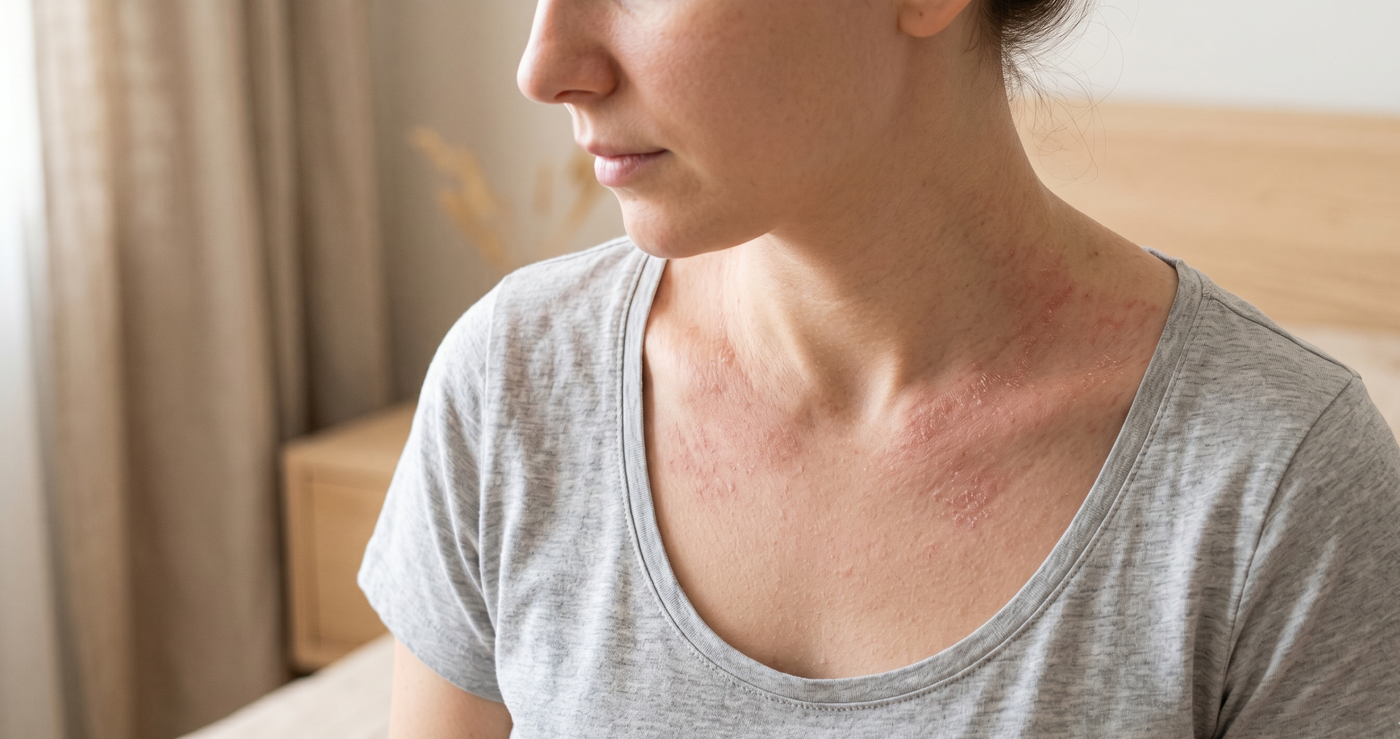
Table of Contents
Introduction What Is Atopic Dermatitis and Why Does It Itch So Much? Why Most Atopic Dermatitis Treatments Don’t Fix the Root Problem Natural Remedies for Eczema That Actually Help Natural Remedies for Eczema That Actually Help Natural Ingredients That Can Actually Make Atopic Dermatitis Worse When You Need More Than Home Remedies for Atopic Dermatitis The TakeawayIntroduction
You’d read every label. Checked every ingredient. Patch-tested on your wrist before you’d even let a product near the flare. Still, something always set it off.
A preservative buried in the fine print. A fragrance listed as “natural.” Sometimes nothing at all, and the skin would flare anyway, red and itching by morning as if it had never had a quiet day in its life.
Living with atopic dermatitis does something specific to you. It makes you distrust the very products designed to help you. It makes every new recommendation feel like a small gamble.
And it puts you in an exhausting loop of temporary relief, another flare and starting the search all over again.
What most people don’t realize is that some of the most popular remedies they reach for are quietly making that loop worse. Not all of them but enough that it matters which ones you choose and how you use them.
This article breaks down what actually soothes the itch, what to avoid even when the internet swears by it and for skin that reacts to almost everything… what a 4-ingredient, essential-oil-free formula rooted in a generations-old recipe has been quietly doing for women who’d tried everything else.
What Is Atopic Dermatitis and Why Does It Itch So Much?
This is the most common form of eczema and it goes far deeper than dry skin. The real problem is in the skin barrier, the protective outer layer that keeps moisture in and irritants out.
In skin with this condition, the barrier doesn’t hold the way it should. Moisture escapes, the skin dries out faster than it can recover and the nerve endings just beneath the surface become sensitive to almost everything around them: heat, sweat, fabric, even a change in weather.
Then the itch-scratch cycle takes over. Scratching feels like relief for a few seconds... then it tells the skin to release more inflammatory compounds, which brings more itch.
Atopic dermatitis symptoms like redness, cracking and weeping skin often worsen not from the condition alone, but from that cycle repeating night after night. This isn’t a self-care problem. It’s a biology problem.
And treating it well starts with understanding what the skin barrier actually needs.
Why Most Atopic Dermatitis Treatments Don’t Fix the Root Problem
The standard atopic dermatitis treatment route usually starts with topical corticosteroids. They calm active flares and that’s real.
But many women have valid concerns about using them long-term, particularly on the face, on children, or on skin that already absorbs more than it should.
The bigger issue is what hides inside most store-bought options. Fragrance, alcohol and preservatives show up even in products labelled “gentle” or “eczema-safe.” The packaging promises one thing. The ingredient list tells a different story.
This condition needs more than surface moisture. It needs actual barrier repair. Most products stop at the surface, which is why the relief never lasts and the flares keep coming back.
Natural Remedies for Eczema That Actually Help
There is solid evidence behind several natural ways to heal eczema but how you apply them matters just as much as what you’re reaching for.


The 3-Minute Window After Bathing
One of the most overlooked steps in healing eczema naturally. After a lukewarm bath or shower (not hot, hot water strips the barrier further), pat the skin dry gently. Then apply your remedy within 3 minutes while the skin is still slightly damp. That is the window where the barrier is most receptive. Waiting longer means most of the benefit is already gone.
Coconut Oil
Virgin and cold-pressed only. Refined coconut oil loses most of what makes it useful in processing. The virgin version is rich in lauric acid, a fatty acid with documented antibacterial and anti-inflammatory properties that absorbs well, improves skin hydration, and supports the skin’s natural defenses. Apply it to damp skin right after bathing for best results.
Colloidal Oatmeal
This one has real science behind it. Colloidal oatmeal is FDA-recognized as a skin protectant. The cellulose and fiber in finely milled oats create a film on the skin that physically interrupts the itch signal while calming inflammation at the same time. Add it as an unscented powder to a lukewarm bath, or look for it listed as an active ingredient on a cream, not buried somewhere at the bottom of a long label.
Sunflower Seed Oil
Sunflower seed oil works through a different mechanism than coconut oil. It supports ceramide production, the natural lipids that hold the skin barrier together from within. It’s a reliable option for women who can’t tolerate coconut oil. If there’s a sunflower seed allergy in the picture, skip this one entirely.
Wet Wrap Therapy
One of the most effective natural ways to heal eczema and almost always the most underused. Apply a generous layer of moisturizer or calming salve to the affected skin, then layer damp cotton fabric over it (a wet wrap garment or a clean damp cloth works well), followed by a dry layer on top. The damp layer drives moisture and product deeper while also stopping the overnight scratching before it starts.
Stress Reduction: Not as Fluff, as Medicine
Psychological stress directly activates the inflammatory pathways that trigger and worsen eczema flares. That connection is well-documented. Meditation, breathwork, yoga and tai chi all show measurable effects on skin inflammation. They belong in a real management plan, not as an afterthought.
Quick Reference: What Actually Helps
- Coconut oil: virgin/cold-pressed only, applied to damp skin
- Colloidal oatmeal: bath powder or active-ingredient cream
- Sunflower seed oil: ceramide support; avoid if allergic to sunflower seeds
- Wet wrap therapy: especially effective for severe overnight flares
- Lukewarm baths, pat dry, moisturize within 3 minutes
- Stress management: meditation, breathwork, gentle movement
- Vitamin D and E supplementation: shows promise in studies; speak to your doctor first
Natural Ingredients That Can Actually Make Atopic Dermatitis Worse
This section matters because it’s where a lot of well-meaning routines quietly cause more harm. Several popular natural remedies work well for other skin conditions. For eczema-prone skin specifically, they’re a different story.
Apple cider vinegar is recommended everywhere online for its pH-balancing properties. The research on atopic skin tells a different story. Even in diluted form, it can damage the skin barrier rather than restore it.
Olive oil is another counterintuitive one. Studies suggest it can disrupt the outermost layer of the skin and weaken barrier function over time. Best left out of the routine, especially during an active flare.
Tea tree oil is recommended constantly for its antibacterial properties. But it is also a documented trigger for contact dermatitis and tends to be deeply irritating for atopic skin.
The same applies to many essential oils, even the calming-sounding ones. Lavender, citrus, eucalyptus... reactive skin can flare from all of them.
Ingredients That Make It Worse
- Fragrance: synthetic or natural essential oils; especially critical for babies and sensitive skin
- Ethyl alcohol / SD alcohol: strips the skin barrier
- Olive oil: particularly problematic during active flares
- Apple cider vinegar: diluted or undiluted, can worsen the barrier
- Tea tree oil: too irritating for atopic skin
- Methylisothiazolin
When You Need More Than Home Remedies for Atopic Dermatitis
The remedies above genuinely help. But for skin that’s truly reactive, there’s a real gap in what most natural ointment for eczema can actually offer.
Even options marketed as natural often carry essential oils, fragrance, or too many actives that sensitive skin simply cannot tolerate.
For women who are pregnant, nursing or consistently react to essential oil-based products and for anyone using a remedy around babies or in delicate areas, those options narrow down very quickly.
What skin like that really needs is a formula stripped back to only what belongs there. No triggers. No fillers. Every ingredient earning its place.

That’s what Universal Flare Care Essential Oil-Free was built around. Just 4 ingredients: olive oil, beeswax, egg yolk extract, and propolis. No essential oils. No fragrance.
The formula is rooted in a surgeon-passed-down recipe trusted across generations and now trusted by over 500,000 customers. It’s gentle enough for newborns, and nursing and suited to eczema, perioral dermatitis, cracked skin, and the most sensitive barrier conditions.
It works in stages. In the first few days, discomfort eases and irritation settles. Over the following days the flare zone calms further. From day six onward, the skin’s barrier begins to rebuild properly. Many customers in our community report feeling calmer skin within just a few days.
For women who’ve spent months trying products that either don’t deliver or trigger their own reaction, the answer is rarely something more powerful. Most of the time it’s something simpler... that finally stops fighting the skin it’s supposed to be caring for.
The Takeaway
Atopic dermatitis itch is exhausting in a way that’s difficult to explain to anyone who hasn’t lived it. It isn’t just uncomfortable. It disrupts sleep, steals focus and wears a woman down in ways that go well beyond her skin.
The right natural remedies for eczema do more than quiet the itch for a few hours. Used the right way, consistently, they give the skin what it keeps losing: moisture, barrier function and the space to actually recover.
And for the most reactive skin, the answer is almost never more ingredients. It’s fewer of the right ones. The natural ways to heal eczema that work best are the ones gentle enough to support the skin rather than stress it further.

