




Published 17 Apr 2026
Is Shaving Making My Skin Worse? What Your Skin Is Trying to Tell You
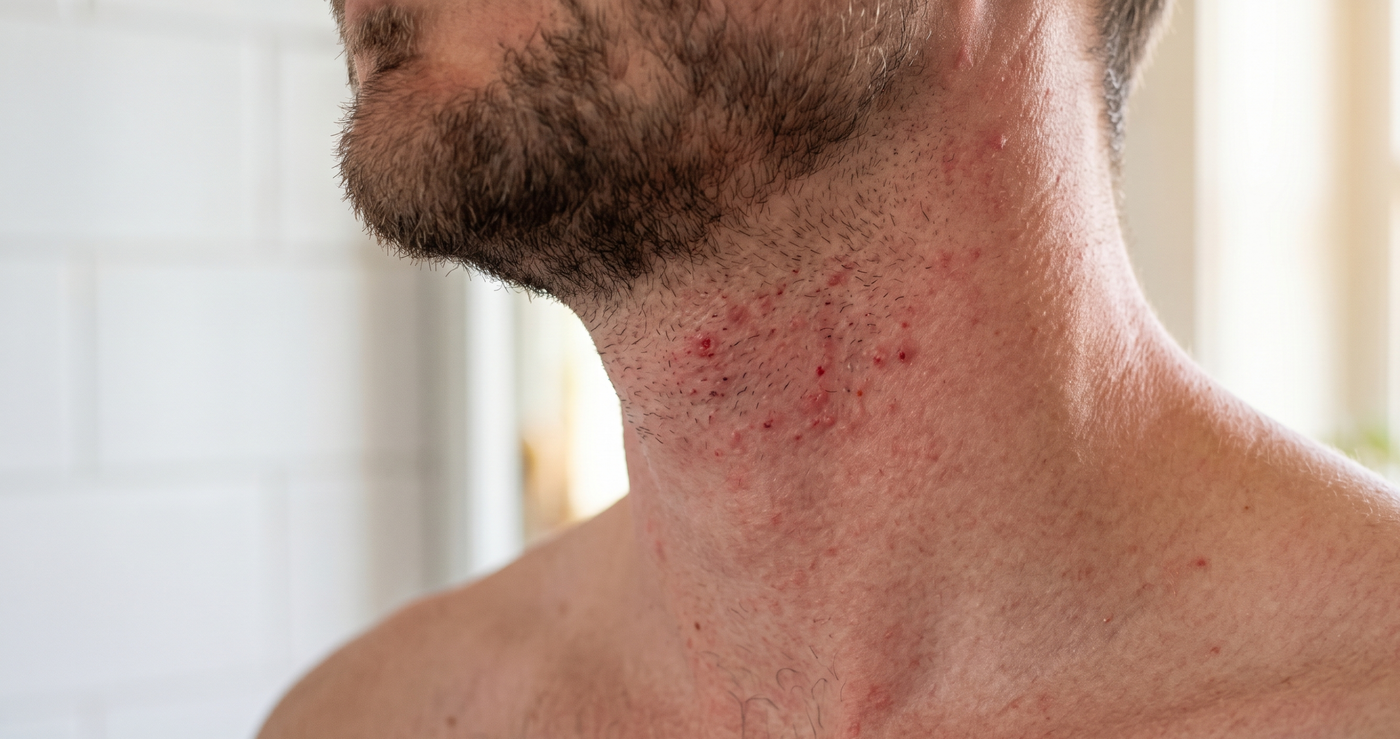
Table of Contents
Introduction Why Does Shaving Cause Razor Bumps? What Does a Razor Bump Look Like? Why Do Some Areas React Worse to Shaving Than Others? Is Bump Shaving Irritation Different From Normal Redness? What Actually Works for Razor Bump Treatment? What Your Skin Needs After Shaving Goes Deeper Than Razor Bump Removal How to Use Universal Flare Care After Shaving The TakeawayIntroduction
You shaved carefully. Fresh blade, right direction, cold water rinse to close things off. Two days later, a razor bump appeared anyway. Same spot as last time.
Here is what most shaving advice misses: a bump forming days after shaving is not a technique failure. It is a reaction.
When the same zones keep flaring... when the redness refuses to settle... when the area stays tender long after the razor is put away... something is happening beneath the surface that no blade upgrade is going to fix.
Bump shaving reactions that return to the same spots repeatedly are worth understanding, not just managing.
This article is not a reminder to exfoliate more or switch razors.
It breaks down what is actually happening inside your skin when shaving causes a recurring reaction, why certain areas are more vulnerable than others, and what kind of consistent support gives reactive skin a real chance to settle.
Why Does Shaving Cause Razor Bumps?
The answer starts below the skin surface, not at it.
When a razor cuts hair, it leaves a sharp, tapered tip on the remaining shaft. For straight hair, regrowth usually exits the follicle cleanly.
For curly or coarse hair, regrowth curves as it grows and can redirect that sharp tip back into the follicle wall or surrounding tissue before it ever breaks through the surface.
The body reads that hair tip as a foreign object and fires an inflammatory response to deal with it. That response is a razor bump.
The redness, the raised bump, the tenderness... none of it is happening at the skin surface. It is happening inside the follicle, in the tissue beneath where the razor ever touched.
This is also why technique alone does not always stop the cycle. If the hair growth pattern is the driving factor, blade quality and shaving direction will not fully override it. The skin needs support at the follicle level, not just at the surface.
What Does a Razor Bump Look Like?
A razor bump typically appears as a small raised bump one to three days after shaving, not immediately.
Look closely and you can sometimes see the coiled hair shaft sitting just beneath the skin surface. The bump is usually firm, tender to the touch, and surrounded by mild inflammation.
When the reaction deepens, it can become pus-filled as the follicle response escalates. With repeated bump shaving cycles over the same areas, the skin often darkens around those zones as post-inflammatory hyperpigmentation sets in. Texture changes in those spots over time.
What a razor bump is not: the general post-shave redness that fades within a few hours. That is friction response.
It resolves on its own and does not require more than time. The distinction matters because each one calls for a different level of attention.
Why Do Some Areas React Worse to Shaving Than Others?
The groin, inner thighs, underarms, and labia majora are consistently more reactive, and there are structural reasons for that.
Skin in those zones is thinner, giving it less barrier protection against the mechanical stress of shaving.
Follicles are more tightly packed and hair grows at angles that make inward regrowth more likely.
Add friction from clothing immediately after shaving, heat, and trapped moisture in skin folds, and you have conditions that significantly compound the follicle's inflammatory response.
A pubic razor bump often persists longer and reacts more intensely than a bump elsewhere on the body for exactly these reasons.
The follicle environment is different, and the skin has less room to absorb repeated shaving stress before it starts pushing back visibly.
This is also why many women reach for an after shave balm in these areas and find it falls short. A product built for surface redness does not always reach the follicle level where the real reaction is building.
Is Bump Shaving Irritation Different From Normal Redness?
Yes. And knowing which one you are dealing with changes how you respond.
Post-shave surface redness is a friction response that peaks within an hour and resolves on its own.
Bump shaving irritation builds over time, returns to the same locations, and signals that the follicle is under ongoing stress.
The following signs point to a true reactive pattern worth addressing:
- Bumps forming 24 to 72 hours after shaving, not immediately
- Bumps returning to the same exact spots with each shaving cycle
- Skin darkening or hyperpigmentation developing around recurring bump zones
- Tenderness or unusual texture that persists between shaves
- Pus-filled bumps when the follicle response intensifies
If more than one of those applies consistently, your skin is not just irritated. It is reacting to something it needs consistent support to work through. Surface calming alone will not get there.

What Actually Works for Razor Bump Treatment?
Razor bump treatment works best as a two-part approach: adjusting what happens during shaving, and building consistent support for what happens after. Neither side alone is enough.
Technique habits that reduce follicle stress:
- Shave in the direction of hair growth, especially in reactive zones
- Use a single-blade razor on areas prone to recurring bumps
- Warm the skin with water for at least a minute before shaving
- Avoid passing over the same area more than once per session
- Let the skin fully rest before shaving again if bumps are currently active
Post-shave support habits that help skin recover:
- Avoid tight clothing over freshly shaved skin for several hours
- Apply something gentle that soothes without clogging the follicle
- Rinse after shaving but avoid harsh cleansing immediately after
- Treat post-shave skin support as a daily habit, not only a reaction to visible bumps
This second list is where most shaving bump treatment routines fall short. Products applied only when bumps are already visible are working reactively.
Skin responds better to consistent support built into the daily routine before the reaction has a chance to escalate.
Razor bump removal is rarely instant. The follicle needs time to release the ingrown hair and settle the inflammation. A calm, consistently supported skin environment is what speeds that process.

What Your Skin Needs After Shaving Goes Deeper Than Razor Bump Removal
Most after-shave options are built for surface calming. They address redness you can see immediately.
What they are not designed for is the follicle-level inflammation that drives recurring reactions in persistently reactive skin zones.
That is the gap many women in the MMH community have found Universal Flare Care fills for them.
Not as a treatment for any medical condition, but as daily skin support applied to reactive areas after shaving to keep the skin calmer and more settled between sessions.

The formula is built around five ingredients, each with a specific role:
- Propolis ... supports the skin's natural repair response at the follicle level
- Beeswax ... creates a breathable barrier without blocking follicle recovery
- Egg yolk extract ... nourishes skin as it works to settle after a reaction
- Grapeseed and olive oils ... help maintain hydration in areas prone to moisture loss after shaving
- Lavender essential oil ... helps calm visible redness with a light natural scent
Many customers in our community report calmer, less reactive skin in areas they shave regularly after adding Universal Flare Care to their post-shave routine. Results vary from person to person.
If you are sensitive to lavender or prefer a fragrance-free option, Universal Flare Care Essential Oil-Free (Yellow jar) carries the same core formula without essential oils.
How to Use Universal Flare Care After Shaving
Universal Flare Care is designed for topical, external use on adults 18 and older. Two methods depending on how reactive your skin is.
Daily comfort: Apply directly to the shaved area morning and night. This works well for skin that reacts mildly and needs consistent support to stay calm between sessions.
Gauze method: Apply directly, then cover with cotton gauze overnight. This suits more reactive or persistently inflamed skin where sustained support is needed between shaves.
Before applying to any sensitive area including the groin, inner thighs, or underarms, do a patch test first.
If you are sensitive to lavender, use the Yellow (EO-Free) jar instead. If you are allergic to eggs, bee products, poplar tree products, or balsam of Peru, consult a healthcare professional before use.
For razor bump treatment concerns that persist or worsen, consult a healthcare professional. This product is for external topical use only and is not a substitute for medical advice.
The Takeaway
- A razor bump forms when regrown hair curls back into the follicle wall and triggers an inflammatory response... it is a skin reaction, not a shaving mistake
- The groin, inner thighs, underarms, and labia majora react more intensely due to thinner skin, tighter follicle patterns, and hair growth angles prone to inward regrowth
- Bump shaving reactions develop days after shaving, return to the same spots, and signal the follicle needs consistent support, not just surface calming
- Technique adjustments reduce stress at the source, but post-shave barrier support used consistently is what keeps reactive skin calmer between sessions
- Many customers in our community use Universal Flare Care as daily skin support for areas prone to razor bumps... results vary from person to person
- If bumps persist or worsen, consult a healthcare professional before continuing any topical routine

