




Published 20 Apr 2026
How to Care for Diaper Rash Gently and Safely
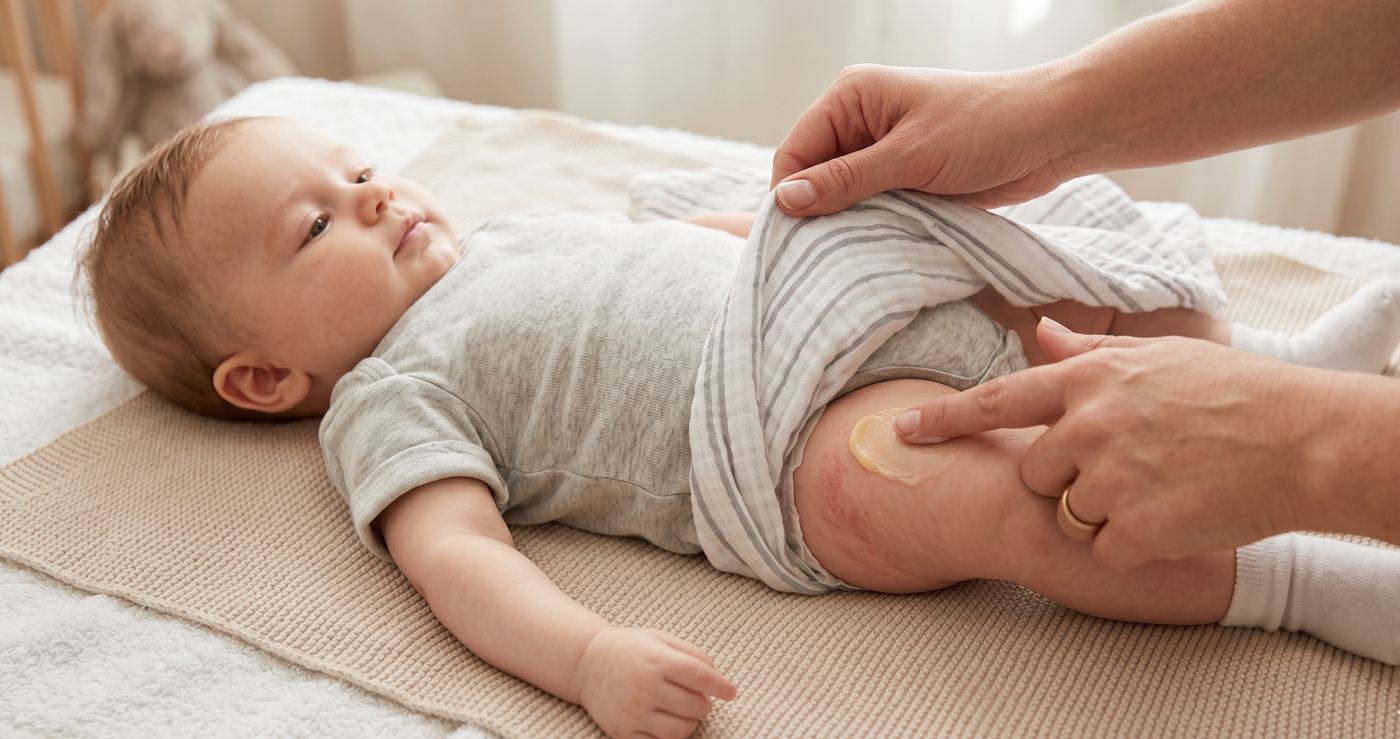
Table of Contents
Introduction Why the Rash Keeps Coming Back What Does It Actually Look Like? What Causes It in the First Place? Is It a Bacterial Diaper Rash or Something Else? What Does Diaper Rash Treatment Really Involve? What Does a Barrier Ointment Do? What Is the Best Ointment for Diaper Rash? Do Home Remedies for Diaper Rash Actually Work? Can Adults Get It Too? When to See a Doctor The TakeawayIntroduction
Most diaper rash advice comes down to three steps: change frequently, clean the area, apply a cream.
What that advice does not tell you is why the rash keeps coming back even when you follow all three. The standard approach was built around the cleaning half of the problem.
Nobody talks much about what happens to the skin in between changes... after the cream goes on, the diaper goes back up, and the moisture and friction start again.
That gap is where most diaper rash stays stuck. The skin is never quite recovering because the protection sitting on it is not built to actually hold.
And for babies whose skin is broken, reactive, or just not responding to what you have been using, that gap matters even more.
Understanding what the skin in the diaper area actually needs and what gets in the way of it recovering is what moves you from managing a rash to getting ahead of it. That is what this article is built around.
Why the Rash Keeps Coming Back
Baby skin in the diaper area has one of the hardest jobs on the body. It spends hours in a warm, closed environment in direct contact with moisture and friction... and even with the most attentive routine, the window for irritation to restart is short.
Most standard advice focuses on how to clean. Very little of it addresses what happens to the skin after you fasten the diaper back up.
If there is nothing working in its favor between changes, every wet diaper essentially restarts the cycle. The barrier has to be reinforced consistently, not just addressed after a rash appears.
What Does It Actually Look Like?
The most common presentation is pink or red patches across the skin covered by the diaper... the buttocks, upper thighs, and lower abdomen.
The skin may feel warm to the touch or appear raw in more irritated spots. In milder cases it is mostly redness. In more persistent cases, the skin becomes tender enough that your baby cries during changes.
Location matters. A rash sitting in the skin folds and creases points to a different cause than one spread across flat skin surfaces... and that distinction shapes what care actually makes sense.

What Causes It in the First Place?
Most rashes in the diaper area begin with moisture. Skin that stays damp starts to break down, and once that breakdown begins, friction from the diaper and the irritants in urine and stool do the rest.
But moisture is not always the only factor behind persistent diaper rash.
Common Causes:
- Extended contact with a wet or soiled diaper, especially overnight
- Friction between delicate skin and diaper material
- Fragrances, alcohol, or preservatives in wipes and creams
- Yeast overgrowth, most often following a course of antibiotics
- Dietary changes affecting stool frequency or consistency
- Teething, which increases the volume of saliva passing through the gut
Understanding the cause matters. A rash from friction calls for a different approach than one triggered by yeast or a recent antibiotic prescription.
Is It a Bacterial Diaper Rash or Something Else?
Not every rash in the diaper area is straightforward irritation. Two other causes show up regularly, and recognizing them changes everything about how you respond.
A yeast rash appears bright red with sharp, defined edges... usually worse in the skin folds and creases, often with small satellite spots scattered around the main patch.
It does not respond to a standard barrier approach. It typically requires an antifungal for diaper rash prescribed by your baby's doctor.
A bacterial diaper rash, caused by bacteria like staph or strep, may present with yellow crusting, pus-filled spots, or intensely bright redness around the anus. This is not something to manage at home.
If the rash looks unusual, is not settling after a few days, or comes alongside a fever, get a professional assessment before adding anything new to your routine.
Identifying what you are dealing with is step one... everything else follows from there.
What Does Diaper Rash Treatment Really Involve?
Diaper rash treatment is not a single product moment. It is a three-part approach carried out consistently: reduce the skin's contact with irritants, clean without adding friction, and protect the skin between every change.
Plain water with a soft cloth is often gentler than commercial wipes on already-irritated skin. Pat the area dry rather than wiping.
Give skin a few minutes to breathe before re-diapering when you can. These small steps matter because they give the skin a moment to recover rather than going straight back under a sealed diaper.
The protection step is where most routines fall short. Cleaning carefully and then leaving skin unprotected means the next wet diaper restarts the irritation almost immediately.

What Does a Barrier Ointment Do?
A barrier ointment for diaper rash sits between the skin and whatever is in the next diaper.
It is a physical shield... not a single-use fix, but a layer of consistent protection that gives recovering skin the conditions it needs to rebuild.
The difference between a basic barrier and one that actually works comes down to a few things.
Does it stay on through a wet diaper, or dissolve on contact? Does it support the skin underneath, or just coat the surface?
And for already-sensitive baby skin, does it carry fragrance or essential oils that could add to the irritation?
A diaper rash ointment that earns its place is one stripped back to only what belo
What Is the Best Ointment for Diaper Rash?

What skin in this state needs is a formula built around as few well-chosen ingredients as possible. No essential oils. No fragrance. Nothing the skin has to work against.
Universal Flare Care Essential Oil-Free is built around exactly that. Four ingredients: olive oil, beeswax, egg yolk extract, and propolis. The olive oil supports moisture in the skin.
The beeswax creates a breathable barrier that holds through a wet diaper. The egg yolk extract nourishes the skin underneath. The propolis offers calm, supportive coverage without reactivity.
Gentle and approved for use on babies and children, it can be applied to open or broken skin in the diaper area and is well tolerated when used as directed.
Trusted by over 500,000 customers in the MMH community, it stands out as the best ointment for diaper rash for parents who want a formula that works with delicate skin rather than around it.
Many customers in our community report calmer, more comfortable skin within the first few days of consistent use. The results vary from person to person.
Always perform a patch test on your baby before applying to the affected area.
What to Look for in a Gentle Ointment:
- No essential oils or synthetic fragrance
- Approved for use on babies and broken or open skin
- A breathable barrier that holds through a wet diaper
- Ingredients that nourish and support barrier function, not just coat the surface
- Simple enough to apply consistently at every change
Do Home Remedies for Diaper Rash Actually Work?
Some genuinely do. Plain water cleaning reduces irritation better than commercial wipes on compromised skin. Brief air exposure between changes helps the skin recover. These are not myths.
The problem is the category of remedies that circulate online under the same label. Apple cider vinegar, witch hazel applied directly to baby skin, essential oil blends... these are acidic or reactive.
On already-broken skin, they can worsen irritation rather than ease it. The intent behind them is right. The chemistry is wrong for this kind of skin.
If gentle and natural is the goal, the smarter move is a formula with the fewest well-matched ingredients possible... not stacking DIY applications on skin already asking for less.
Can Adults Get It Too?
Yes. The same mechanism applies. Skin that spends extended time in contact with moisture and friction in a closed area... from incontinence products, extended bed rest, or skin conditions affecting the inner thighs and groin... breaks down the same way.
A diaper rash ointment for adults in this situation follows the same logic: consistent barrier protection using a formula without fragrance or essential oils. Universal Flare Care Essential Oil-Free is gentle enough to serve this purpose and is well tolerated across all ages when used as directed.
If the rash in this context shows sharp red edges and satellite spots in the skin folds, an antifungal for diaper rash or its adult equivalent should come from a healthcare provider rather than a pharmacy shelf. Getting the right diagnosis first is what makes any care approach actually work.
When to See a Doctor
Most rashes settle with consistent gentle care within a few days. When they do not, or when the picture looks more complicated, a healthcare professional should be the next step... not a new product.
Reach out to a doctor if:
- The rash is not improving after three to four days of careful, consistent care
- You see pus, yellow crusting, or blistering anywhere in the affected area
- The rash is brightest in the skin folds with satellite spots (possible yeast)
- Your baby has a fever alongside the rash
- The rash appeared shortly after a course of antibiotics
Do not add new products to skin that has not been properly assessed. A confirmed cause always leads to better care than a well-intentioned guess.
The Takeaway
- Diaper rash care is a routine, not a single product decision. The skin needs protection between every change, not just after a rash appears.
- Not every rash in the diaper area is simple irritation. A yeast rash and a bacterial diaper rash look and behave differently, and each requires a different response.
- A yeast rash that sits in the skin folds with satellite spots needs a prescription antifungal from your doctor... not a barrier ointment.
- The best diaper rash treatment approach has three parts: reduce irritant contact, clean without friction, and apply barrier protection at every change.
- For babies, broken skin, pregnancy, or anyone reactive to essential oils, the formula matters as much as the routine. Fragrance-free and essential oil-free is the right starting point.
- Universal Flare Care Essential Oil-Free carries four ingredients... olive oil, beeswax, egg yolk extract, and propolis... gentle enough for newborns, approved for broken skin, and well tolerated when used as directed. Many customers in our community report calmer, more comfortable skin within the first few days of consistent use. Results vary from person to person.
- Always patch test before first use. If symptoms persist or the rash is not responding, consult a healthcare professional.

