




Published 18 May 2026
How Stress and Environment Influence Eczema Symptoms
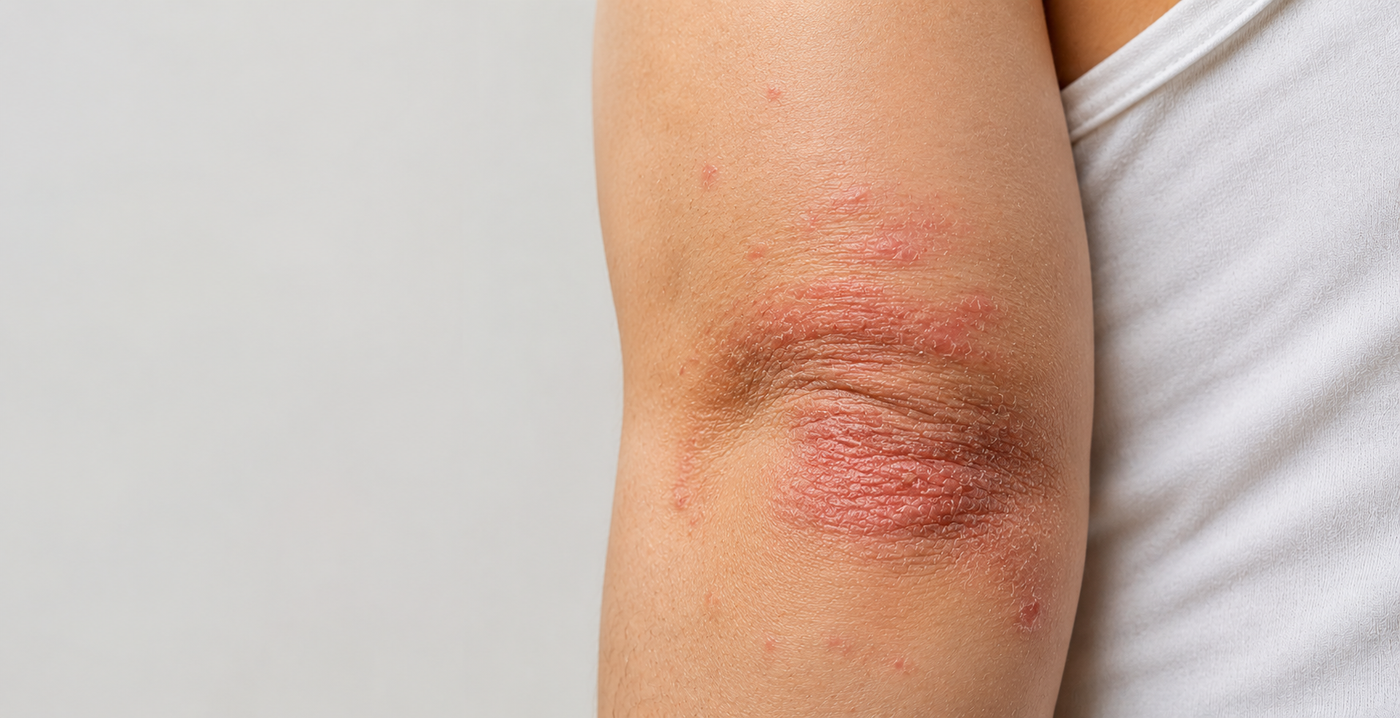
Table of Contents
Introduction Why Your Eczema Flares Worse During Stressful Weeks What Stress Actually Does to Your Skin Barrier How Environment Stacks With Stress to Trigger Flares The Itch-Scratch Cycle Stress Feeds at Night Daily Habits That Lower the Stress-Flare Load Environmental Adjustments That Calm Reactive Skin When Eczema Symptoms Need More Than Lifestyle Fixes The TakeawayIntroduction
Most eczema advice points you to the same handful of culprits. The food on your plate. The fabric against your skin. The weather your body keeps reacting to.
The detergent that promised gentle and delivered a rash. You've read those lists so many times you could write them yourself by now... and yet your skin still flares on the weeks none of those triggers changed.
There's something doing more to your skin than every item on that list combined. Most women never trace it back to it because it doesn't look like a skin issue.
It looks like a hard meeting. A sleepless night. A week of holding too much at once. It looks like the kind of pressure women carry quietly, the kind no one writes a trigger list for.
We've been chasing the trigger list while the bigger driver sits inside the body. Inside the nervous system that quietly rewrites the skin's chemistry every time the day asks too much of you.
You already noticed this, even if you haven't named it. The patch on your inner elbow that surfaced the week before the deadline.
The flare behind your knee after the hard conversation you'd been avoiding. The 3 a.m. itch that only shows up on the weeks you're holding the most.
The way your skin tightens after a poor night of sleep, even when nothing in your routine has changed. You weren't imagining the pattern. The pattern is real.
The eczema dermatitis stress connection is what no one was naming. Eczema isn't just a skin condition. It's a translator for what your nervous system and your environment are doing to your body, often inside the same week.
On a single hard day, your skin is processing a cortisol spike, a poor night of sleep, the dry indoor heat, the fragrance on someone's coat in the elevator, and a sweater seam against your neck for nine hours.
That's five hits stacking on the same barrier before dinner. The flare you're blaming on "the new soap" was usually decided three days earlier, when the load got bigger than the reserve.
This article walks through what's actually happening on those weeks, and what helps you settle the cycle before the next flare lands.
Why Your Eczema Flares Worse During Stressful Weeks
The pattern most women report is the same. The flare doesn't show up randomly. It tracks the hardest stretches of the month.
The eczema dermatitis stress link is felt before it's understood. You can usually map your worst flares back to something specific, not a food or a fabric, but a season of life that asked more of your nervous system than it had room for.
Common stress events that tend to land on the skin within days:
- A high-pressure week at work or a deadline stretch
- Three or four nights of broken sleep in a row
- A hard conversation, breakup, grief or family conflict
- Hormonal shifts around your cycle, postpartum, or perimenopause
- Caregiving load that doesn't pause, even when you do
When the body holds that much for too long, the skin is usually the first place the load shows up.
What Stress Actually Does to Your Skin Barrier
Under stress, cortisol levels rise, the immune system shifts into a more inflamed state, and the skin barrier loses water faster than it can hold. Inflammation messengers ramp up.
The nerve endings just under the surface get more reactive. That's the mechanical version of what's happening underneath.
The lived version is simpler. Your skin gets thinner-feeling. Itchier. More reactive to fabrics and products that didn't bother you a week ago.
The physical symptoms of stress aren't only racing thoughts and a tight chest. On reactive skin, they show up as redness that sits longer than it should, dryness that won't lift no matter how often you moisturize, and patches that flare with almost no provocation.
A weakened barrier also lets irritants in faster. So the stress hit and the environmental hit don't take turns. They stack.
How Environment Stacks With Stress to Trigger Flares
The trigger list isn't wrong. It's just incomplete on its own. Environmental load matters most when it lands on a barrier that's already running low on reserve.
The eczema dermatitis stress baseline is what decides how loudly your skin reacts to the same air, the same detergent, the same sweater you've worn all year.
On a calm week, your skin tolerates more. On a high-load week, the same exposures cross a threshold.
Environmental triggers worth watching during high-stress stretches:
- Dry winter air or over-conditioned indoor heat
- Pollen surges in spring and early fall
- Fragranced laundry detergent, fabric softener, body wash
- Wool, polyester blends, and rough seams against the skin
- Trapped sweat from gym clothes, masks, or tight bands
- Hard water and over-cleansing routines
When two or three of these stack on the same skin, the flare you blame on "the new soap" was usually building all week.

The Itch-Scratch Cycle Stress Feeds at Night
Nights are often when the cycle hits hardest. Cortisol drops, the day's distractions fall away, and the nerves under reactive skin get louder. The itch starts. The scratch follows.
The skin gets more inflamed. The itch gets worse. By morning, the patch you scratched in your sleep looks worse than the one you went to bed with.
The physical symptoms of stress feed this loop directly. Tense shoulders, a racing mind, shallow breathing... they keep your nervous system in a heightened state, which keeps the skin nerves sensitive, which keeps the urge to scratch alive at 2 a.m.
Most women in the eczema community describe their worst nights the same way... the bedroom is finally quiet, and the skin gets loud.
Breaking the loop usually starts before bed, not at 2 a.m. Anything that quiets the nervous system in the hour before sleep gives the skin a calmer night.
Daily Habits That Lower the Stress-Flare Load
You can't avoid every stressful week. Life will keep handing you the deadlines, the broken sleep, and the seasons that ask too much of you.
But you can lower the baseline your skin reacts from, so the next hard week doesn't land on a barrier that's already running on empty.
The habits below aren't a fix. They're a daily input that, used consistently, gives your nervous system fewer reasons to keep your skin on high alert:
- A slow exhale practice for two to five minutes, twice a day
- A short walk without your phone, ideally outside
- A protected sleep window of at least seven hours
- Writing down what's actually weighing on you, even for five minutes
- Easing caffeine on the weeks you can already feel the load building
- Limiting late-evening screens, which keep the body alert past bedtime
None of these soothe a flare on the spot. What they do is shrink the reserve gap that lets the next flare land.

Environmental Adjustments That Calm Reactive Skin
Lifestyle changes get more out of your skin when the environment around it stops working against it.
A few swaps that ease the load:
- A humidifier in the bedroom during dry months
- Fragrance-free laundry detergent, no fabric softener, no dryer sheets
- Soft cotton against the skin, especially overnight
- Lukewarm baths and showers, never hot
- Moisturizing within three minutes of patting the skin dry
For the most reactive skin, the daily moisturizer matters more than most women expect. A gentle, fragrance-free formula gives the barrier something to hold onto on the days it can't hold onto much.
That's the lane Universal Flare Care Essential Oil-Free was built for. Just four ingredients: olive oil, beeswax, egg yolk extract, and propolis. No essential oils. No fragrance.
The formula is rooted in a surgeon-passed-down recipe trusted by over 500,000 customers, and it's gentle enough for the inner elbow, behind the knee, the neck, under the breast, and the inner thigh, where eczema tends to settle in.
It's well tolerated when used as directed, suitable through pregnancy and nursing, and gentle enough for babies and kids.
A patch test is always a good first step, especially for sensitive areas, and anyone with a known bee allergy should consult their healthcare provider before use.
Many customers in our community report calmer, less reactive skin within the first few days of consistent use, especially during high-stress and seasonal-shift weeks. Results vary from person to person.
When Eczema Symptoms Need More Than Lifestyle Fixes
Some flares move past what daily habits and gentle care can hold. If your skin is breaking open, weeping, not closing, or stealing your sleep night after night, that's not a self-care problem anymore. That's a sign your skin is asking for medical support.
Speak with a healthcare professional if symptoms persist, get worse during stress, or stop responding to your usual routine.
A dermatologist or your primary care provider can rule out infection, adjust your plan, and help you find what your skin actually needs.
The Takeaway
Your eczema isn't a character flaw or a sign you've been doing self-care wrong. It's a translator for what your nervous system and your environment are putting your body through, often at the same time.
When you address both sides of that... the inside load and the outside exposure... your skin gets a real chance to settle.
Stress management gives the barrier a calmer baseline. Environmental swaps give it less to react to. A gentle, well-tolerated daily formula gives it something to hold onto in between.
The goal isn't a perfectly calm life. The goal is a skin that has the reserve to weather the hard weeks without breaking down on you.

