




Published 21 Apr 2026
Folliculitis: causes, symptoms, treatment
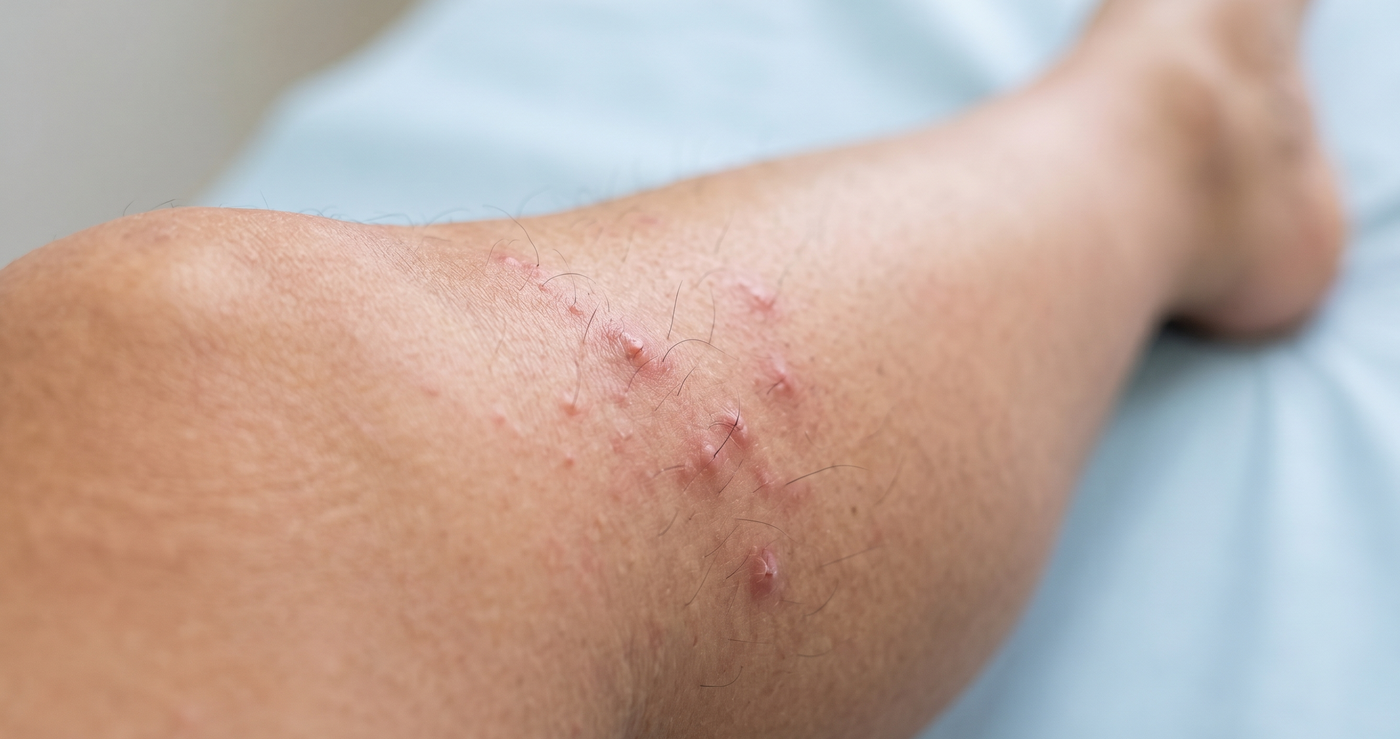
Table of Contents
Introduction What Is Folliculitis and Why Does It Keep Coming Back What a Hair Follicle Infection Actually Looks Like Razor Bumps vs Folliculitis: How to Tell the Difference Common Causes of Bacterial Folliculitis Folliculitis Treatment: What Works and What Doesn't Folliculitis Skin Care for Stubborn, Recurring Flare-Ups The TakeawayIntroduction
Folliculitis doesn't send a warning. It shows up on your inner thighs, your buttocks, your bikini line, your underarms... and just when the last round of bumps finally clears, a new cluster forms in the same spot.
If you're dealing with a recurring hair follicle infection, you already know how frustrating that cycle is. You've done what you were told. You kept the area clean. You switched razors. You tried exfoliating. Maybe you stopped shaving altogether for a while.
And it still came back.
That's not your fault. The problem is that most standard folliculitis treatment advice only talks about what's happening on the surface... the redness, the bumps, the irritation. It doesn't address what's actually feeding the infection underneath.
The bacteria that cause folliculitis don't just sit on your skin waiting for a dirty razor. They thrive in specific conditions... friction, moisture, trapped heat, clogged follicles.
If those conditions stay the same, the bumps will too. No matter how many times you clean the area or swap out your shaving routine.
And that gap between what you've been doing and what's actually going on inside the follicle? That's where the real answer lives. Because folliculitis that goes unaddressed doesn't just hold still.
It spreads to nearby follicles. It leaves dark marks behind. It scars. And with every new round of inflamed hair follicles, the pattern gets harder to interrupt.
This article breaks down what folliculitis actually is, how to identify it correctly, what causes it to keep coming back, and which approaches actually interrupt the cycle... not just the flare on the surface.
What Is Folliculitis and Why Does It Keep Coming Back
Folliculitis is the inflammation or infection of one or more hair follicles. A hair follicle is the tiny pocket in your skin where each strand of hair grows from.
When bacteria, fungi, or other irritants get inside that pocket, the follicle becomes swollen, red, and sometimes filled with pus.
It can show up anywhere hair grows. But for most women, the areas that get hit hardest are the ones where friction and moisture live together... buttocks, inner thighs, bikini line, underarms, and the back of the neck.
These spots trap sweat, rub against clothing, and are often shaved or waxed, which makes them a perfect environment for bacteria to take hold inside the follicle.
The reason it keeps coming back is simple. The conditions that caused the first flare are usually still in place. Tight clothing still presses against the same skin. Sweat still collects in the same folds.
The follicle may have cleared on the surface, but the environment that allowed bacteria in hasn't changed. So the next time friction meets moisture meets a micro-cut from shaving... the cycle restarts.

What a Hair Follicle Infection Actually Looks Like
On your skin, folliculitis usually appears as clusters of small red or white bumps. Some have a visible hair in the center. Others look more like tiny pimples with white or yellow heads.
In mild cases, you might only see a few scattered bumps that itch or sting. In more persistent cases, the bumps can group together, fill with pus, and become painful to the touch.
It's easy to mistake folliculitis for acne, especially when it shows up on the face, chest, or back. But the key difference is location.
Acne forms inside pores. Folliculitis forms around the hair follicle itself. If your bumps consistently appear in areas where your skin folds, sweats, or gets rubbed by clothing... and they keep coming back in the same spots... it's more likely inflamed hair follicles than a breakout.
Folliculitis can also be acute or chronic. Acute cases clear in a few days with basic care. Chronic cases are the ones that cycle back every few weeks or months, sometimes leaving scars or dark spots behind.
Razor Bumps vs Folliculitis: How to Tell the Difference
This is one of the most common mix-ups, and it matters because the wrong approach can make things worse.
Razor bumps are ingrown hairs. After shaving, the hair curls back and grows into the skin instead of out of it.
That causes a raised, sometimes painful bump. Razor bumps follow the pattern of a recent shave... they show up within a day or two, and they stay close to the area where the blade touched.
Folliculitis is different. It's an infection or inflammation of the follicle itself, and it doesn't need a razor to start.
You can get it in areas you never shave. It shows up where friction, moisture, and bacteria overlap... not necessarily where a blade has been.
The confusion around razor bumps vs folliculitis leads a lot of women to reach for exfoliating scrubs, glycolic acids, or ingrown hair serums that aren't built for infected follicles.
Those products can irritate already-inflamed skin and push bacteria deeper into the follicle. If your bumps keep returning in the same areas regardless of whether you shaved recently, or if they show up in spots where friction and sweat are constant... you're likely dealing with folliculitis, not ingrowns.
Common Causes of Bacterial Folliculitis
The most common cause of folliculitis is a bacterium called Staphylococcus aureus. It already lives on most people's skin without causing any issues.
The problem starts when it gets inside a hair follicle through a small cut, a scratch, friction from clothing, or a freshly shaved surface.
Once the bacteria are inside, the follicle becomes inflamed. Your body sends white blood cells to fight the infection, which is what creates the redness, swelling, and pus.
That's a standard immune response... your body doing its job. But the real issue isn't that the infection happened once. It's that the environment keeps inviting it back.
Tight leggings, non-breathable underwear, excessive sweating, prolonged sitting, and frequent shaving or waxing all play a role.
So does soaking in hot tubs or pools that aren't well-maintained. For women, the groin, buttocks, and inner thighs are especially vulnerable because they hit almost every trigger at once... friction, warmth, moisture, and regular hair removal.
Understanding the bacterial cause is what shifts the approach. A bacterial folliculitis treatment that only focuses on killing the bacteria on the surface misses the point if the conditions that let the bacteria in are still active.

Folliculitis Treatment: What Works and What Doesn't
Mild folliculitis often resolves on its own within a week or two. Warm compresses can help ease discomfort and encourage the follicle to drain.
Keeping the area clean and dry matters. Avoiding tight clothing in the affected zone gives your skin room to breathe.
And pausing hair removal in that area... even temporarily... removes one of the most common entry points for bacteria.
For more stubborn or widespread flare-ups, a doctor may recommend topical or oral antibiotics, antifungal medications if yeast is involved, or anti-inflammatory options to bring down swelling and itch.
These are real tools, and they work for what they're designed to do. But here's what standard care often misses: the daily skin environment.
Antibiotics handle the infection. They don't change the friction, the moisture, the heat, or the lack of skin support between flare-ups. That's why so many women go through rounds of antibiotics only to see the bumps come back weeks later.
A more complete approach pairs medical care with consistent bacterial folliculitis treatment of the skin itself... daily support that keeps the area calm, nourished, and protected even when there's no active flare. That's the piece most routines are missing.
Folliculitis Skin Care for Stubborn, Recurring Flare-Ups
If your folliculitis keeps cycling back, the gap isn't usually in how you respond to a flare. It's in what happens between flares. The skin in areas prone to folliculitis needs daily attention, not just crisis management.
Start with the basics. Wear breathable, loose-fitting fabrics over areas that flare often. Shower soon after sweating.
Avoid pore-clogging lotions or heavy oils in your friction zones. Don't pick at bumps or try to pop them... that pushes bacteria deeper and opens the door to scarring. If you shave, use a clean single-blade razor and always go in the direction of hair growth.
For women looking to add a daily skin support layer to their folliculitis skin care routine, Thyme & Tea Tree Flare Care from MyMagicHealer is built for exactly this kind of stubborn, recurring flare.

Rooted in a surgeon-passed-down formula, it combines thyme and tea tree to help soothe and calm the skin during a flare. You can apply it directly to the affected area morning and night as part of your daily routine. For deeper support, apply it and cover with a cotton gauze overnight.
Many customers in our community of 500,000 report that it helps calm redness, supports skin in folliculitis-prone areas like the buttocks, thighs, bikini line, and underarms, and fits naturally into their daily routine. Results vary from person to person.
A few things to keep in mind: Thyme & Tea Tree Flare Care is for adults 18 and older. It is not for use during pregnancy or breastfeeding, and should not be applied to broken or irritated skin.
Always do a patch test before first use. Avoid sun exposure on areas where it's been applied. If you have asthma or epilepsy, consult a healthcare practitioner before using. And if your symptoms persist, spread, or worsen, see a healthcare professional.
The Takeaway
Folliculitis is common, and it's manageable... once you stop treating it like a surface problem. The bumps are the visible part.
But the cycle underneath is driven by friction, moisture, bacteria, and skin that isn't getting the daily support it needs between flares.
Knowing the difference between razor bumps and an infected follicle changes how you respond. Understanding what causes a hair follicle infection to keep returning changes what you reach for.
And building a daily folliculitis treatment routine that goes beyond crisis mode is what finally interrupts the pattern.
You don't have to keep guessing. You don't have to keep starting over every few weeks. The right information paired with consistent, daily care puts you ahead of the cycle instead of always reacting to it.
And if your skin isn't responding to home care, a healthcare professional can help you find the right next step.

