




Published 18 May 2026
Different Types of Dermatitis (And What Actually Helps Naturally)
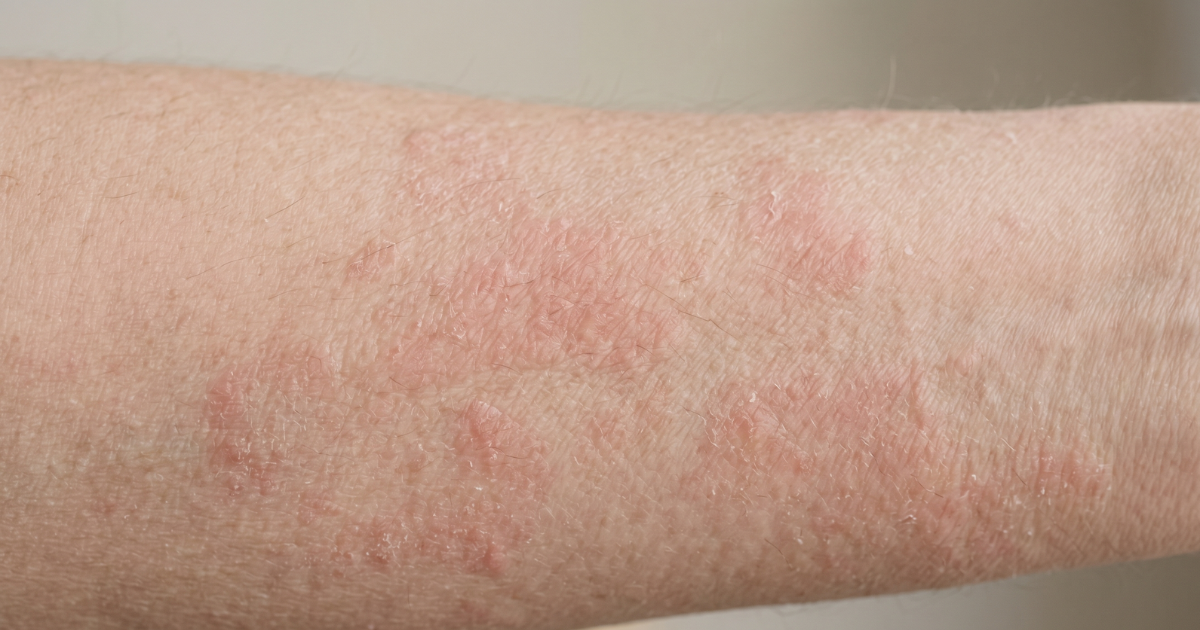
Table of Contents
Introduction Why Different Types of Dermatitis Get Confused What Atopic Dermatitis Looks Like (And Why It Itches) What Stasis Dermatitis on Legs Looks Like What Contact Dermatitis Looks Like What's the Difference Between Atopic, Stasis, and Contact Dermatitis? What Causes Each Type of Dermatitis? What Actually Helps Eczema on the Skin Day to Day What Are the Best Natural Remedies for Atopic Dermatitis? When to See a Healthcare Professional The TakeawayIntroduction
This article will sort out which type of dermatitis you are actually dealing with and what each one specifically responds to... so the daily care stops being a guessing game.
Whether you have atopic dermatitis on the inside of your elbows, stasis dermatitis showing up as brown staining on your lower legs, or a sharp-edged contact reaction following the line of a watch strap, the support each one needs is different.
You have probably already been to your doctor or dermatologist. You have already heard "use a moisturizer" and "avoid your triggers."
What often does not get sorted out in a 15-minute appointment is the day-to-day distinction between the types and what each one specifically needs... because the wrong support on the wrong type is exactly why the flares keep cycling.
Most women searching for answers about their skin are not just trying to understand one condition.
You are trying to figure out whether the patch on your inside elbow is the same thing as the rash on your ankles, and why the advice you keep finding online sounds the same for every type of dermatitis there is.
Once you can identify which type you are actually dealing with, the eczema on the skin you keep watching come and go starts making sense. The mechanism handed to you in the next few minutes is the distinction itself.
By the end of this article, you will know how each common type looks side by side, what specifically sets each one off, and the daily skin support women in the MMH community rely on for the most reactive types of skin.
Why Different Types of Dermatitis Get Confused
"Dermatitis" is a category, not a single condition. The umbrella covers atopic, stasis, contact, and seborrheic forms among others, and the surface presentation of each can overlap enough that a person looking in the mirror cannot easily tell where one ends and another begins.
Most articles online list six types under the same heading and use words like "rash" and "itchy" and "inflamed" for all of them. They are technically correct and practically useless... because the same surface words describe conditions with very different triggers, locations, and care needs.
The rest of this article walks through the three forms women most commonly mix up... atopic, stasis, and contact... and gives you the specific clues that separate them.
What Atopic Dermatitis Looks Like (And Why It Itches)
Atopic dermatitis is the most common form of eczema on the skin. It shows up as dry, scaly patches that come and go in predictable spots... inside the elbows, behind the knees, on the neck, on the hands, and on the face.
On lighter skin, those patches typically appear red. On deeper skin tones, the same condition often appears gray, purple, or a darker brown rather than red... which is why women with darker skin sometimes go years before recognizing what they are dealing with.
The itch is the loudest symptom for a reason. The skin barrier in this condition does not hold the way it should.
Moisture escapes faster than the skin can recover, and the nerve endings just under the surface become reactive to almost everything around them... heat, sweat, fabric, even a change in weather. Then the itch-scratch cycle takes over.
Spanish-speaking women searching dermatitis atopica are looking at the same condition under the Spanish name.
Atopic eczema symptoms:
- Dry, scaly patches that show up red on lighter skin and gray, purple, or darker brown on deeper skin tones
- Patches that come and go in the same predictable spots
- Intense itching that gets worse at night
- Skin that cracks, weeps clear fluid, or thickens with repeated flares
- Locations: inside the elbows, behind the knees, on the neck, hands, and face
- Often runs in families alongside asthma and hay fever
What Stasis Dermatitis on Legs Looks Like
Stasis dermatitis is a different problem entirely... not a barrier issue, but a circulation issue. This is the condition most articles online cover in a single sentence and move on, which is why so many women dealing with it go years without recognizing it for what it is.
It shows up as brown or rust-colored discoloration on the lower legs and ankles. On deeper skin tones, the staining often presents as a darker purple-brown or gray. There is usually swelling that gets worse by evening, especially after a long day on your feet, and there can be itchy or weeping patches around the ankles.
What is happening underneath is that the small valves in the leg veins have weakened. Blood does not return to the heart efficiently, fluid pools in the lower extremities, and the skin over those areas becomes inflamed. This is dermatitis on legs in the most literal sense... the location is the diagnosis. The patches stay where the circulation problem lives.
This condition is most common in adults over 50, people who stand for long shifts at work, anyone who is pregnant, and anyone with varicose veins or a family history of circulation issues.
Symptoms of this circulation-driven form:
- Brown or rust-colored staining on the lower legs and ankles
- Swelling that gets worse after standing or sitting still for hours
- Itchy, scaly, or weeping patches around the ankles
- Skin that feels heavy, achy, or tight by evening
- Slow-to-close sores or open patches in advanced cases
- Patches that stay in the same spot rather than moving around the body
What Contact Dermatitis Looks Like
Contact dermatitis is the simplest of the three to understand. Your skin touched something it does not tolerate, and reacted.
There are two forms. Irritant contact reactions happen when the substance damages the skin directly... usually appearing as a burn-like reaction within hours.
Allergic contact reactions happen when the immune system flags the substance as a threat... usually appearing one to two days after exposure.
Both look similar visually. A sharply outlined red patch (or gray-brown on deeper skin tones) that follows the exact shape of whatever touched the skin. The shape is the clue.
A rash that follows the line of a watch strap. A patch in the exact shape of a necklace clasp at the base of the throat. A reactive line where the seam of a bra sits. A square of irritation where a transdermal patch was placed.
Common triggers are nickel (in jewelry, watch backs, jean buttons, bra closures), fragrances (in skincare and laundry products), preservatives (in cosmetics and "natural" products both), poison ivy and poison oak, and certain plants in the garden.
What's the Difference Between Atopic, Stasis, and Contact Dermatitis?
Four signals separate the three conditions cleanly.
- Location pattern. The atopic form shows up in the folds of the body. The circulation-driven form shows up almost exclusively on the lower legs and ankles. The contact form shows up wherever the trigger touched.
- Shape. Atopic patches are diffuse and patchy with edges that fade into the surrounding skin. The lower-leg form covers the leg in a sleeve-like pattern that wraps the ankle and shin. Contact patches follow the exact shape of the trigger.
- Trigger profile. The atopic form responds to barrier stressors like dry air, fragrances, fabric, sweat, and stress. The circulation-driven form is driven by venous issues and gets worse with standing, sitting, pregnancy, and heat. Contact reactions show up after a specific exposure you can usually trace.
- Timing. The atopic form tends to come and go from childhood. The lower-leg form develops gradually with age and circulation changes. Contact reactions appear within hours to two days of an exposure and clear once the trigger is removed.
If you have more than one of these going on at once, that is common and not a contradiction. It just means the daily care has to account for all of them.
Here’s where it gets worse… as these abscesses repeatedly heal and break open again, your skin starts forming scars and tunnels underneath the surface. Dermatologists call these tunnels “sinus tracts,” and they’re basically pathways connecting different lesions under your skin. You can’t see them but you can definitely feel them.
Stage 3 HS:
Severe HS happens when the condition has been going unchecked for a long time. You’ll have widespread lesions, extensive scarring, and multiple tunnels covering entire areas like your armpits or groin. At this stage, you might always have active abscesses. The pain becomes constant, scarring can be thick, ropy, and uncomfortable. Movement gets restricted because the affected areas are so inflamed and tender.
People with Stage 3 HS often need a combination of biologic medications and surgery to manage the condition. The tunneling and scar tissue have to be physically removed because topical treatments can’t reach that deep.
What Causes Each Type of Dermatitis?
Once you know the type, you can audit your own life for the trigger profile that fits it.
Atopic flares cluster around skin barrier stressors. Dry indoor air in winter, hot showers, harsh soaps, fragrances in laundry products, fabric irritation from wool or polyester, sweat, stress, and hormonal shifts.
Lower-leg flares are about circulation. Long shifts standing or sitting still, pregnancy, excess weight, heat, and a sedentary lifestyle that does not move blood through the legs regularly.
Contact reactions are direct exposures. Nickel in jewelry, watch backs, bra closures, and jean buttons. Fragrance in skincare and laundry products. Preservatives in cosmetics including "natural" ones. Poison ivy, poison oak, certain plants. Adhesives in bandages.
You leave this section with three different mental checklists, not one.
What Actually Helps Eczema on the Skin Day to Day
Some daily habits support all three forms of dermatitis, regardless of which one you are dealing with.
Switch to fragrance-free everything... laundry detergent, body wash, lotion, hand soap. Use lukewarm water rather than hot, because hot water strips the skin barrier faster than it can recover.
Wear soft fabrics like cotton against the skin. Moisturize within three minutes of getting out of the shower while the skin is still damp, so the moisturizer locks in water rather than sitting on dry skin.
Keep your nails short to limit late-night scratch damage. And start a simple journal of what you ate, wore, washed with, and used on your skin in the days before a flare... it is the fastest way to find your personal triggers.
Then there is the product question. Many women in the MMH community deal with skin that reacts to almost everything, including products labeled "natural" or "for sensitive skin."
That is because the "natural" label very often includes essential oils, and reactive skin does not tolerate essential oils well.
Universal Flare Care Essential Oil Free is the daily comfort and skin support option many people in our community of more than 500,000 rely on to soothe itchy, irritated skin that does not tolerate fragrance or essential oils.
The formula is four ingredients. Olive oil to nourish and support the skin barrier. Beeswax to lock in moisture and gently shield sensitive skin from outside irritants. Egg yolk extract chosen for its barrier-supporting compounds. Propolis chosen for its skin-calming properties.
It is the formula many women in our community choose specifically because it contains no essential oils.
That makes it gentle and well tolerated when used as directed, including by pregnant women, breastfeeding mothers, and parents applying it on skin around babies and young children.
We always recommend a patch test on a small area of skin first, and we always recommend consulting a healthcare professional if symptoms persist or worsen.
A note on allergies: the formula contains olive oil, beeswax, egg, and propolis. Women with known allergies to any of those ingredients should avoid use.
Many customers in our community report calmer, more comfortable skin within days of swapping out their old products for this one. Results vary from person to person.

What Are the Best Natural Remedies for Atopic Dermatitis?
The internet is full of folk wisdom recommendations for soothing sensitive skin. Some are genuinely useful. Others can make a flare worse.
Worth doing. Oat baths (colloidal oatmeal in lukewarm water) for itch relief during a flare. A humidifier in the bedroom through winter to keep indoor air from pulling moisture out of your skin overnight. Cotton clothing against the skin. A simple journal tracking what you ate, washed with, and wore in the days before a flare. Fragrance-free laundry detergent run through an extra rinse cycle on bedding and intimates.
Worth skipping. Tea tree oil applied directly on broken or weeping skin... it is a known sensitizer and can intensify the very reaction it claims to soothe. Apple cider vinegar on irritated skin... the acidity is irritating to a compromised barrier. Coconut oil for women whose skin reacts to it... it is a common allergen for some, particularly on already-flared skin. Grapefruit seed extract on infected-looking skin... it is not a clinically supported antimicrobial for that purpose. And any product carrying a strong fragrance, even when the fragrance is sold as an "essential oil" blend... reactive skin does not care whether the irritant came from a flower or a lab.
These are the natural remedies for atopic dermatitis that come up most often online. The discipline is not in trying all of them.
It is in knowing which ones are appropriate for skin that already reacts to almost everything. For women in that camp, an essential-oil-free formulation like Universal Flare Care Essential Oil Free is the kind of option worth knowing about.

When to See a Healthcare Professional
Daily skin support is not a substitute for a confirmed diagnosis. There are situations where the right move is a professional appointment, not another product.
Make the call if your patches are not improving with consistent, gentle care. If weeping or oozing is getting worse rather than better.
If you see signs of infection... increased redness, warmth, pus, or fever. If you have painful sores on your lower legs that are not closing, which can be a sign that the circulation-driven form has progressed and needs medical attention.
If you are dealing with a sudden severe reaction covering a large area of your body. Or if any of this is showing up on a baby or young child and you are unsure what you are looking at.
A confirmed diagnosis is the foundation. Daily skin support sits on top of that... not in place of it.
The Takeaway
The three forms of dermatitis women most often mix up are different conditions with different triggers and different care profiles.
- The atopic form lives in the folds of the body, runs in families with asthma and hay fever, and responds to barrier-supporting daily care
- The lower-leg form is driven by circulation issues and worsens with standing, sitting, pregnancy, and heat
- The contact form follows the exact shape of whatever triggered it and clears once the trigger is removed
- Daily care across all three forms comes down to fragrance-free products, lukewarm water, soft fabrics, moisturizing on damp skin, and identifying personal triggers
- For women whose skin reacts to almost everything, including products labeled "natural," an essential-oil-free formula is the daily skin support option worth having in the routine
Universal Flare Care Essential Oil Free is what many people in our community of more than 500,000 reach for to soothe and support skin that will not tolerate anything else... gentle enough for use during pregnancy and breastfeeding, gentle enough for skin around babies and young children, and well tolerated when used as directed.

