




Published 21 Apr 2026
Butt Acne (Folliculitis) + Natural Remedies
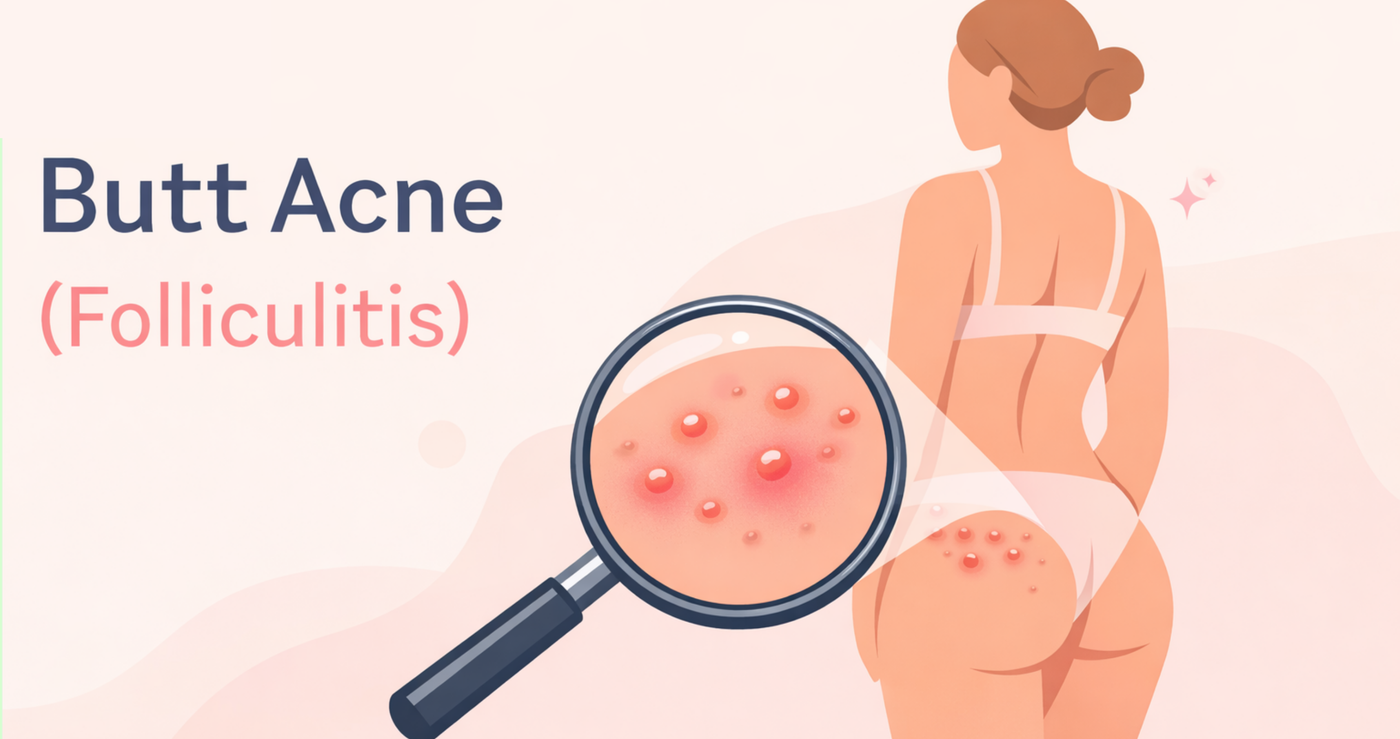
Table of Contents
Introduction Why Butt Acne Isn't Really Acne What Causes Hair Follicle Inflammation on the Buttocks Shaving Bumps, Razor Bumps, or Folliculitis Home Remedies for Folliculitis on the Buttocks Why a Natural Folliculitis Treatment Works Better Long-Term How Thyme & Tea Tree Flare Care Supports Folliculitis-Prone Skin When to Talk to a Doctor About Butt Acne The TakeawayIntroduction
You used to throw on a swimsuit without a second thought. Now there's a pause. A mirror check.
A quick mental calculation about what's visible and what isn't... all because of those bumps on your butt that showed up months ago and never fully left.
Some people call them butt pimples. Others say "breakouts back there" and leave it at that. You might have written them off as bad skin or something you just deal with quietly.
That stops here.
Have you ever bought a "body acne" wash, used it for three weeks straight, and watched absolutely nothing change?
Switched your laundry detergent, your underwear fabric, even your razor... and still felt those same raised bumps every time you ran your hand across your skin?
Sat in a meeting or a car for a couple of hours and noticed the irritation flare right back up?
Most people chalk it up to breakouts and move on. But here's what nobody told you... those bumps are probably not acne at all.
What you're actually dealing with is hair follicle inflammation. Bacteria are getting into the follicle itself and triggering a cycle that no surface-level cleanser can reach. That's why the body washes didn't work. That's why switching razors didn't fix it.
A natural folliculitis treatment has to go after what's actually happening inside the follicle... not just what's sitting on top of the skin. And most of the products you've tried were never built for that.
Because butt acne is not face acne. The same products, the same scrubs, the same routines that work on your chin or forehead were designed for clogged pores... not infected hair follicles.
Scrubbing harder doesn't just fail here. It makes the whole thing worse. So let's get into what's really going on and what actually helps.
Why Butt Acne Isn't Really Acne
What most people call butt acne is actually folliculitis. The difference matters more than you'd think.
Acne vulgaris... the kind you get on your face... starts in the pore. Oil, dead skin, and bacteria build up inside, and you get a whitehead, a blackhead, or a cyst.
Folliculitis works differently. It's a bacterial skin infection that starts in the hair follicle, not the pore. The bacteria involved (usually Staphylococcus aureus) get trapped inside the follicle and cause small, red, sometimes pus-filled bumps that can itch or sting.
That's why acne face washes and spot treatments fall flat when you use them on your buttocks. They're solving a different problem.
Finding the right bacterial skin infection remedy starts with knowing you're dealing with folliculitis, not acne.

What Causes Hair Follicle Inflammation on the Buttocks
Your buttocks deal with more friction, heat, and pressure than almost any other part of your body.
You sit on them all day. Fabric presses against them constantly. Sweat pools in the creases and folds with nowhere to go.
That combination creates the exact environment bacteria love. When Staphylococcus aureus or other common skin bacteria get pushed into a hair follicle through friction or shaving, the follicle gets irritated and swells.
That's hair follicle inflammation... and it's the root of nearly every bump you're seeing back there.
Tight leggings, synthetic underwear, sitting for hours without a break, working out in compression gear and not showering right after... these are the everyday triggers.
When sweat and bacteria sit against the skin for hours, inflamed skin follicles are the predictable result. Your skin isn't broken. The conditions around it are just stacked against it.
Shaving Bumps, Razor Bumps, or Folliculitis
If you shave your buttocks or bikini line, you've probably blamed the razor more than once. And sometimes, that's fair. A dull blade or dry shave can irritate the surface and leave red bumps behind for a day or two.
But when shaving bumps keep showing up in the same spots... weeks after you last picked up a razor... that's not just irritation. That's folliculitis. The razor created a point of entry, and bacteria moved in.
A standard razor bump treatment (witch hazel, cold water, a better blade) helps with surface irritation. It won't address what's happening below the surface if the follicle itself is already inflamed.
That distinction is why so many women try fix after fix and end up right back where they started.
Home Remedies for Folliculitis on the Buttocks
You don't need a complicated routine to start calming things down. What you need is consistency and the right habits working together. Here's what actually helps:
- Shower right after sweating. Don't sit in gym clothes. The longer sweat stays pressed against your skin, the more bacteria multiply in the follicles.
- Switch to loose, breathable fabrics. Cotton underwear and looser bottoms give your skin room to breathe. Tight synthetics trap moisture and increase friction.
- Use warm compresses. A clean, warm washcloth held against the area for 10 to 15 minutes can help open follicles, ease discomfort, and let the skin begin to calm on its own.
- Stop scrubbing. Harsh exfoliation feels productive but it damages the skin barrier and pushes bacteria deeper into follicles. A soft washcloth is enough.
- Wash with a gentle, fragrance-free cleanser. Skip anything with heavy fragrances, sulfates, or drying alcohols. These strip the skin's natural barrier and make it more vulnerable, not less.
Each of these steps is part of a natural folliculitis treatment routine you can start today. None of them require a prescription. All of them help reduce the conditions that keep triggering those bumps in the first place.

Why a Natural Folliculitis Treatment Works Better Long-Term
Most drugstore body washes marketed for acne rely on harsh antibacterial agents or chemical exfoliants.
They strip everything off the surface... good bacteria, protective oils, all of it. Short-term, the skin might feel "clean." Long-term, you've weakened the very barrier that was keeping bacteria out.
That's the cycle a lot of women get stuck in. Strip, dry, irritate, flare. Repeat. And every round of it leaves inflamed skin follicles more exposed than they were before.
A gentler approach works differently. Instead of stripping the skin raw to get at irritated follicles, natural options focus on calming the environment that caused them.
That means supporting the skin's own ability to regulate bacteria, retain moisture, and recover from irritation without being attacked by the very products meant to help it.
Here's what to avoid if you want to break the cycle:
- Popping or squeezing bumps (pushes bacteria deeper)
- Sitting in sweaty clothes after exercise
- Using fragrance-heavy lotions or body sprays on the area
- Over-exfoliating with scrubs, loofahs, or gritty products
The goal is to work with your skin... not wage war on it.
How Thyme & Tea Tree Flare Care Supports Folliculitis-Prone Skin
When you're looking for a bacterial skin infection remedy that doesn't rely on harsh chemicals, ingredients matter. Thyme & Tea Tree Flare Care was built for exactly the kind of stubborn, recurring bumps that folliculitis leaves behind.

Thyme is known for its purifying properties. Tea tree helps keep skin feeling clean and balanced. Together, in a base of grapeseed oil, olive oil, beeswax, and egg yolk extract, they work to calm irritated, inflamed skin and support your skin's daily comfort.
Many customers in our community of over 500,000 report that it "shrinks bumps," "calms redness," and is "great for ingrowns." Results vary from person to person.
You can use it two ways. As a daily moisturizer, apply directly to the affected area morning and night. For deeper support, apply and cover with cotton gauze twice daily, especially overnight.
A few things to know before you start. Thyme & Tea Tree Flare Care is formulated for adults 18 and older. It is not for use during pregnancy or breastfeeding. Do not apply to broken, irritated, or sensitive skin.
Avoid sun exposure on applied areas. If you have asthma or epilepsy, consult a healthcare professional before use.
It contains essential oils and egg yolk extract, so check for allergies before use. And always do a patch test first... especially when applying to a new area of the body. For external use only.
When to Talk to a Doctor About Butt Acne
Most folliculitis responds well to consistent home care. But there are times when it needs more attention.
If the bumps are spreading, getting more painful, or turning into deeper boils... or if you notice fever, increased swelling, or pus that won't drain... it's time to talk to a healthcare professional. These could be signs of a deeper infection that home care alone can't reach.
Folliculitis that keeps returning in the same area after weeks of proper care is another reason to get a professional opinion. Sometimes what looks like folliculitis is actually something else entirely, and only a proper evaluation can tell the difference.
A dermatologist can also help rule out other conditions that mimic folliculitis, like keratosis pilaris or contact dermatitis.
Consult a healthcare professional if symptoms persist or worsen after a week of consistent care. Catching it early makes a real difference.
The Takeaway
Those bumps on your butt are almost certainly not acne. They're folliculitis... inflammation inside the hair follicle, triggered by bacteria, friction, and the daily conditions your skin sits in.
That's why the face washes didn't work. That's why scrubbing made it worse. You weren't dealing with clogged pores.
You were dealing with infected follicles. And once you know that, everything about how you care for this skin changes.
Gentle cleansing, breathable fabrics, warm compresses, and a routine that works with your skin instead of stripping it... that's the path forward.
Your skin can get the support it actually needs. You just have to match the right approach to the real problem.
Always do a patch test before trying a new product, especially on the buttocks and surrounding areas. And if your skin isn't responding after a week of consistent care, talk to a healthcare professional.
You deserve answers that actually fit what your skin is going through.

