




Published 17 Apr 2026
Boils vs Pimples (Includes Risk Areas Like Groin)
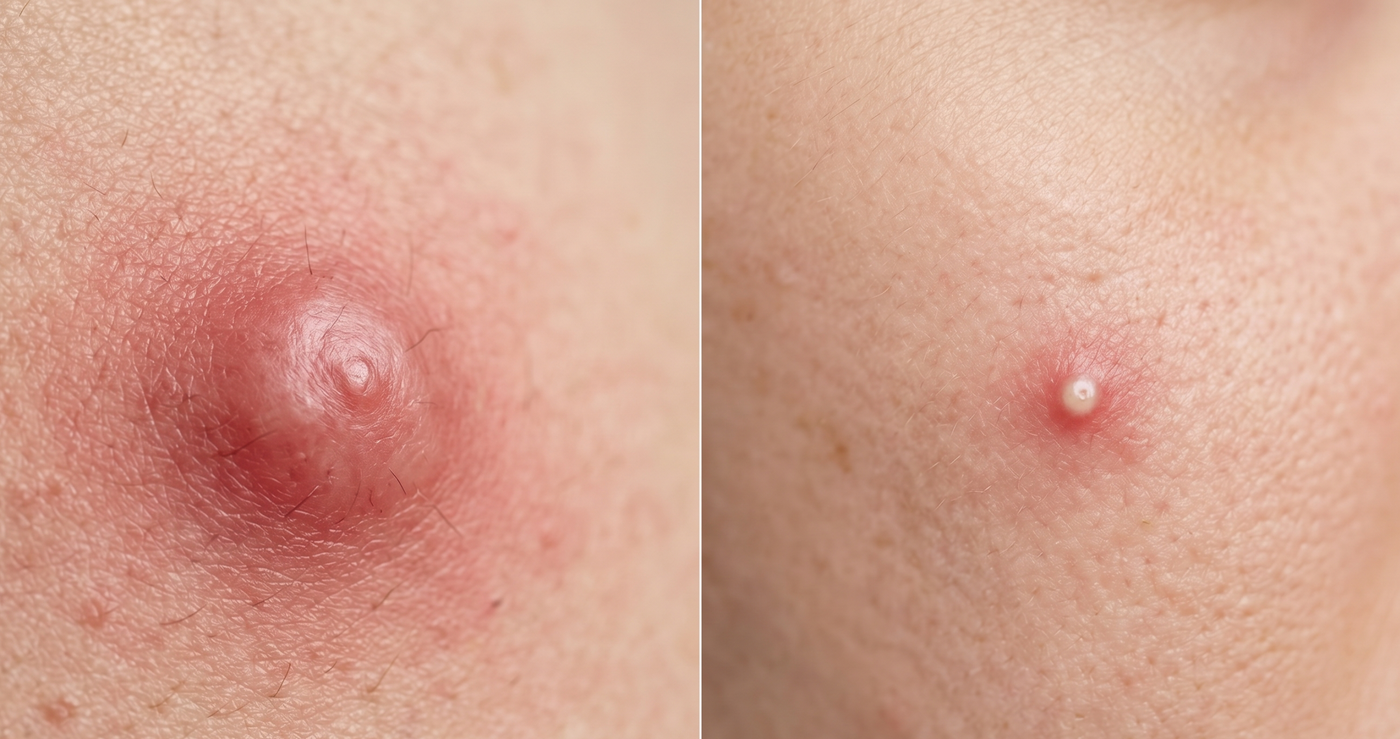
Table of Contents
Introduction How to Tell if That Bump Is a Boil or a Pimple Why Boils Keep Forming in the Groin and Inner Thighs Groin Boil Treatment You Can Start at Home Inner Thigh Boil Relief That Works With Your Skin When Groin Skin Irritation Turns Into Something Bigger Daily Skin Support for Recurring Boils When to Talk to a Doctor About Boils The TakeawayIntroduction
You've been looking at that bump for days now. Maybe longer. You figured it was a pimple... something that would flatten out on its own.
So you left it alone. Or you treated it like acne, dabbed on some benzoyl peroxide, and waited. But it didn't shrink. It got bigger. And it started to hurt in a way that a regular pimple never does.
Here's what most people miss when that bump shows up in the groin or along the inner thighs... the location changes everything.
A pimple on your chin and a painful lump in your groin crease are not the same problem. They don't start the same way, they don't behave the same way, and they don't respond to the same things.
If you've been searching for groin boil treatment or inner thigh boil relief and coming up empty, it's because you've likely been managing the wrong condition.
Think about the bump that keeps coming back in the same fold. The one that shows up after a long shift on your feet, or after a day in tight jeans.
It hurts when your thighs press together. You cover it, ignore it, hope it disappears by morning. Then it's right back in the same exact spot, just as angry as before.
That pattern is telling you something. Pimples form when dead skin cells and oil clog a pore close to the surface. They're shallow. Boils are completely different.
A boil starts deeper, inside the hair follicle itself, where bacteria... usually Staphylococcus aureus... cause an infection beneath the surface. Different mechanism. Different depth. Different response needed.
Your groin and inner thighs are warm, moist, and under constant friction from movement and clothing.
That environment is exactly what Staph bacteria need to multiply. It's why the same bump keeps returning in the same crease. It isn't bad luck. It's biology.
And when a boil in a fold area goes unaddressed, it doesn't just sit there quietly the way a pimple fades.
It grows. It deepens. It can cluster with nearby boils and form a carbuncle... a larger, more painful mass that can leave scarring behind. That progression is the signal most people miss because they're still thinking "pimple."
How to Tell if That Bump Is a Boil or a Pimple
The biggest difference comes down to what's happening beneath the skin.
A pimple is a surface-level problem. Oil and dead cells block a pore, bacteria get trapped, and a small bump forms.
Most pimples stay between the size of a pinhead and a pea. They're usually tender but not deeply painful, and they don't ooze unless you pop them.
A boil is deeper. It starts as a firm, red lump under the skin that gets more painful over several days.
As it develops, it softens and fills with pus... some reach the size of a golf ball. The pain is different too.
Boils create a heavy, throbbing pressure you feel when you sit, walk, or press your thighs together. Inner thigh inflammation from a boil can make everyday movement uncomfortable.
Another telling sign is drainage. Boils eventually fill with enough pus that they may open and drain on their own. Pimples don't do that.
And if multiple boils appear close together, they can connect beneath the skin into a carbuncle... something pimples never do.
If the bump is in your groin, on your inner thigh, under your arm, or beneath your breast... and it's deep, painful, and growing... you're almost certainly looking at a boil.

Why Boils Keep Forming in the Groin and Inner Thighs
Boils don't show up randomly. They favor specific parts of your body.
The groin and inner thighs sit where friction, heat, and moisture all converge. Every time you walk, your skin rubs against itself or against clothing.
Sweat stays trapped in the creases. Hair follicles in these areas are under constant stress. All of that creates ideal conditions for Staph bacteria to cause an infection.
You rarely get boils on your shins or the tops of your hands because those areas are dry and exposed to air.
The groin rash skin that so many women deal with is often the first sign that the fold environment is already compromised. Add shaving or waxing... both of which create tiny breaks in the skin... and the entry point for bacteria gets even easier.
Inner thigh inflammation tends to get worse in warmer months, during exercise, or when you're on your feet for long hours.
More skin-to-skin contact means more friction. None of this is something to be embarrassed about. It's just how your body works in those zones.
Groin Boil Treatment You Can Start at Home
Once you've identified a boil and not a pimple, the approach changes completely.
The most reliable home method is a warm compress. Soak a clean cloth in warm water, wring it out, and hold it against the boil for 10 to 15 minutes, several times a day.
The warmth increases blood flow and helps the boil come to a head. Keep this up consistently for several days.
Between compresses, keep the area clean and dry. Use a gentle cleanser... nothing harsh or heavily fragranced. Pat dry instead of rubbing.
The goal with groin boil treatment at home is to support your skin while your body works through the infection.

Do not squeeze, pop, or try to lance a boil yourself. Forcing the pus out can push the infection deeper into the tissue and make things worse.
Reduce friction however you can. Loose, breathable clothing... cotton underwear instead of synthetics, looser pants when possible.
Chafing treatment for the groin and inner thighs isn't just about the moment of irritation. It's about cutting off one of the main triggers so the boil can resolve. Keeping groin rash skin clean and dry after you shower or exercise matters more than most people realize.
Inner Thigh Boil Relief That Works With Your Skin
Here's where a lot of women get stuck. You know the bump isn't a pimple. You've tried the warm compress. But the skin around the boil is still irritated, raw, and angry.
And the products you've been reaching for... the acne washes, the salicylic acid pads... aren't doing anything because they were built for a different problem entirely.
Acne products unclog pores and dry out excess oil near the surface. That's not what a boil needs.
The infection is deeper, and the skin in your groin and inner thighs is already dealing with friction and moisture. Adding drying chemicals can make the groin skin irritation worse.
What the skin in these areas actually needs is something that soothes irritation, supports the skin barrier, and can be used daily without creating more problems.
Many customers in our community of 500,000 report reaching for Universal Flare Care (the Purple bottle) during recurring flares in the groin and inner thighs.
They use it as part of their daily routine to help soothe and calm the skin during a flare, especially in areas where friction and moisture make everything harder to manage. Results vary from person to person.

Universal Flare Care is made with olive oil, beeswax, egg yolk extract, propolis, and lavender essential oil. It is for external use only, intended for adults 18 and older.
If you have allergies to eggs, bee products, poplar tree products, or balsam of Peru, consult a healthcare professional before use. Always do a patch test before applying to fold areas. If symptoms persist, consult a healthcare professional.
When Groin Skin Irritation Turns Into Something Bigger
One boil can happen to anyone. But when boils keep returning in the same fold areas... groin, inner thighs, underarms, under the breast... that pattern deserves closer attention.
Recurring boils can cluster together into carbuncles... a connected mass of infected follicles that forms a larger, deeper pocket of pus under the skin.
Carbuncles are more painful, take longer to resolve, and are more likely to leave scars. They can also cause symptoms like fatigue, fever, and chills.
If you're dealing with chronic irritation in the groin and boils that won't stay gone, this pattern sometimes points to hidradenitis suppurativa (HS).
HS affects hair follicles in fold areas and can look a lot like "just boils" in the early stages. A healthcare provider can evaluate whether your flares need a broader management plan.
The point of managing boils in the groin goes beyond getting through one flare. It's about recognizing when the pattern itself is the problem.
Daily Skin Support for Recurring Boils
If boils keep coming back, reacting to each one is not enough. You need a routine that supports your skin between flares.
Start with how you clean the area. Use a gentle, fragrance-free cleanser. No harsh scrubbing... the skin in your groin and inner thighs is already under stress from friction.
Pat dry completely after every shower and after exercise. Moisture left sitting in folds is one of the fastest ways to create conditions for another boil.
What you wear matters. Breathable fabrics like cotton reduce friction and let sweat evaporate. Tight synthetics trap heat and moisture against the skin. If you exercise, change out of sweaty clothes as soon as possible.
And think of chafing treatment as something you do for your skin every day, not just when a flare is active.
Inner thigh boil relief is more effective when the skin in that area is being cared for consistently... kept clean, kept dry, kept supported with something gentle enough to use as part of your normal routine.
When to Talk to a Doctor About Boils
Most small boils will resolve at home with warm compresses and basic care. But some situations need professional attention.
See a healthcare provider if a boil is on your face or spine, larger than 2 inches across, causes fever or chills, or hasn't improved after 2 weeks.
Also see a provider if boils keep coming back, especially in the groin, inner thighs, or under the arms.
A dermatologist can drain larger boils, prescribe antibiotics for spreading infection, and assess what's driving the recurrence. One boil that resolves on its own is normal. A cycle of boils returning to the same spots means it's time for professional input.
The Takeaway
A pimple is a clogged pore near the surface. A boil is a deeper bacterial infection inside the hair follicle. They might look similar early on, but they are not the same problem and they don't respond to the same approach.
Location matters more than most people realize. The groin and inner thighs create the exact conditions boils need to form and return... warmth, moisture, friction, and hair follicles under constant stress. That's why pimple products won't help.
Know the difference. Support your skin daily, not just during flares. And if boils keep coming back, talk to a healthcare professional so you can get ahead of the pattern instead of chasing it.

