




Published 17 Apr 2026
Boils and Folliculitis Infections Overview
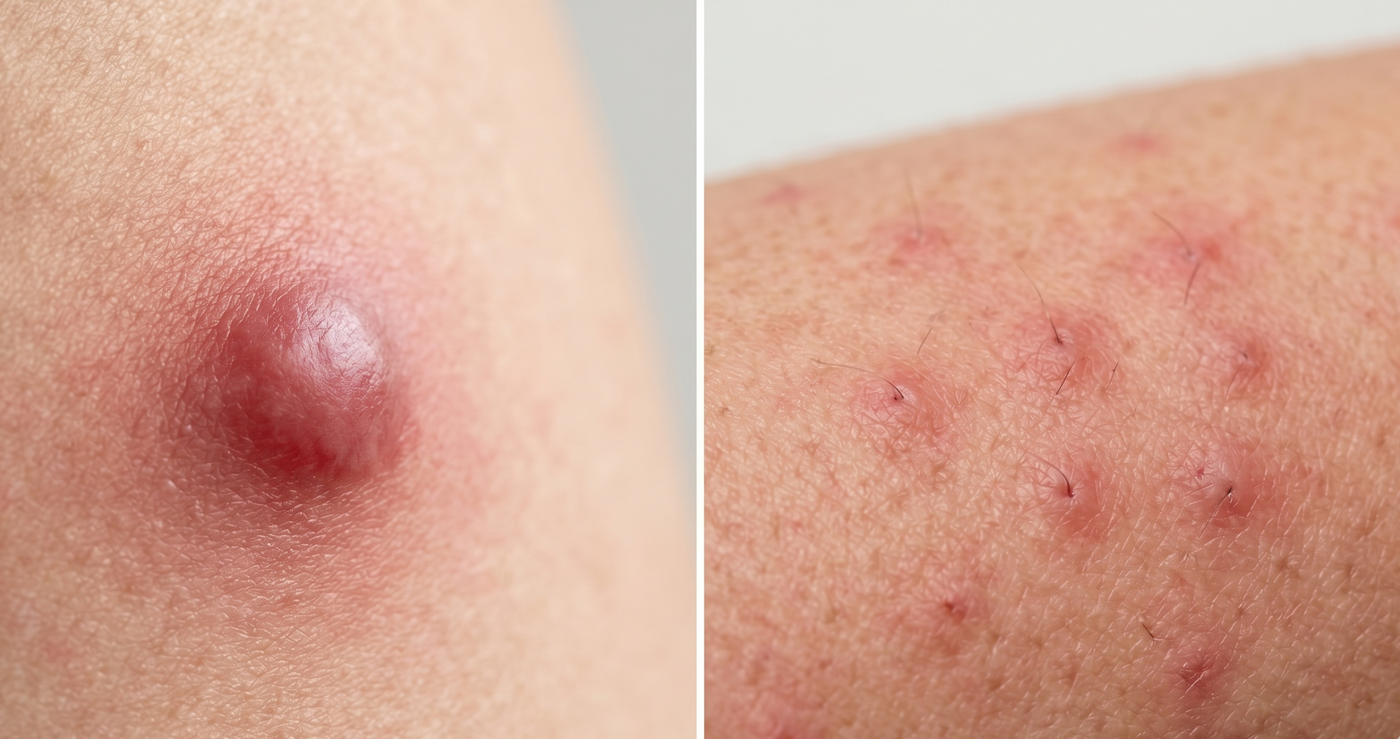
Table of Contents
Introduction What Is a Hair Follicle Infection? What Causes Boils and Folliculitis in the Groin Rash on Inner Thigh Female vs Inner Thigh Chafing Male How to Tell if Your Inner Thigh Rash Is More Than Chafing What Helps With a Hair Follicle Infection in the Groin When to See a Doctor for Boils or Folliculitis The TakeawayIntroduction
You already know the spot. That place where you felt it this morning getting dressed... that same tender area on your inner thigh where the fabric caught.
The bump that showed up two days after you shaved. The rash that flares every time you walk in the heat. The redness in the crease of your groin that fades for a few days, then comes right back, same place, like it never left.
You've probably called it chafing. Or a heat rash. Or just "that thing that keeps coming back." But a hair follicle infection in the groin doesn't announce itself with anything dramatic.
It looks exactly like the irritation you've been brushing off. The difference is what's happening underneath... and that difference changes everything.
Most of the advice online throws inner thigh rash, chafing, folliculitis, and boils into the same pile, as though they're all the same problem.
They're not. And even a quick doctor visit can end with a generic cream and no real explanation of what's going on in that follicle. You just haven't had the right framework.
Your skin has actually been giving you the answer this whole time. Whether the bumps cluster around a hair follicle or spread flat.
Whether they return to the same spot or show up randomly. Whether there's warmth, pus, or pain that's getting worse. Those details separate something that will pass on its own from something that won't.
Surface chafing fades. A follicle infection that keeps getting mistaken for friction can progress to boils, deeper tissue damage, and scarring.
By the end of this article, you'll know how to read what your skin is showing you... and what it needs from you next.
What Is a Hair Follicle Infection?
Every hair on your body grows out of a small pocket in the skin called a follicle. When bacteria get inside that pocket, the follicle becomes inflamed and infected.
The bacteria most often responsible is Staphylococcus aureus... a type that already lives on your skin and only becomes a problem when it finds a way in through friction, shaving, or a blocked pore.
When the infection stays near the surface, it's called folliculitis. Small red bumps or white-headed pustules right at the base of a hair. It can itch, sting, or feel mildly tender.
When infection pushes deeper and spreads to the tissue around the follicle, a boil forms. A boil (also called a furuncle) is a firm, painful, swollen lump that fills with pus. When several boils connect under the skin, that cluster is called a carbuncle.
Folliculitis on its own is usually manageable. But folliculitis that goes unaddressed in a high-friction area like the groin can become a boil. And boils that aren't managed properly can become something worse.
What Causes Boils and Folliculitis in the Groin?
The groin and inner thigh sit at the top of the list for folliculitis and boils because everything that feeds these infections meets in one place: friction, heat, moisture, and dense hair follicle concentration.
Skin irritation in the groin usually starts with rubbing. Tight jeans, synthetic underwear, a long walk on a warm day. The skin reddens, chafes, and the surface barrier weakens. That's when bacteria have their opening.
What began as a friction response becomes a hair follicle infection in the groin... not because of anything you did wrong, but because this particular area of your body was already under constant stress.

The triggers stack up faster than most women realize:
- Shaving or waxing the groin and inner thigh, creating micro-cuts bacteria enter through
- Tight, non-breathable clothing that traps heat and sweat against the skin
- Prolonged sweating during exercise or in hot conditions
- Sharing towels, razors, or gym equipment
- A weakened immune system or conditions like diabetes
- Existing skin conditions like eczema that compromise the skin barrier
Rash on Inner Thigh Female vs Inner Thigh Chafing Male
Both women and men get irritation in the inner thigh. But the way it starts and what makes it worse differs enough that it's worth pulling apart.
For women, hormonal fluctuations during the menstrual cycle can make the skin more reactive at certain points in the month.
Clothing plays a role too... seams on underwear, the cut of jeans across the groin crease, and fabric that doesn't breathe all concentrate friction in the same spots.
Inner thigh chafing male tends to be tied more directly to physical activity. Heavier sweating, coarser body hair, and athletic gear that holds moisture against the skin all increase the risk.
Men are also more likely to dismiss the irritation as normal, giving a developing follicle infection more time to progress.
Whether the original trigger was hormonal, mechanical, or sweat-related, once a hair follicle in the inner thigh gets infected, the progression looks the same: red bumps, tenderness, pus formation, and the potential to become a boil.
How to Tell if Your Inner Thigh Rash Is More Than Chafing
This is where most of the confusion lives. Chafing and a follicle infection can look almost identical in the first 24 hours. After that, they tell very different stories.
Plain inner thigh chafing shows up as flat, widespread redness where skin rubs against skin or clothing. No center point. No raised bump. Remove the friction source and it fades.
A follicle infection clusters around individual hair follicles instead of spreading flat. You might see a small white or yellow head forming.
The skin around that bump feels warmer than the area next to it. And here's what most women overlook... it comes back in the exact same spot.
Skin irritation in the groin that resolves and then returns to the same location isn't random. That recurrence pattern is one of the clearest signs that what you're dealing with is follicle-level, not surface-level.
The signals are clear once you know them:
- The bump centers around a visible hair follicle, not spread across a flat area
- A white or yellow head forms at the center
- The spot is warm to the touch, not just red
- The same bump returns to the exact same location after it clears
- Pain increases over 2-3 days instead of fading
- The bump grows deeper rather than staying on the surface
If you're checking more than two of those, you're likely past chafing and into a follicle infection that needs a different response.
What Helps With a Hair Follicle Infection in the Groin
Start with the basics. Apply a warm, damp compress for 15 to 20 minutes to increase blood flow and support natural drainage.
Keep the area clean and dry. Wear loose, breathable cotton clothing and stop shaving the affected area until the flare settles.
But if your inner thigh rash keeps coming back, the question isn't just what to do during a flare. It's what your skin needs between them.
What you apply between flares is not separate from your care routine... it is part of it.

That's what Universal Flare Care was built for. Formulated for inflamed, painful, irritated skin, it uses propolis, lavender essential oil, egg yolk extract, and beeswax... ingredients rooted in a surgeon-passed-down formula that works to calm, protect, and support the skin's natural comfort.
Apply it generously as a daily moisturizer on the inner thighs and groin. During an active flare, use the Gauze Method... apply a thick layer and cover with gauze overnight for deeper support.
Many customers in our community report calmer, more comfortable skin within just a few days of consistent use. Results vary from person to person.
Always do a patch test before applying to the groin or inner thigh area. Consult a healthcare professional if you are allergic to eggs, bee products, poplar tree products, or balsam of Peru.
For external use only... avoid eyes and mucous membranes. If symptoms persist, talk to your healthcare provider.
When to See a Doctor for Boils or Folliculitis
Not every bump needs a doctor. But some do, and knowing where that line sits keeps you from waiting too long.
See a healthcare professional if the bump is larger than a coin and still growing. If it's accompanied by a fever or you notice red streaks spreading outward from the area, the infection may be moving beyond the follicle.
A recurring rash on inner thigh female that keeps appearing in the same spot despite home care is worth a proper evaluation.
Boils that don't drain on their own within a week often need medical attention. Squeezing a boil yourself can push the infection deeper, so leave that to a professional.
Folliculitis that isn't improving after a week of warm compresses and good hygiene deserves a closer look. A healthcare provider can swab the area to identify the bacteria involved and guide you from there.
The Takeaway
The difference between chafing, folliculitis, and a boil is not academic. Each one needs a different response, and getting it wrong means your skin keeps cycling through the same flare without resolution.
The groin and inner thigh are especially vulnerable because they combine every factor that feeds hair follicle infections... friction, moisture, heat, and dense follicle concentration. That's something you manage with the right information and the right daily support.
Your skin has been telling you which problem you're dealing with. The location of the bumps, the pattern of recurrence, the depth and warmth of the inflammation... those are your answers. Now you know how to read them.
For the days between flares, daily support with something gentle and natural does its quiet work.
Universal Flare Care was made for exactly that... for skin that keeps flaring and for women who are ready to stop guessing and start responding to what their skin is actually saying.


