




Published 20 Apr 2026
Anti-inflammatory Effects of Propolis for Eczema
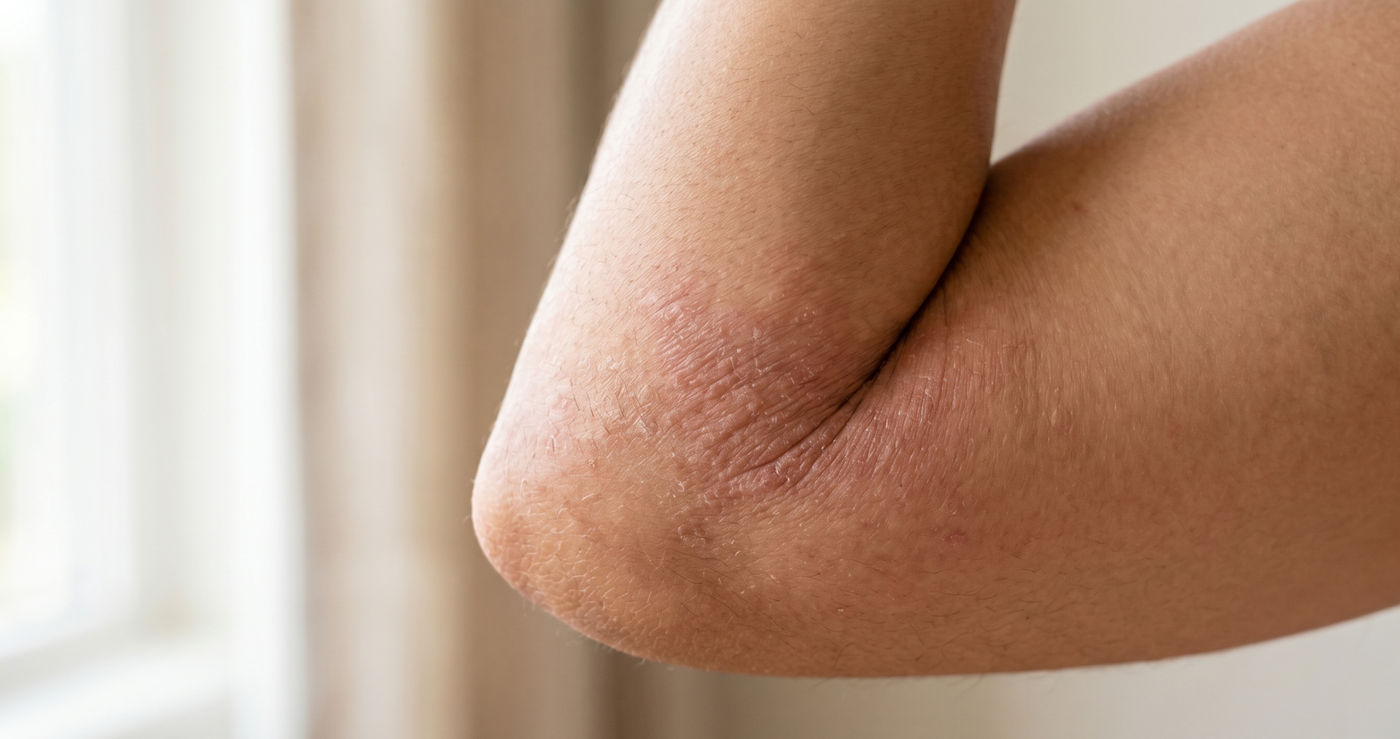
Table of Contents
Introduction Why Eczema Keeps Coming Back Even When You Do Everything Right What Propolis Is and What It Has to Do With Your Skin What the Research Shows About Propolis and Atopic Dermatitis How Propolis Supports Skin Barrier Repair What an Eczema Skin Care Routine Actually Needs How to Use a Propolis-Based Product During a Flare The TakeawayIntroduction
It takes one look at your forearm to know the flare is back... and in that second, every careful step you took this month means nothing.
Suddenly you're not someone managing eczema... you're someone it keeps winning against.
You've got to understand what's actually driving this... not just what the surface keeps showing you.
And now there's research that maps exactly where that inflammation starts... and what propolis does at the cellular level of eczema-affected skin.
- You'll see what a 2024 peer-reviewed study found about propolis and the specific inflammation markers behind eczema rash treatment failure.
- You'll understand what happens to your skin barrier proteins during a flare... and what the research shows can support their restoration.
- And you'll know what an eczema skin care routine actually needs when your skin doesn't stop reacting.
This is the picture you should have had before you ran through your third round of the same thing.
Why Eczema Keeps Coming Back Even When You Do Everything Right
Eczema is not just a skin reaction. It is a cycle that keeps itself running.
When your skin barrier is disrupted, the cells in your outer skin layer... called keratinocytes... release signaling proteins that activate your immune system.
That immune response drives inflammation. Inflammation drives itching. Itching drives scratching. And scratching breaks the barrier further, restarting the loop all over again.
This is the part that most standard atopic dermatitis treatment was never designed to address. Topical products reduce what is visible on the surface. The moment the barrier is challenged again, the immune response picks right back up where it left off.
The Th2 immune pathway sits at the center of this. In eczema-affected skin, Th2 cells release cytokines... including IL-4 and IL-13... that directly weaken barrier proteins and keep the inflammatory response running.
Signaling proteins called alarmins... TSLP, IL-25, and IL-33... pile onto the itch signal and sustain the scratching behavior that keeps damaging the barrier.
You are not doing anything wrong. The routine most people use for eczema was built to manage symptoms... not to interrupt the process driving them.
What Propolis Is and What It Has to Do With Your Skin

Propolis is not honey. It is not beeswax. It is something entirely different.
Bees collect resin from the bark and buds of plants and trees, mix it with wax and enzymes from their own bodies, and use the result to seal and protect the hive from bacteria, fungi, and physical damage.
The compound that results contains over 300 identified substances... including flavonoids, phenolic acids, and a key active called caffeic acid phenethyl ester, or CAPE.
The propolis skin benefits that researchers have been studying come largely from CAPE. It is not a fragrance ingredient or a filler.
It is a biologically active molecule with a specific mechanism in inflamed skin tissue... and that distinction matters when you are looking at ingredients for skin that keeps reacting.
Most ingredients marketed for eczema relief work at the surface. CAPE works at the signaling level. That is what put it on researchers' radar in the first place, and what the 2024 study set out to test in detail.
What the Research Shows About Propolis and Atopic Dermatitis
A 2024 study published in BioFactors by researchers from Yonsei University and Chonnam National University tested propolis directly against atopic dermatitis markers... in keratinocytes, in human skin tissue, and in an AD mouse model.
In keratinocytes exposed to TNF-α... the same inflammatory trigger behind atopic dermatitis flares and one of the key reasons standard atopic dermatitis treatment keeps falling short...
Propolis reduced the production of inflammatory cytokines IL-6 and IL-8, and chemokines MCP-1 and MDC. These are the proteins that signal the immune cascade in eczema-affected skin and keep the inflammatory loop running.
Propolis also restored filaggrin and involucrin... two proteins critical for skin barrier structure... in both the cell model and the human skin tissue model. In the human skin tissue model, where AD-like conditions were sustained for 14 days.
Propolis consistently reduced inflammatory biomarkers while supporting the recovery of barrier proteins throughout the entire period.
In mice with DNCB-induced AD-like symptoms, propolis reduced scratching frequency, decreased transepidermal water loss, and visibly improved skin symptoms including redness, dryness, and edema compared to the untreated group.
The researchers identified CAPE as the primary active compound responsible for these effects. The mechanism: CAPE targets MKK4, an upstream kinase that regulates the p38 signaling pathway.
The p38 pathway is one of the central drivers of the inflammatory response in eczema-affected skin. By binding to the ATP site of MKK4, CAPE works to reduce skin inflammation at the point where the signal starts... not just where it shows up on the skin.
That is not surface-level action. That is a mechanism that addresses eczema rash treatment failure at the source.
How Propolis Supports Skin Barrier Repair
Your skin barrier is a structured layer of proteins. It holds the outermost cells of your epidermis together and controls how much water your skin loses to the environment around you.
Filaggrin is the anchor of that structure. It binds keratin fibers together and forms the network that keeps the barrier intact.
People with eczema typically have reduced filaggrin expression... and some carry filaggrin gene mutations that make the barrier structurally weaker from the start. When filaggrin is depleted, the barrier cannot hold, and the skin stays open to every trigger it encounters.
Involucrin and loricrin are two more structural proteins that reinforce the outer skin layer from within. When all three are disrupted during a sustained inflammatory response, transepidermal water loss increases, the skin cannot retain moisture, and it stays dry, reactive, and vulnerable.
The 2024 study showed propolis restored the expression of filaggrin, involucrin, and loricrin in both the cell and animal models.
That is what natural skin barrier repair looks like at the molecular level... not just adding moisture on top, but supporting the proteins that hold the barrier together in the first place.

What an Eczema Skin Care Routine Actually Needs
Moisturizing matters. But if the routine includes ingredients that keep triggering the barrier, the moisture goes in one side while the damage continues on the other.
A well-built eczema skin care routine for chronically reactive skin starts with what you remove. These are the most common barrier disruptors found in everyday skincare:
- Fragrance: one of the most documented contact irritants for eczema-prone skin, whether synthetic or derived from plants
- Essential oils: biologically active compounds that can trigger sensitization in already-reactive skin, even when sourced from natural botanicals
- Alcohol: drying and barrier-disrupting at concentrations found in most toners, sprays, and lightweight serums
- Preservatives like methylisothiazolinone: a frequent allergen in people with sensitive or eczema-prone skin
What reactive skin needs is a formula stripped back to only what belongs there. Fragrance-free. Essential oil-free. With ingredients that support the barrier rather than challenge it daily.
This matters even more during an active flare, when the barrier is already compromised and absorption of potential irritants is higher than it would normally be.
How to Use a Propolis-Based Product During a Flare
When looking for a propolis-based topical for eczema-prone skin, formulation matters as much as the ingredient itself. It needs to be essential oil-free and fragrance-free.
It also needs to be appropriate for broken or compromised skin... which is often what you are working with when a flare is already active.

The Universal Flare Care Essential Oil-Free formula contains propolis alongside olive oil, beeswax, and egg yolk extract... with no essential oils and no fragrance.
It is formulated for sensitive skin, broken skin, and post-procedure skin, and is well tolerated when used as directed across all ages... including babies, and during pregnancy and breastfeeding.
Two ways to use it as part of your daily skin support:
- Daily moisturizer: Apply directly morning and night to affected areas
- Gauze method: Apply directly to the skin and cover with cotton gauze, especially overnight, for more consistent contact with the skin during a flare
Always patch test before use, particularly on reactive or broken skin. Avoid if you have a known allergy to bee products or eggs. For external use only.
Many customers in our community report feeling their skin is calmer and less reactive with consistent daily use. Results vary from person to person.
If your symptoms persist or worsen, consult a healthcare professional.
The Takeaway
Eczema keeps coming back because most approaches to eczema rash treatment address what you can see without touching what is driving it.
The itch-scratch-barrier damage loop runs on a specific inflammatory pathway... and until something works at that level, the cycle continues.
The research on propolis points directly at that source.
The 2024 Yonsei and Chonnam National University study showed that propolis and its active compound CAPE work to reduce the inflammatory cytokines and chemokines that characterize atopic dermatitis flares, while supporting the restoration of filaggrin, involucrin, and loricrin... the barrier proteins that keep reactive skin structurally stable.
A daily routine for eczema-prone skin needs to do two things at once: remove the ingredients that keep loading the barrier, and support the skin's own structural proteins consistently over time.
That means fragrance-free, essential oil-free, and formulated for the kind of skin you are actually working with.
The research behind propolis is specific, peer-reviewed, and points to a mechanism that most standard eczema products do not reach.
If you have been running through the same routine without understanding why your skin keeps reacting, the biology is where that answer starts. If your symptoms persist, always consult a healthcare professional.

