




Published 18 May 2026
A Guide To Tea Tree Oil And Using It For Acne Spots
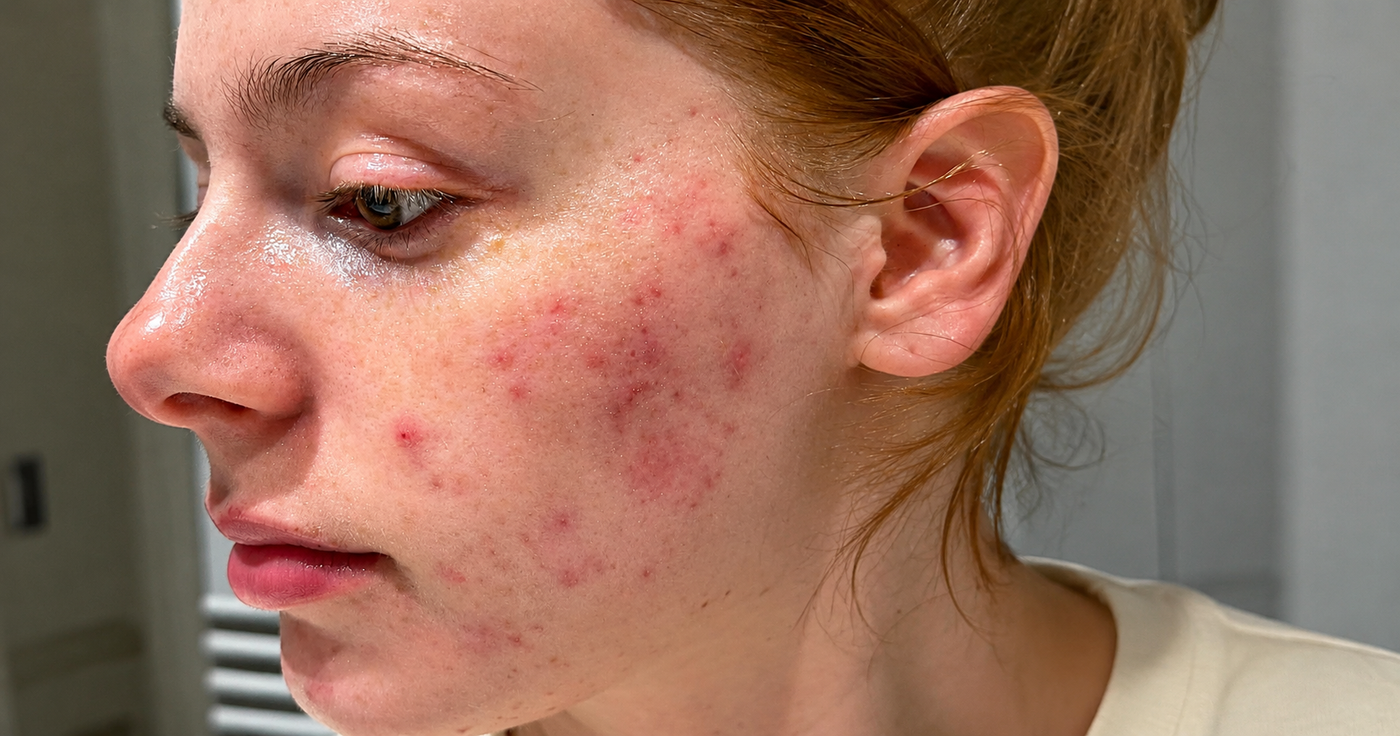
Table of Contents
Introduction What Tea Tree Oil Actually Does To An Acne Spot Why Tea Tree Oil Works Differently From Harsh Acne Treatments Acne Tea Tree Oil For The Different Pimples You Get Using Tea Tree Oil On An Infected Pimple Cysts On Face And Pimples Under Armpit: Two Different Flares How To Apply Tea Tree Oil Without Drying Or Damaging Your Skin When Tea Tree Oil Is The Wrong Move For Your Skin A Gentler Way To Use Tea Tree Oil On Acne Flares The TakeawayIntroduction
For most acne advice, prescription-strength creams and harsh actives are the standard answer when a stubborn pimple refuses to quit. But what most acne creams don't address is...
Nature has its own answer for the inflammation sitting inside an angry spot. And on certain types of pimples, it works on the inflamed tissue more directly than the drying actives most products lean on.
What is it? Tea tree oil. The compound your skin actually responds to is one that calms swelling around a spot rather than burning the spot down with the rest of your face.
You have probably already seen tea tree oil. It sits on drugstore shelves, in beauty cabinets, in the bathroom drawer of a friend who swears by it.
But tea tree oil is not the same category as a generic essential oil you would dab on for fragrance, and it is not the same category as a harsh prescription acne active either. It sits in its own lane... a plant-derived ingredient with a very specific job on inflamed skin.
But what really matters for the spot on your face right now is this...
Used the right way, on the right type of pimple, tea tree oil can settle the redness and swelling within days.
Used the wrong way, on the wrong skin, it can dry the spot out, deepen the mark left behind, or leave a scar that takes months to fade.
What Tea Tree Oil Actually Does To An Acne Spot
Tea tree oil works on a pimple by calming the inflammation around it. The compounds inside the oil soothe the angry, swollen tissue that gives a spot its red, raised, painful look... they do not strip the skin or scrub the surface dry.
That is the part most people get wrong about tea tree for pimples. They think of it as a spot zapper. It is not. It is a soother that lets the spot settle on its own timeline without making the surrounding skin worse.
Why Tea Tree Oil Works Differently From Harsh Acne Treatments
Most acne spot treatments dry the area down to a flake. They strip oil. They peel skin. They flatten a spot by pulling moisture out of every layer underneath.
Acne tea tree oil takes a different route. Instead of stripping, it works on the swelling. The skin around the pimple stays calmer, the redness settles faster, and you avoid the dry, tight, irritated feeling that comes after a harsh active has done its job and moved on.
That difference matters most when you have skin that flares often. Drying the same spot of skin over and over leaves it more reactive, not less.
Acne Tea Tree Oil For The Different Pimples You Get
Not every pimple behaves the same way. A whitehead is not a cyst. A blind pimple is not an infected one. Tea tree oil interacts with each type a little differently, so it helps to know what you are looking at before you apply.
Cystic Pimple
A cystic pimple sits deep in the skin. There is no head to pop, no surface to dry. It is firm, painful when pressed, and the redness reaches further than the bump itself.
Three quick signals you are dealing with one:
- It hurts well before you touch it
- It feels like a hard lump under the skin, not a soft bump on top
- It does not come to a head no matter how long you wait
On a cyst like this, tea tree oil works on the inflammation that is making the lump throb. It will not pull the cyst to the surface.
It will not flatten it overnight. What it does is calm the heat around it so the cyst can settle without the angry redness that usually trails a cyst for days.
Pimples That Form Under The Skin
A blind pimple is the closed, raised bump that refuses to surface. You can feel it. You can see the shape of it through the skin. But there is no head to dry, no whitehead to pick, nothing to do but wait.
Tea tree for pimples like this means soothing the swelling without forcing the bump up. Forcing a blind pimple is what turns a small bump into a deep mark. The goal is to let it shrink, not bring it to a head.
Using Tea Tree Oil On An Infected Pimple
There is a line between an inflamed pimple and an infected pimple. An inflamed one is red, swollen, sometimes painful.
An infected one is something else. The redness spreads beyond the spot. The skin feels hot. There may be yellow or green discharge, or the area may keep filling back up after it drains.
Tea tree oil can soothe an inflamed spot. It is not the right move once that spot has tipped into infection. If you see spreading redness, increasing heat, fever, or thick discharge, stop using any topical and consult a healthcare professional.
That kind of flare may need actual medical attention, and waiting too long can turn a small problem into a much bigger one.
Cysts On Face And Pimples Under Armpit: Two Different Flares
Same underlying inflammation. Very different terrain. The way you handle a flare on your face is not the way you handle one in a friction zone, and tea tree oil shows up differently in each one.
Cysts On Face
Facial cysts tend to flare along the jawline, the chin, and sometimes the lower cheeks. These are areas where hormonal shifts hit hardest, and the skin is already prone to deeper, slower-settling breakouts.
For these flares on the face, tea tree oil is most useful while the cyst is still intact. Once a cyst breaks open, splits, or starts oozing, the skin is broken... and broken skin is a stop sign for tea tree oil entirely.
At that point, you wait, you keep the area clean, and you let the skin close before applying anything strong.
Friction-Zone Breakouts
Pimples under armpit, on the inner thighs, or on the groin are usually a mix of clogged follicles, sweat, and friction from clothing. Some of what looks like a pimple in these areas is actually an ingrown hair, and ingrowns respond differently to tea tree oil than a regular pimple does.
Tea tree oil handles friction-zone breakouts well as long as the skin is intact. The key is not to apply it to a spot you have squeezed open, picked at, or shaved over too closely. On unbroken skin, it can settle the redness and the swelling in the same way it does on the face.
How To Apply Tea Tree Oil Without Drying Or Damaging Your Skin
Pure tea tree oil is too strong to apply directly. It needs to be diluted with a carrier oil or built into a formula designed for skin contact. Used straight from the bottle, it can burn, blister, or leave a chemical mark on the skin.
Here is the basic application sequence:
- Patch test first. Apply a small amount to the inside of your elbow and wait 24 hours. If the skin reacts, do not put it on your face.
- Cleanse and dry the area. Wet skin dilutes everything you put on top.
- Dab, do not rub. Apply with a cotton swab directly on the spot, not the surrounding skin.
- Moisturize after. Tea tree oil works best when the skin around the spot stays comfortable, not stripped.
Patch testing is not optional, especially before applying to a sensitive area or to skin that flares often.
When Tea Tree Oil Is The Wrong Move For Your Skin
Tea tree oil is not for everyone. The list of when to skip it is short, but it matters.
Skip tea tree oil if you are pregnant or breastfeeding. Skip it on broken skin, open wounds, popped cysts, or shaved-raw friction zones. Skip it near the eyes, mouth, or nose.
For teenagers, an adult should oversee use and select the product on their behalf. And keep in mind that tea tree oil increases sun sensitivity, so a daytime application without proper sun protection can leave you with more pigment, not less.
If your acne is severe, painful, recurring across large areas, or showing signs of infection, consult a healthcare professional before adding any topical to your routine. Some flares need more than a soothing ingredient.

A Gentler Way To Use Tea Tree Oil On Acne Flares
Diluting essential oils at home is easy to get wrong. Too concentrated and you irritate the skin. Too diluted and you wonder why nothing is working.
A pre-formulated option takes the guesswork out. The Thyme & Tea Tree Flare Care jar from MyMagicHealer is built around tea tree as the active... formulated at a dilution that is gentle enough for daily skin support during a flare without stripping the skin around the spot.
It is for adults 18+, external use only, and suitable for teenagers only when an adult is overseeing the routine. A patch test on the inside of your elbow is recommended before regular use.
Many customers in our community report visible calming of redness and swelling on active flares within their first week of consistent use. Results vary from person to person.
For acne tea tree oil to do its job without doing damage, the dilution and the form matter as much as the ingredient.

The Takeaway
Tea tree oil is not a miracle. It is a mechanism. Used on the right type of spot, in the right form, at the right dilution, it calms what harsh actives worsen.
Used in the wrong place, on broken skin, or at the wrong strength, it can leave a mark that lasts longer than the pimple itself.
If you are working with an active flare, start with a patch test, keep the area unbroken, and skip the oil entirely on areas that are already raw or infected.
If symptoms persist, get worse, or spread, stop and talk to a healthcare professional. The right tea tree formula, used as daily skin support during a flare, is a gentle place to start... not a replacement for medical care when you need it.

