




Published 17 Apr 2026
8 Common Types of Rashes and What They Look Like
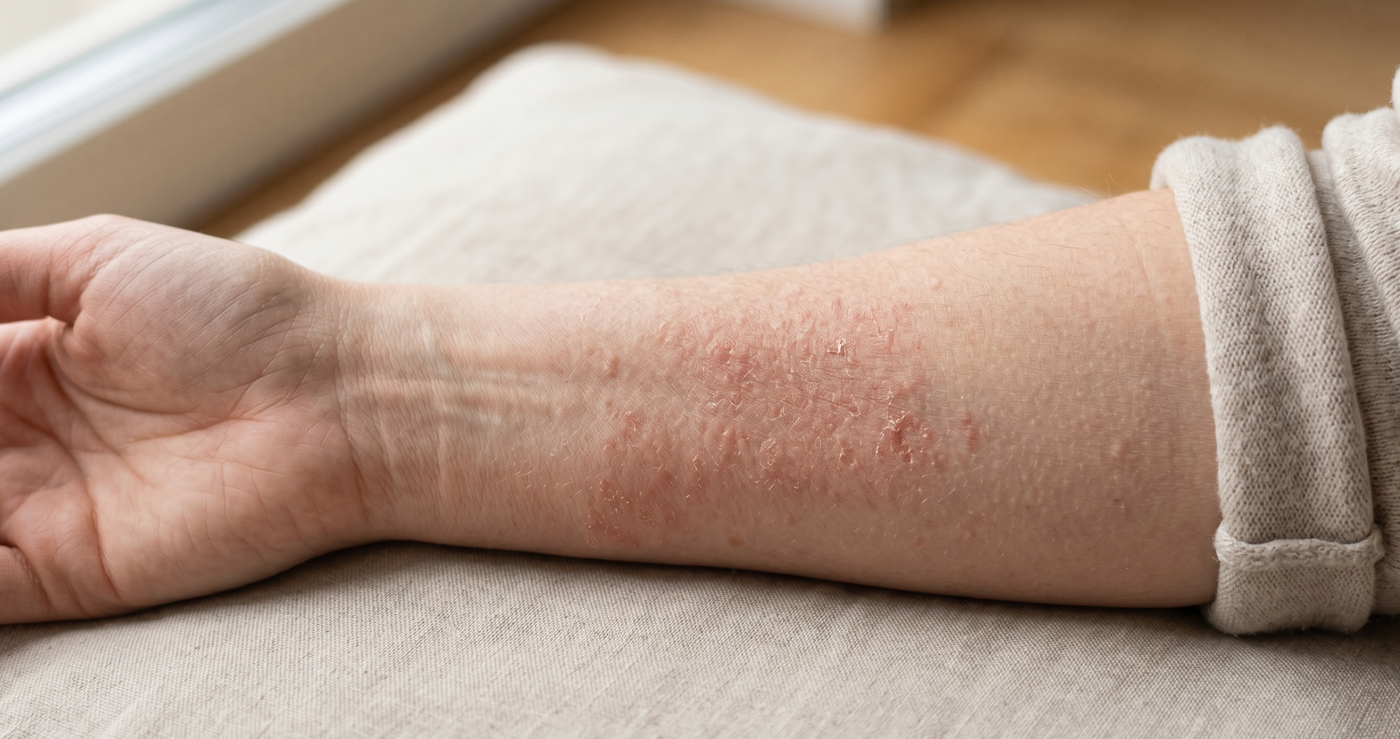
Table of Contents
Introduction 1. Eczema (Atopic Dermatitis) 2. Contact Dermatitis 3. Seborrheic Dermatitis 4. Folliculitis 5. Bacterial Infections 6. Hives (Urticaria) 7. Herpes (HSV-1 Cold Sores) 8. Heat Rash (Miliaria) Natural Support for Healing Skin How Universal Flare Care Supports Your Skin's Healing The TakeawayIntroduction
Do you relate to the following?
- your skin constantly itchy and inflamed
- skin breaking out in painful rashes that seem to come and go without warning
If you relate to the persistent skin issues you just read, you're not alone.
Because millions of people deal with various types of rashes every day... and they're frustrated by the trial-and-error process of finding what works.
Understanding what type of rash you have is the first step toward finding real relief.
Whether you're dealing with eczema, contact dermatitis, or another skin condition, knowing the symptoms and triggers can help you make informed decisions about your care.
In this guide, we'll walk you through eight common types of rashes, what they look like, what causes them, and most importantly... how you can find the support your skin needs.

1. Eczema (Atopic Dermatitis)
What It Looks Like:
Eczema appears as red, dry and itchy spots on the skin that get thick and scaly over time.
And in a worse case scenario, they can leak or crust over when they get scratched. Because you see this specific rash... they usually affect certain areas of the body depending on age.
In infants and young children... the face, scalp and outer surfaces of the arms and legs are the areas Eczema affect the most.
For the adults... the hands, feet, ankles, wrists, neck, upper chest and in the creases of elbows and knees are where it shows up.
What Triggers It:
Understanding what triggers eczema is very important for managing this type of rash. They can be caused by:
- Hot weather, cold temperatures, or sudden climate changes
- Irritating soaps, detergents, and products with fragrances
- Allergens like dust mites, pet dander, and pollen
- Certain fabrics, particularly wool and synthetic materials
- Stress and hormonal fluctuations
- Excessive sweating or dry skin
Why It Happens:
Eczema occurs when your skin's protective barrier becomes damaged, allowing moisture to escape and irritants to enter more easily.
This creates a cycle where the skin becomes dry and vulnerable to inflammation.
People with eczema do have a genetic condition that affect how their skin retain moisture and shields against certain triggers.
2. Contact Dermatitis
What It Looks Like:
Contact dermatitis shows up as a red, itchy rash filled with blisters... caused by your skin coming in contact with an irritating substance.
This rash burns and sting causing the affected area to become swollen and soft. Unlike other rashes that appear out of nowhere, contact dermatitis takes the shape of whatever touched your skin.
The rash typically appears within hours to days after contact, depending on whether it's by an irritant or allergic factors.
What Triggers It:
Contact dermatitis happens when your skin reacts to something it touches. Common culprits include:
- Jewelry containing nickel, especially costume pieces
- Hair dyes, nail polish and cosmetic products
- Latex gloves and rubber products
- Poison ivy, poison oak and poison sumac
- Harsh cleaning products and industrial chemicals
- Certain preservatives and fragrances in skincare products
Two Types You Should Know:
There are two main types of contact dermatitis.
Irritant contact dermatitis is more common and occurs when a substance damages your skin's surface directly, like harsh soaps or chemicals.
Allergic contact dermatitis involves your immune system and typically takes 2-3 days to develop after exposure. Once you develop an allergy, subsequent reactions may appear more quickly.
3. Seborrheic Dermatitis
What It Looks Like:
Seborrheic dermatitis shows up as greasy, yellowish scales or flakes on red, inflamed patches of skin.
It's basically a worse form of dandruff that can affect multiple areas of the body. The scales may appear thick and crusty which causes the affected skin to look red and irritated.
This condition commonly affects the scalp, but it can also appear on the face (especially around the nose, eyebrows, and ears), upper chest, and back... anywhere your skin has a high concentration of oil glands.
What Triggers It:
Studies show that the overgrowth of Malassezia, a type of yeast that naturally lives on skin is the causal factor of Seborrheic dermatitis. And factors that can trigger this type of rash include:
- Having naturally oily skin
- Stress and emotional tension
- Cold, dry weather conditions
- Hormonal changes
- Weakened immune system function
- Certain neurological conditions like Parkinson's disease
Who Gets It:
This condition can affect anyone, but certain groups are more susceptible. Infants often develop it as "cradle cap," which usually resolves on its own.
Adults with oily skin types are more prone to developing seborrheic dermatitis and it tends to be more persistent in people with compromised immune systems.
4. Folliculitis
What It Looks Like:
Folliculitis shows up as tiny red or white-headed pimples around hair follicles. These bumps tend to be itchy, soft and contain pus. Most times, it looks like a minor breakout but a severe case of folliculitis can cause painful swollen lumps that may leave scars.
The type of skin rash develops in areas with hair... especially in places where shaving or friction occurs like the beard area, scalp, thighs, underarms and groin.
What Triggers It:
It’s possible for you to develop folliculitis if you:
- Shave, wax or use tight clothing that causes friction
- Soak in hot tubs or pools with the wrong skin pH balance
- Have existing skin conditions like eczema or dermatitis
- Sweat heavily during exercise or in hot weather
- Use oily skin products that clog follicles
- Have a weak immune system
Types and Severity:
Surface folliculitis affects just the upper part of the hair follicle and usually heals fast. But you see the folliculitis that goes deeper into the dermis causes larger and painful boils.
Then you have Barber's itch that affects men who shave while Hot tub folliculitis forms after you get exposed to contaminated water.
5. Bacterial Infections
What They Look Like:
Bacterial infections show up as red, swollen and painful spots on the skin. The affected area is known to be warm and maybe have a couple pus-filled bumps that come with a yellow discharge.
As the bacterial skin rash progresses, you might notice red streaks spreading from the infection site.
These infections begin from a small area and can quickly spread to a wider area if it's not taken care of..
What Triggers Them:
Bacterial infections move differently. If the bacteria can't get through the skin's protective barrier, it's a no-show. Only if there are situations that affect the skin like:
- Cuts, scrapes, and wounds
- Insect bites and stings
- Existing skin conditions like eczema that create openings
- Surgical incisions
- Puncture wounds from splinters or needles
People with weakened immune systems, diabetes or poor circulation face higher risks of developing bacterial skin infections.
Warning Signs:
Some symptoms do need urgent medical attention. Seek help immediately if you notice the following:
- Fever or chills developing
- Red streaks spreading from the wound
- Increasing pain and swelling
- Foul-smelling drainage or yellow pus
- The infection area growing rapidly
Early treatment is crucial because bacterial infections can become serious quickly. In severe cases, bacteria can enter the bloodstream, leading to life-threatening complications.
6. Hives (Urticaria)
What They Look Like:
Hives show up as raised, red or skin-colored welts of different sizes... they can go from tiny dots to large patches several inches across.
They're intensely itchy and have a distinctive feature... they appear suddenly and often move around the body, disappearing from one area and popping up in another.
Individual hives on body typically fade within 24 hours, though new ones may continue to appear. And the welts are known to have pale centers with red borders.
What Triggers Them:
Some factors make your body release Histamine which causes hives to form. Though these triggers are different, they are very common. They are:
- Foods like peanuts, eggs, shellfish, and tree nuts
- Medications, particularly antibiotics and aspirin
- Insect bites and stings
- Extreme temperatures (heat or cold)
- Physical pressure on the skin
- Stress and anxiety
- Viral or bacterial infections
Sometimes, the trigger remains unknown even after thorough investigation.
When to Worry:
Sometimes, hives come and go on their own without leaving any damage.
But, if you see swelling of the eyes, lips, tongue or throat, or you find yourself breathing a certain way, please seek emergency care fast.
These symptoms may indicate angioedema or anaphylaxis, both of which require urgent medical treatment.
Chronic hives that persist for six weeks or longer warrant a consultation with a dermatologist or allergist to identify potential underlying causes.
7. Herpes (HSV-1 Cold Sores)
What It Looks Like:
Herpes is known for it's painful blisters around the mouth and lips... and it can affect other areas as well.
The herpes skin rash begins as tingling or burning sensation before the blisters show up most times. The blisters are small, contain fluid and they cluster together.
After a few days, the blisters burst and form crusts that gradually heal over 7-10 days. The virus tends to recur in the same location because it lives dormant in nerve cells beneath the skin.
What Triggers It:
The herpes simplex virus (HSV-1) remains in your body for life after initial infection. Outbreaks can be triggered by:
- Physical or emotional stress
- Illness or fever
- Excessive sun exposure
- Fatigue and lack of sleep
- Weakened immune system
- Hormonal changes during menstruation
Some people rarely experience outbreaks, while others may have frequent recurrences, especially during times of stress.
How It Spreads:
Herpes spreads through direct contact with active lesions.
Common transmission routes include kissing, sharing utensils or drinking glasses and using contaminated items like lip balm or lipstick testers.
HSV-1 can also be transferred to the genitals during oral sex.
The virus is most contagious when blisters are present but it can also spread during the tingling phase before blisters appear and occasionally even when no symptoms are visible.
8. Heat Rash (Miliaria)
What It Looks Like:
Heat rash as the name implies show up when there's heat. You see them as clusters of small red bumps or tiny blisters on the skin's surface.
The affected area may feel prickly, itchy, or cause a stinging sensation. The skin feels hot because of the hot weather and tends to be uncomfortable to touch.
This rash affects the chest, neck, back, groin and in skin folds where sweat tends to gather and dry off slowly.
What Triggers It:
When the sweat ducts are blocked, trapping sweat under the skin... it gives heat rash the chance to thrive. Triggers that create the environment that this type of rashes love are:
- Hot, humid weather conditions
- Intense physical exercise
- Wearing tight or non-breathable clothing
- Overdressing for the temperature
- Using heavy creams that block pores
Who Gets It:
Babies are particularly susceptible to heat rash because their sweat glands aren't fully developed yet.
Adults who live in tropical climates, athletes who train intensively and people who overdress for warm weather also commonly experience this condition.
There's good news, heat rash gets resolved once the skin cools down and sweat can evaporate normally.
Finding Relief: A Natural Approach to Skin Health
One frustration faced by many who deal with rashes is the constant cycle of recurrence that happens.
You try one treatment, it helps for a while then the symptoms return. You then experiment with different creams, each promising relief but they fail to provide you with the comfort you're looking for.
Many people find that conventional treatments have their place but come with limitations.
- Steroid creams may thin skin with prolonged use.
- For antibiotics, the rashes build resistance to them.
- Some treatments mask symptoms temporarily without solving why the flare-ups keep happening.
And the good news? There are natural methods that improve your skin's own healing process from the root rather than just managing symptoms.
Let's talk about home remedies for skin rashes that target the root causes of inflammation and irritation.
Natural Support for Healing Skin
Understanding the Limitations of Conventional Approaches
Traditional treatments can be very helpful in managing certain symptoms. But they come with limitations that make people go for other options.
In the case of Topical steroids, they can thin the skin and cause side efforts in the long run while reducing inflammation.
Antibiotics may work for a short time but they stop working as bacteria become resistant.
Most treatments only help for a short time but they don't fix the problems that make these rashes come back.
Some people just like gentler, more natural options better... especially for long-term conditions that need to be managed regularly..
A Time-Tested Natural Alternative

For those seeking natural options, there's a formula that's been quietly helping thousands of people find relief from chronic skin flare-ups.
Universal Flare Care is a formula passed down by a surgeon. This formula is said to support the skin in a unique way.
This natural salve only has four carefully chosen ingredients, unlike other products that have complex formulations.
For generations, each ingredient has been studied in a lab and used to help skin health.
More than 500,000 people trust it, and it has a 4.8 Trustpilot rating, which means that people with a wide range of skin problems, from eczema and contact dermatitis to fungal infections and bacterial skin rashes, trust it..
How Universal Flare Care Supports Your Skin's Healing
This natural formula works through three distinct stages to support your skin's recovery:
Stage 1: Relieves Discomfort
When a flare-up strikes, immediate comfort matters. The combination of egg yolk extract and propolis works quickly to soothe irritation and calm inflammation at its source. Natural compounds in these ingredients help activate your skin's own healing pathways, providing relief when you need it most.
Stage 2: Supports the Healing Process
As discomfort eases, the formula continues working to address the underlying issues. Propolis offers natural antibacterial properties that help keep the affected area clean while your skin heals. Nourishing lipids work to restore your skin's protective barrier... the critical defense that keeps moisture in and irritants out. This stage helps reduce visible redness, swelling, and the intensity of flare-ups.
Stage 3: Protects and Strengthens
The final stage focuses on long-term skin health. Beeswax creates a breathable protective shield over healing skin, locking in moisture without clogging pores. This barrier helps protect against environmental triggers that might cause another flare-up. Over time, your skin's natural defenses become stronger and better able to resist future irritation.
In customer surveys, many customers in our community report experiencing calmer, more comfortable skin within just days of using Universal Flare Care. Results vary from person to person
People dealing with conditions ranging from eczema and dermatitis rashes to fungal rash on body and bacterial infections have found the relief they were searching for.
Our Essential Oil-Free formula is gentle and can be applied to open wounds, and is suitable for use during pregnancy and breastfeeding. We strongly recommend consulting with your healthcare provider first.
It is 100% natural, so it's a good choice for those who want to support their skin healing process with natural ingredients.
So, if you're looking for a natural approach to support your skin's healing, Universal Flare Care offers a gentle yet effective option.
A lot of people who have had flare-ups over and over for years have found that this is the last thing they need in their skincare routine..
The company stands behind the product with a 30-day money-back guarantee, so you can try it risk-free. You can learn more about how it works here.

The Takeaway
Understanding the eight common types of rashes we've covered... eczema, contact dermatitis, seborrheic dermatitis, fungal infections, bacterial infections, hives, herpes, and heat rash...
Gives you the knowledge to identify what you're dealing with and make informed decisions about your care.
Because trying to get rid of rashes naturally starts with understanding what's causing them and tackling those root causes rather than facing the symptoms.
What's most important is finding what works for your skin whether it is medicine or natural remedies or a mix of the two.
You don't have to put up with recurring chronic skin issues or suffer in silence.
There are many ways to help you feel better and heal from skin rashes... medical treatments and natural home remedies included.
Your skin is your body's largest organ and its first line of defense. It deserves care and support... and you deserve to feel comfortable in it.
Remember, for your skin to fully heal... you need to be patient and with the right support and with little time, your desired result is within reach.

